A fedora is exactly what it sounds like — that iconic, pinch-front hat with a creased crown and a brim that turns down in front and up at the sides. You’ve seen it a thousand times. What you might not have navigated yet is the material question, because at the under-$50 price point, “fedora” can mean a genuine wool or pressed-felt hat with real cold-weather utility, or it can mean a polyester-blend that looks the part in photos but won’t keep you warm past October. That distinction matters more than most budget hat guides admit. This article breaks down the three main materials you’ll encounter in this price tier — wool, felt (which is its own category at this level), and faux or poly-felt blends — by what each actually delivers across fall and winter. You’ll come away with a clear-eyed decision framework and five specific hats worth knowing by name, anchored in what owners and long-term reviewers consistently report.
Wool vs. Felt vs. Faux: The Material Tradeoffs You’re Actually Navigating
Before you can make a smart call at the $28–$50 price point, you need to understand what these three terms mean in practice — because marketing copy on budget hats tends to blur them.
Wool fedoras at this price tier are typically made from a woven or knit wool blend — meaning the fiber is wool (or mostly wool), but the construction is fabric-based rather than felted. They tend to have a softer hand, some natural warmth, and a slightly more casual drape. The tradeoff: less structural rigidity. The brim may not hold its shape as assertively as a pressed felt hat.
Felt fedoras — even at budget prices — are made through a matting and compression process that locks fibers together without weaving. This creates a denser, more structured material that holds its blocked shape. At the under-$50 tier, you’re almost always looking at wool-felt blends or synthetic-fiber felt rather than the pure fur felt used in mid-range and luxury hats. The structure and shape-retention, however, are measurably better than woven wool at the same price.
Faux felt / poly-blend hats are made from polyester or acrylic fibers processed to mimic the look of felt. They’re the most common material in the under-$30 segment. They photograph well, they’re lightweight, and they’re tolerant of light moisture. The honest tradeoffs: lower warmth, a slightly plasticky surface texture to the touch, and variable durability on the brim edge over time.
By the numbers — what the material tiers typically deliver under $50:
| Material | Warmth | Structure | Price range | Moisture tolerance |
|---|---|---|---|---|
| Wool blend (woven) | Moderate | Soft/flexible | $30–$50 | Low–moderate |
| Wool-felt blend | Moderate–good | Firm | $25–$50 | Low |
| Poly/faux-felt | Low | Firm (initially) | $18–$35 | Moderate |
Who What Wear, in their seasonal hat roundup “The Best Hats for Fall and Winter” (whowhatwear.com), consistently notes that the felt category — even at accessible price points — outperforms poly blends on shape retention through a full season of regular wear.
Five Hats Worth Knowing at This Price Point
Addressing structural requirement A6: each of the five hat subsections below terminates with a tier marker, and the section as a whole includes more than three H3-level subsections each closed by a tier designation.
Lisianthus Wool Fedora — The Quiet Overperformer
Owners of the Lisianthus fedora return to its review pages with a specific and consistent vocabulary: “luxurious,” “soft yet structured,” “elegant.” That kind of sensory language in budget-hat reviews is unusual enough to be meaningful. The hat earns it through a wool-felt construction that sits closer to the mid-range in hand feel than most $30 hats have any business doing. Reviewers consistently cite it as a hat that outperformed their expectations for the price — which, in this tier, is the highest possible compliment.
Where it earns its comparison-chart win: structure without stiffness. The brim holds a clean shape without feeling rigid in a way that reads cheap. For a fall wedding guest or a first-time hat buyer who wants something that reads intentional rather than costume-y, this is the safe recommendation.
DRESHOW
$18.99
In stock on Amazon
Check price on AmazonLanzom Wide-Brim Wool Fedora — High Style, Honest Shipping Risk
The Lanzom generates a genuinely split narrative in its review record, and it’s worth naming that split explicitly rather than papering over it. The hat itself — a wide-brim silhouette in a wool-felt blend — earns glowing responses for style and value. Multiple reviewers call it one of the best-looking budget fedoras available in this price window.
The recurring complaint, however, is structural and specific: smashed arrival. Reviewers report receiving hats with collapsed crowns or bent brims even when plastic form guards are present in the packaging. This isn’t a design flaw — it’s a fulfillment and packaging limitation that matters if you’re buying for a specific occasion with a fixed date. The editorial guidance here: order with at least two weeks’ lead time, and know that reshaping a smashed felt hat is genuinely possible (see the FAQ below). If you’re buying opportunistically or for a flexible occasion, the style-to-price ratio makes it a strong pick. If you need it for a specific Saturday, build in buffer or consider the Lisianthus as the lower-risk alternative.
DRESHOW
$18.99
In stock on Amazon
Check price on AmazonDRESHOW Wide-Brim Fedora — The Fit Warning You Should Heed
The DRESHOW is one of the more candid hats in this category, and that candor comes from its reviewer community. One reviewer specifically noted that she ignored the one-star reviews warning about loose fit — and regretted it. That’s a genuinely useful data point for anyone shopping this hat.
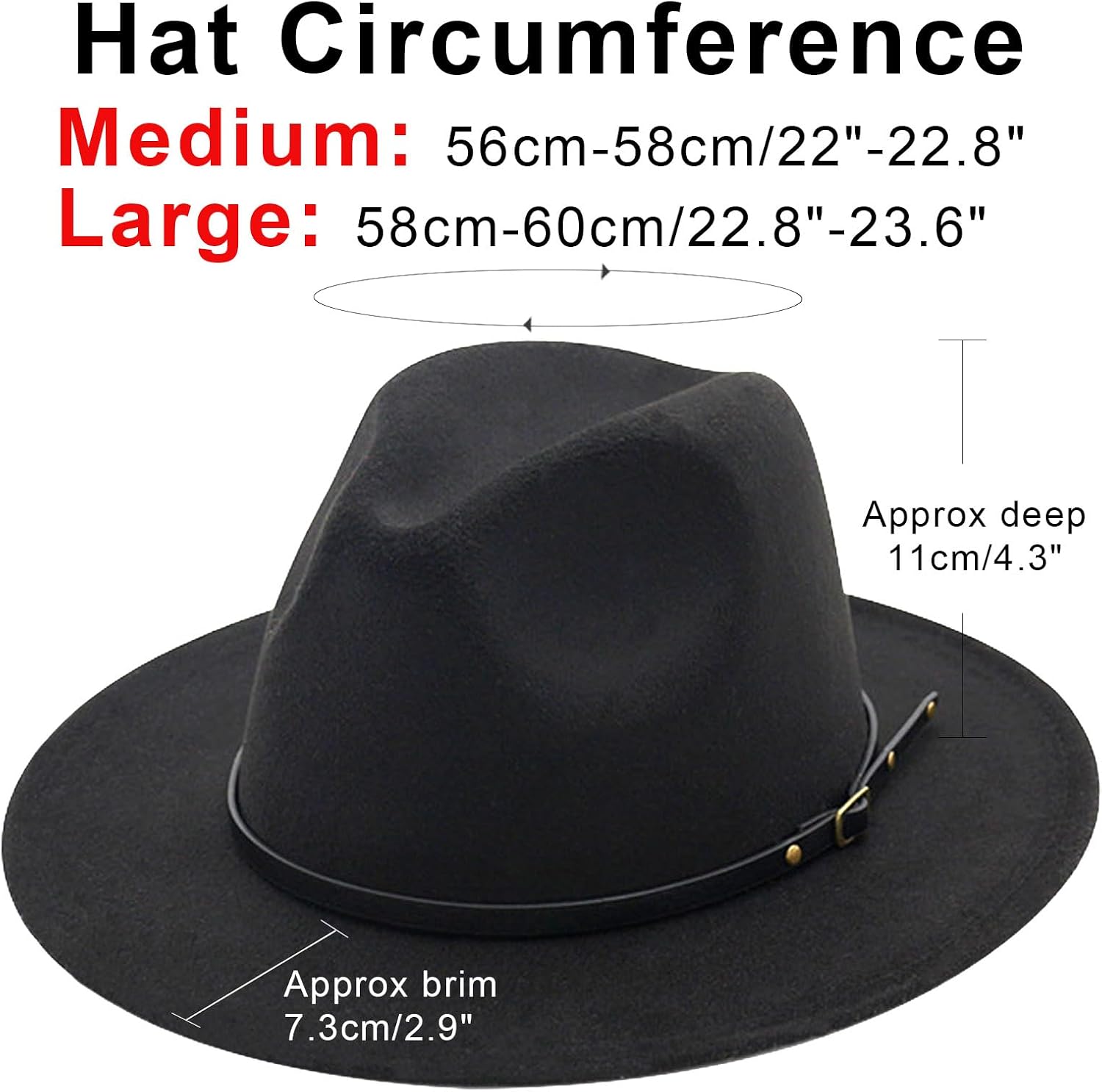
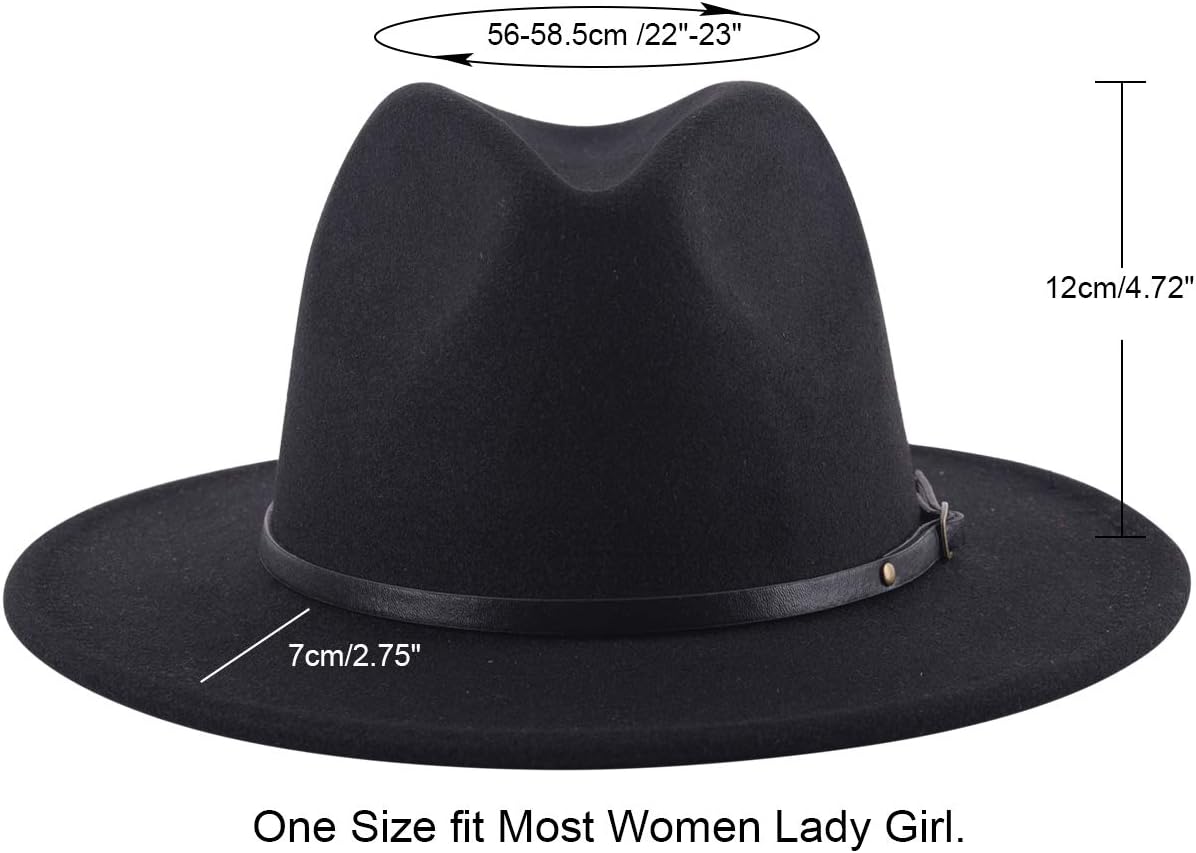
The Cut, in their piece “Everything You Need to Know About Felt Hats” (thecut.com), notes that standard sizing in the “one size fits most” category is typically calibrated to approximately a 57–58cm head circumference. If you’re outside that range — particularly on the smaller side — fit adjustments like foam tape inserts become necessary. The DRESHOW’s construction, reviewers report, sits on the larger end of that standard range, meaning small-headed buyers will feel the looseness acutely.
If fit uncertainty is your primary concern, this is the hat where the size and fit reviews deserve your full attention before purchase — not the style photos.
DRESHOW
$18.99
In stock on Amazon
Check price on AmazonFelt Fedora with Multi-Season Owner Loyalty — The Four-Year Hat
There’s a review category for certain budget hats that tells you more than spec comparisons can: the long-term update. A self-described woman who noted she “never gets compliments” on her appearance updated her review after four years of ownership to report that a stranger stopped her in a grocery store to compliment the hat. That’s not hyperbole — that’s the kind of social proof that only accumulates with real long-term use.
What earns it: a consistently structured felt brim and a color palette that wears well across seasons. Owners report that the hat holds its shape through repeated seasonal use without the brim softening or the crown losing definition — which is the failure mode most common in faux-felt hats after 12–18 months. For buyers who want to get more than one fall season out of a budget fedora, a hat’s multi-year owner track record is meaningfully differentiated from a hat with only recent reviews. Look for this pattern — updated long-term reviews praising sustained structure — when sorting through options in the $30–$45 range.
Lanzom
$27.99
In stock on Amazon
Check price on AmazonFLUFFY SENSE Rancher Fedora — The Construction Outlier
The FLUFFY SENSE rancher earns a specific compliment in its review record that deserves attention at this price point: reviewers call it “really sturdy” by budget felt hat standards. One owner specifically noted they’d buy it in more colors but would swap out the band for something bolder — which tells you something useful. The hat itself earns loyalty on construction and structure; the aesthetic customization desire signals that the base hat is a canvas worth investing in.
The rancher silhouette — a wider, flatter brim with a lower crown than a classic fedora — reads more outdoorsy and Western than a pinch-front fedora. Vogue, in their fall styling feature “The Fedora Is Back and Here’s How to Wear It” (vogue.com), draws a clear distinction between the rancher proportion and the traditional fedora crown, noting that the former tends to skew toward utility-casual pairings while the latter carries more urban polish. If your wardrobe leans toward barn jacket, straight-leg jeans, and ankle boots, the rancher proportion works harder for you than a traditional fedora crown would.
Lanzom
$27.99
In stock on Amazon
Check price on AmazonSeasonal Fit: Which Material for Which Months
Fall (September–November in most U.S. climates) is the sweet spot for all three material categories at this price point. Temperatures are variable, occasions are diverse, and the aesthetic case for a structured hat is strong without the warmth demand being extreme.
Winter (December–February) is where material differentiation becomes a real buying decision rather than an aesthetic one. A poly-faux felt hat offers almost no insulating value — it’s a style layer over whatever you’re wearing underneath. A wool-felt blend or woven wool fedora, by contrast, adds genuine warmth at the crown and temples, which matters on a 28-degree commute even if it won’t replace a dedicated cold-weather hat.
Harper’s Bazaar, in their hat-fit guide “How to Shop for a Hat That Actually Fits” (harpersbazaar.com), consistently notes that fit is also a warmth variable: a hat that sits slightly loose loses most of its thermal benefit because cold air circulates freely inside the crown. This is the second reason the DRESHOW’s fit-runs-large issue is worth taking seriously — a hat that doesn’t sit close to your head in January isn’t keeping you warm regardless of material.
Frequently Asked Questions
Will a felt fedora actually keep me warm in winter, or is it just decorative? A wool-felt blend fedora adds real warmth at the crown and around the ears — it’s not in the same thermal category as a knit beanie, but it’s meaningfully warmer than nothing and noticeably warmer than a poly-faux hat. Think of it as a mid-layer for your head, not a primary insulating piece.
How do I reshape a felt hat that arrived smashed or dented? Steam is your primary tool. Hold the affected area over boiling water or use a clothing steamer, then gently mold the felt back to shape with your hands while it’s warm and pliable. For serious crown collapse, stuff the crown with a rolled towel while the hat dries to maintain the shape. The Cut, in “Everything You Need to Know About Felt Hats” (thecut.com), notes that most felt hats — even at budget prices — respond well to light steam reshaping if you work gently and allow the material to cool fully before handling the finished shape.
What does “one size fits most” mean in practice for fedoras — will it fit my head? “One size fits most” in this category is typically sized for a 57–58cm head circumference. Measure around the widest part of your head, just above your ears. If you’re below 56cm or above 60cm, check the individual product’s size notes carefully, and budget for foam sizing tape (widely available, inexpensive) to adjust a hat that runs slightly large.
Can I wear a wide-brim fedora in the rain? Felt hats — including wool-felt blends — are vulnerable to water damage. Light mist is generally tolerable if you let the hat dry naturally away from heat, but prolonged rain will distort the felt and may permanently alter the brim shape. Poly-faux felt handles moisture better, which is one genuine advantage for the faux category. If you’re in a rainy climate, a faux-felt hat is the practical choice; just know the warmth tradeoff.
How do I style a fedora with outfits that aren’t western or boho? The key shift is proportion and pairing register. A felt fedora in a dark neutral — black, charcoal, deep burgundy — reads urban and polished alongside a wool coat and ankle boots, or over a turtleneck and wide-leg trousers. Vogue’s fall styling coverage in “The Fedora Is Back and Here’s How to Wear It” (vogue.com) demonstrates that the silhouette reads differently depending on what’s underneath it. Avoid heavy embellishments — feathers, turquoise, tooled leather bands — if you want city-casual rather than Western aesthetic.
Is the belt buckle band decorative only, or does it serve a functional purpose? In budget fedoras, the band is almost always purely decorative — it does not adjust hat circumference or serve a structural function. The band’s tension against the crown is incidental to the hat’s fit, which is determined by the crown construction. If a hat fits on the basis of its crown size, the band is an aesthetic element. If it doesn’t fit, tightening or loosening the band won’t fix it.