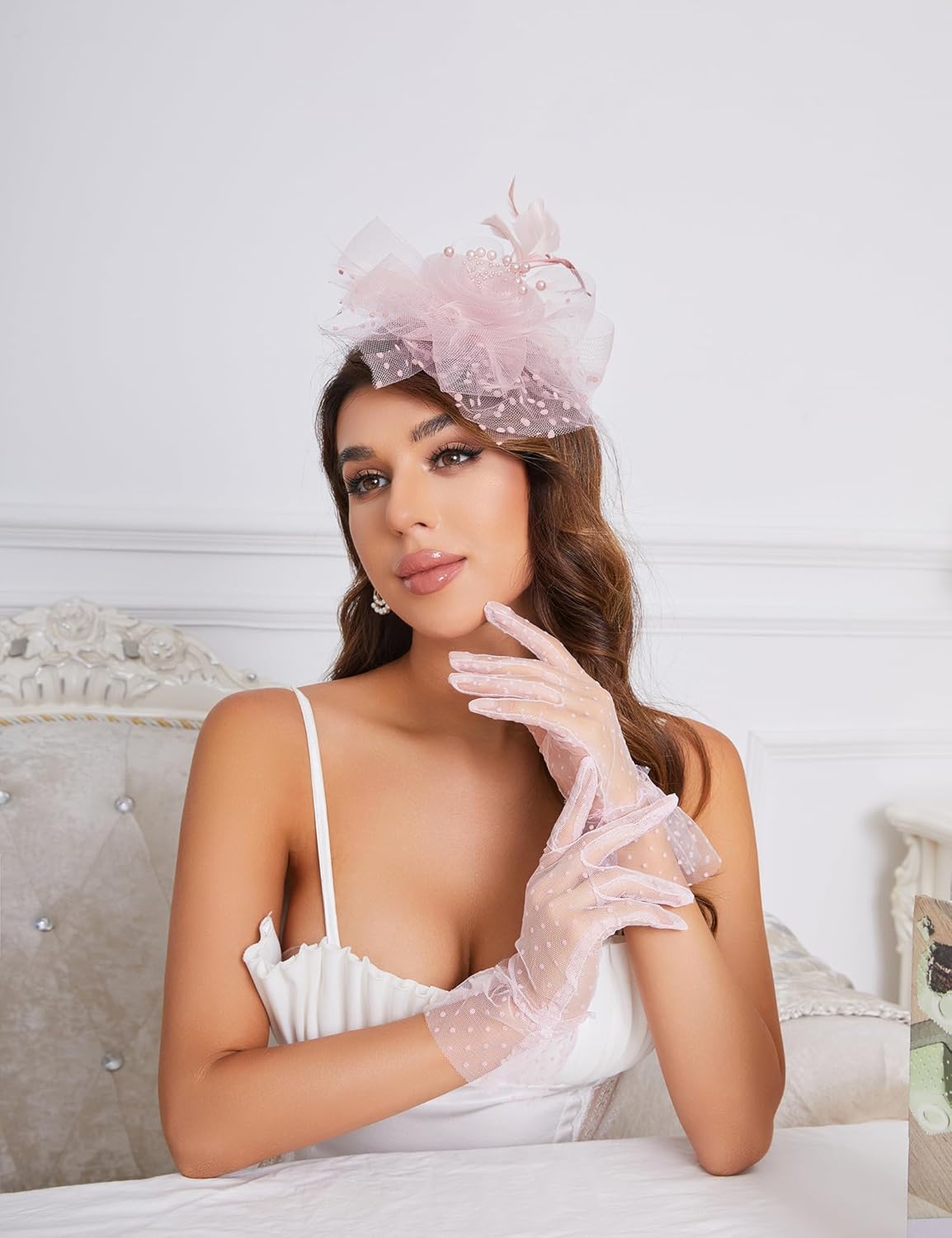
If you’ve ever searched “fascinator for a wedding” or “Derby hat set,” you’ve probably landed on one of those tidy product photos showing a small sculpted headpiece — a fascinator (a decorative mini-hat worn tilted on the head, secured by a comb, clip, or headband rather than sitting over the whole crown) — paired with a set of elbow or wrist-length gloves, all packaged together for somewhere between $25 and $75. The appeal is immediate: one purchase, complete look, nothing left to source. For a first-time occasion hat buyer heading to a Kentucky Derby party or a garden wedding, that feels like a solved problem. And sometimes it is. But if you’ve bought one of these sets before, or you’re sourcing them for clients, you already have a hunch about what the asterisk says. This article is about naming that asterisk precisely — what the fascinator component actually delivers, what the gloves almost never deliver, and the specific situations where the bundle math still makes sense anyway.
The Quality Split Is Real, and It’s Predictable
Here’s the pattern aggregated reviews keep surfacing, across multiple sets at multiple price points: buyers rate the fascinator component somewhere between 8 and 9 out of 10. The gloves land between 4 and 6. The overall purchase rating stays high — often 4 to 4.5 stars — because the fascinator was always the actual purchase motivator. The gloves are, in most buyers’ experience, a bonus they didn’t entirely need and a component they weren’t primarily evaluating.
This isn’t a random quality-control failure. It’s structural. Fascinators at the $30–$70 price point are made with relatively simple materials — sinamay (a stiff woven fabric made from abacá plant fiber, the workhorse material of mid-market fascinators), felt, or synthetic satin over a buckram base — that can be cut, shaped, and finished at low cost without the result looking obviously cheap. The fascinator is a static object. You look at it; it holds its shape; it does its job. Gloves, by contrast, are a wearable with stretch, seams under tension, and fingertip stress points. The same cost constraints that produce a perfectly acceptable fascinator produce gloves that reviewers consistently describe as “fine for photos” but prone to snagging or tearing during a full event.
One specific, actionable warning appears in aggregated reviews of bundled fascinator sets in the under-$50 category: buyers with long nails report that the gloves can tear at the fingertip during wear — not after repeated use, but on the first wearing. This detail almost never appears in product listings. If you have long nails or are sourcing for a client who does, plan to either skip the gloves entirely or budget for a separate glove purchase.
By the numbers:
| Component | Typical buyer rating | Primary failure mode |
|---|---|---|
| Fascinator | 8–9 / 10 | Occasionally arrives crushed; reshapes with steam |
| Gloves | 4–6 / 10 | Thin fabric, tears under nail stress, loose fit |
| Overall set | 4–4.5 / 10 | Fascinator satisfaction carries the score |
The Attachment System: What Most Buyers Don’t Know
The single most useful piece of functional information in fascinator-set reviews — and the one most consistently described as undocumented — is how the clip-and-headband switching system works on models that offer dual attachment.
Many bundled pillbox-style fascinators in this price category ship with both a comb/clip and a separate headband. The default assumption is that you choose one and discard the other. What reviewers who figured it out explain is that the clip is designed to slide out of its channel, allowing you to insert the headband in its place. One reviewer noted that “most customers don’t know” this interchange is possible — which tracks, because product listings typically show the two pieces separately without explaining the mechanism.
Why does this matter practically? Because clip fascinators are notoriously difficult to secure in fine, thin, or very short hair. The comb teeth have nothing to grip. Headbands distribute the anchor point across the skull rather than concentrating it at a small section of hair, which makes them dramatically more stable for short-haired wearers. A buyer who purchased a black pillbox fascinator set for a bereavement occasion specifically cited this dual-attachment feature as the reason she chose that set over alternatives — she had very short hair, wasn’t sure whether clip or headband would work better, and valued having both options. Her description of the hat as giving “hat-ish looks” without requiring her to own or know how to wear a full hat is exactly the use case these sets are designed for: low-stakes commitment to a hat moment with maximum wearability insurance.
The mechanical how-to, since it’s genuinely not documented well: look at the back of the fascinator base. The clip assembly typically sits in a fabric sleeve or channel stitched to the base. Grip the clip body (not the teeth) and slide it laterally out of the sleeve. The headband end — usually a plain aliceband — slides into the same sleeve from the opposite direction and locks into place by friction and the sleeve tension. It takes about thirty seconds once you know to look for the sleeve.
Harper’s Bazaar, in its guidance on fascinator fit, notes that the headband anchor is generally more reliable than a single clip for wearers with less than three inches of hair to grip — a threshold that cuts out a significant percentage of buyers who default to clips without considering alternatives. (Source: Harper’s Bazaar, “How to Wear a Fascinator,” harpersbazaar.com.)
Occasion Mapping: When the Set Format Actually Serves You
Town & Country’s race day dressing coverage is consistent on one point: at events like the Kentucky Derby, Preakness parties, and Royal Ascot-themed occasions, a fascinator is entirely appropriate as an alternative to a full hat. The set format has a specific sweet spot within that landscape. (Source: Town & Country, “Race Day Dressing Rules,” townandcountrymag.com.)
The set works cleanly when:
- You need a complete accessory story for one event and have no existing gloves or millinery in your wardrobe
- The event is photographed but not formally judged on headwear (a Derby watch party, a bridal shower, a garden wedding as a guest)
- Your budget is under $80 and a full hat isn’t proportionate to the occasion
- You have short or fine hair and want the insurance of the dual-attachment option
- The gloves are genuinely decorative rather than functional — you’re holding them for photos rather than wearing them for three hours
The set format underserves you when:
- You have long nails and need gloves that will survive a full day of wear
- The event has a formal millinery tradition (actual race-day competitions, mother-of-the-bride roles at formal weddings, church hat culture contexts) where a full hat reads more appropriately than a fascinator
- You already own good gloves — buying a set means paying for a redundant component
- The fascinator will be worn more than once or twice; at that frequency, investing in a standalone piece with better construction makes more economic sense
Who What Wear’s seasonal wedding-guest hat coverage frames this well: the fascinator occupies a middle register between a hair accessory and a hat. It signals effort and occasion-awareness without the commitment — financial or aesthetic — of a full blocked felt or sinamay hat. That middle register is genuinely useful, but it has a ceiling. (Source: Who What Wear, “The Modern Guide to Wedding Guest Hats,” whowhatwear.com.)
The funeral question is worth addressing directly. The reviewer who bought a black pillbox fascinator set for a bereavement occasion is not an edge case. Black fascinators have a long history in mourning dress, and a muted, simply shaped pillbox or cocktail fascinator in black is entirely appropriate for a funeral, memorial service, or graveside service. Vogue’s occasion dressing guidance treats black fascinators as appropriate for formal and semi-formal mourning occasions, particularly in British and church-adjacent contexts. (Source: Vogue, “The Complete Guide to Occasion Dressing,” vogue.com.) The set format is fine for this use; just ensure the fascinator is in a subdued colorway and the gloves — if you wear them — are in black or neutral.
When to Skip the Set and Buy Separately
If the gloves in the set are the component that concerns you — or if you’ve already been burned by a set where the gloves were unwearable — the math is simple. A standalone fascinator at the same price point as the set will almost always be better constructed than the fascinator in the bundle, because the manufacturer isn’t splitting costs between two SKUs. And a separate pair of dress gloves, even at $20–$30, will be made to a wearable standard rather than a photographic one.
Vogue’s coverage of occasion accessory dressing consistently places quality gloves in the $45–$120 range for anything that needs to be worn rather than merely held. Below that threshold, the construction compromises are real — but they’re more tolerable in a standalone glove purchase where you know what you’re getting than in a bundled product where the gloves feel like afterthought inventory. (Source: Vogue, “The Complete Guide to Occasion Dressing,” vogue.com.)
The decision rule is this: if the fascinator is the point and the gloves are genuinely optional, buy the set. The fascinator component at most budget-tier price points overdelivers for the money, and the gloves are a free bonus you can photograph and shelve. If you need wearable gloves — for a long event, if you have long nails, or if gloves are a core part of the look — buy separately. The set’s glove component will let you down at precisely the moment the stakes are highest.
Frequently Asked Questions
How do I switch between the clip and headband attachment on a fascinator? Look for a fabric sleeve or channel stitched to the underside of the fascinator base. The clip slides laterally out of this sleeve; the headband slides in from the opposite end. The friction of the sleeve holds both in place. This works on most dual-attachment designs in the bundled set category; check that the sleeve is present before assuming the swap is possible.
Will the clip hold in fine or very short hair? Clips rely on comb teeth gripping a section of hair, which requires at least two to three inches of length and enough density for the teeth to anchor. Fine or short hair typically doesn’t provide enough resistance. Harper’s Bazaar’s fascinator fit guidance recommends the headband attachment for wearers with short hair — and the switchable-attachment models described above solve this problem directly. (Source: Harper’s Bazaar, “How to Wear a Fascinator,” harpersbazaar.com.)
Are the gloves in these sets actually wearable or just for photos? Honestly: mostly for photos, at the price points where bundled sets live. They’re thin, the fit is approximate, and reviewers with long nails report tearing at the fingertips on first wear. They’ll survive a short photo session. They may not survive a four-hour event.
Can I wear a fascinator-glove set to a funeral or is it only appropriate for festive events? A black or dark-neutral fascinator is entirely appropriate for funeral and memorial occasions — it has a documented place in formal mourning dress across British, church, and formal American contexts. The set format is fine; choose a subdued colorway and a simple silhouette. Avoid anything with bright embellishments, feathers dyed in festive colors, or netting in non-black tones.
What occasions are fascinator sets actually appropriate for versus when is a full hat better? Fascinators work well as guests at weddings, Derby watch parties, garden parties, christenings, and semi-formal luncheons. A full hat reads more appropriately when you are in a featured role (mother of the bride, hostess, honoree), at events with formal millinery traditions (actual race-day competitions, church hat culture services), or any occasion where a hat is part of the cultural expectation rather than an accessory choice. Town & Country’s race day coverage draws this line clearly: fascinators are guest-appropriate; full hats are for anyone who wants to be noticed. (Source: Town & Country, “Race Day Dressing Rules,” townandcountrymag.com.)