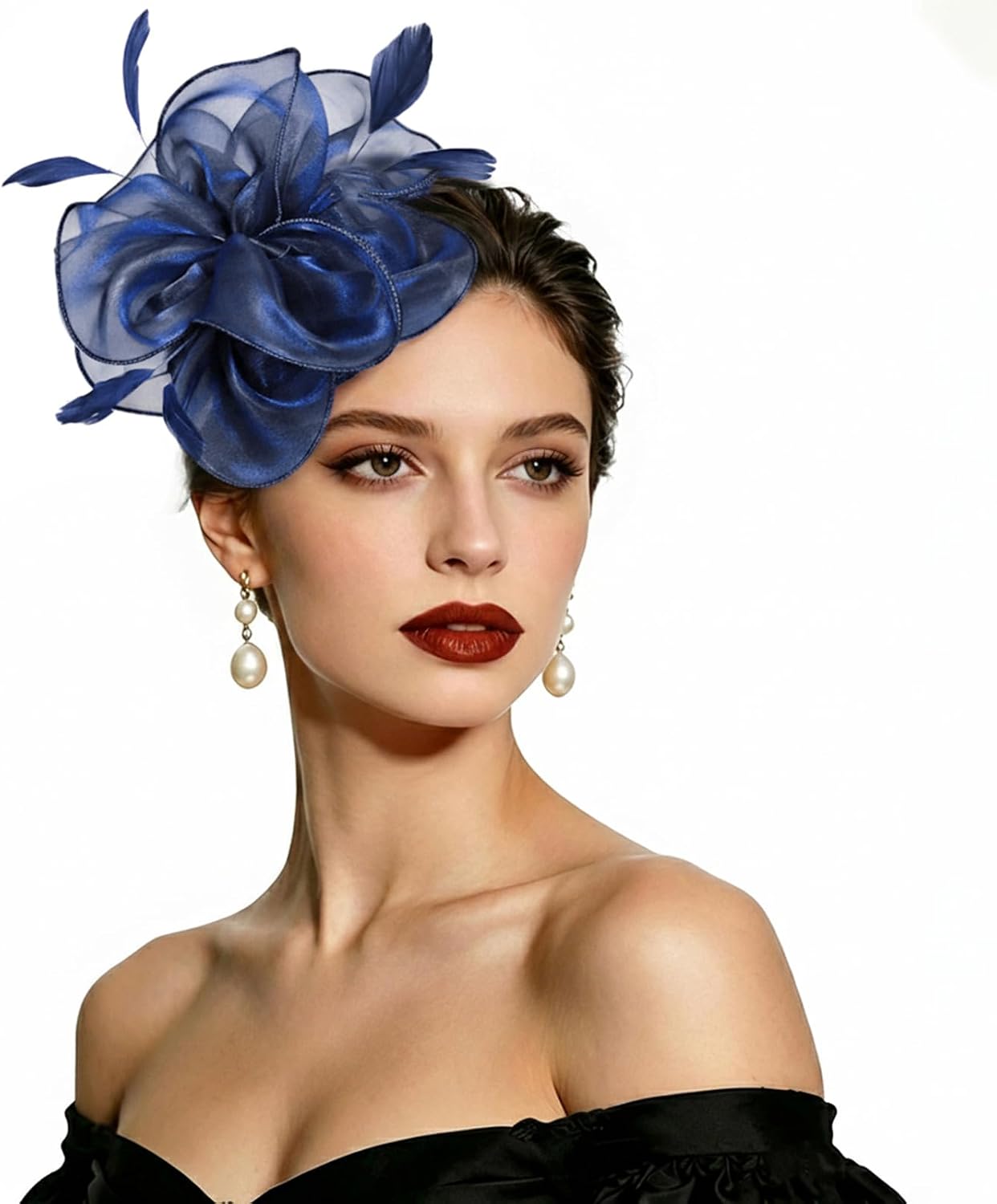
A fascinator — if this is your first encounter with the word — is a small decorative headpiece that sits tilted to one side of the head, typically at or above the ear. Unlike a full hat, it has no crown and no brim that wraps your head. Instead, it attaches directly to your hair using some combination of a clip, a comb, a pin, or a rigid headband. That attachment mechanism is the whole ballgame. You can have the most beautiful piece of hand-blocked sinamay (a stiff, open-weave fabric woven from banana plant fiber, the standard material for this category) in the room, and if it’s sliding down your temple by the second hour of a garden party, the purchase was a failure. This guide is for people who already know what a fascinator is and broadly what they want — but who are navigating the specific, underserved problem of short hair, a smaller-than-average head, or a justified skepticism about clip attachments that have failed them before.
The goal here is simple: treat attachment method as the primary buying criterion, not a footnote. Every product recommendation below is organized around that frame.
| EDITOR'S PICKBABEYOND Tea Party Fascinator K… | Mid-tierORIDOOR Sinamay Flower Feathers… | Budget pickDRESHOW Fascinators Hat Flower… | |
|---|---|---|---|
| Attachment | Headband | Headband | Headband + clip |
| Shape | Pillbox | Pillbox | — |
| Material | — | Sinamay | Mesh |
| Feathers | — | ✓ | ✓ |
| Diameter | — | — | 7" |
| Size | — | One size | One size |
| Price | $42.99 | $18.99 | $9.99 |
| See on Amazon → | See on Amazon → | See on Amazon → |
Why Attachment Fails — and Why It Matters More Than You Think
The standard buying conversation around fascinators focuses on silhouette, color, and occasion appropriateness. Those things matter, but they’re downstream of a more fundamental question: will this thing stay on your head?
Harper’s Bazaar’s style desk feature on how to wear a fascinator notes that the most common complaint from first-time wearers isn’t about aesthetics — it’s about stability. Vogue UK’s Royal Ascot dress-code guide, which addresses fascinators in some depth given the occasion’s rules around minimum hat base diameter, explicitly flags that clip-only attachments are a liability for anyone with fine or short hair.
Here’s the mechanical reality: a clip bites into hair to create friction. The more hair you have — and the longer and coarser it is — the more surface area the clip grips. A pixie cut or a close-cropped style gives a clip almost nothing to work with. The clip has to clamp harder to compensate, which either damages hair or eventually fails under the lateral torque that a large fascinator dish creates as you move through a crowd, turn your head, or dance.
Structural integrity and attachment are also linked in a way that most product descriptions obscure. Reviewers of the Z&X sinamay pillbox have flagged that the piece broke during wear — not because the construction was inherently poor, but because a poorly secured fascinator transmits stress directly back into its own base. When the attachment slips, the fascinator doesn’t just fall; it twists, and that twisting puts shear force on whatever connects the hat base to the decorative elements. A $30 fascinator with a solid dual-mount attachment will outlast a $60 one with a single flimsy alligator clip.
By the numbers — attachment failure modes:
- Single alligator clip: highest slip rate on hair shorter than 2 inches
- Comb attachment: requires minimum 1.5–2 inches of hair to thread correctly
- Dual clip + headband: rated most stable by reviewers across short-hair categories
- Rigid headband alone: most secure on small heads when sized correctly; no hair required
The Three Attachment Types, Compared Honestly
Alligator clip (single or double) This is the most common attachment on entry-to-mid-range fascinators. It looks like a flat metal or plastic clip — the same mechanism as a hair clip — mounted horizontally on the underside of the fascinator base. For hair that’s at least chin-length and medium texture, it works adequately. For short hair, it’s a gamble. The clip has to open wider to clamp onto fewer strands, which reduces grip pressure. Reviewers with short styles consistently report that single-clip fascinators migrate toward the back of the head within 90 minutes. The fix — layering bobby pins perpendicular to the clip — works, but it means you’ve already bought the wrong attachment type and are compensating.
Comb attachment A millinery comb is a small rigid comb — usually 1.5 to 2 inches wide, with 6–10 teeth — sewn to the underside of the fascinator base. You slide it into a section of hair the way you’d anchor a decorative hair comb. The mechanical advantage over a flat clip is real: the teeth distribute grip across a wider surface area and resist lateral movement better. The downside is that it requires enough hair to actually thread. On a true pixie cut, you’re working with perhaps an inch of hair on top, and the comb teeth simply don’t engage deeply enough to stay. Millinery enthusiasts on Who What Wear’s fascinator buying guide note that combs are excellent for medium-short styles (think ear-length bobs) but unreliable below that threshold.
Headband attachment A rigid headband that curves over the crown of the head is, counterintuitively, the most versatile attachment for short hair — because it doesn’t rely on hair grip at all. The headband anchors against the skull at two contact points (above each ear), and the fascinator sits where it’s mounted on the band. The failure mode here isn’t grip; it’s sizing. A standard headband is sized for an average adult head circumference of approximately 22–22.5 inches. Smaller heads — typically under 21.5 inches — will find that a standard headband sits too loosely and slides forward or backward rather than staying put.
The dual-mount option (clip + headband in the same piece) This is the configuration that short-haired buyers should be actively seeking. Several BABEYOND pieces — including the BABEYOND pillbox fascinator with dual clip-and-headband construction — receive specific praise from reviewers with extremely short hair, who describe the dual option not as a bonus feature but as the reason the purchase worked at all. The logic is sound: the headband provides primary stability against the skull, and the clip provides a secondary anchor in whatever hair is available. If you have almost no hair, the headband alone carries the load. If you have a few inches, the clip supplements it.
The Small-Head Problem, Specifically
A head circumference below approximately 21.5 inches is genuinely underserved by most fascinator sizing. The issue isn’t the fascinator itself — it’s the headband, which is almost always manufactured to a single adult size. Refinery29’s feature on keeping a fascinator in place all day offers a practical solution that most buyers discover only after a failed wear: wrap the underside of the headband with a thin strip of silicone hair grip tape (the same material used to keep strapless garments in place). This increases the friction coefficient against the skull dramatically and can take a loose headband from frustrating to fully secure without altering the headband’s structure.
The sinamay pillbox in black and navy — pieces that reviewers consistently describe as fitting well on both short hair and smaller heads — earns that praise partly because sinamay is a lighter material than felt or straw braid, which means the fascinator’s center of gravity is lower and the torque on the attachment is reduced. A heavy fascinator on a loose headband is a physics problem. A lightweight sinamay piece on the same headband is a manageable one.
If you’re shopping for a small head and the product listing doesn’t specify headband sizing, treat that as a yellow flag. The BABEYOND white fascinator is notable because reviewers — not the product description — have independently documented that you can remove the clip, slide the headband into the same slot, and use two layers of felt to reinforce the connection. This workaround exists because the attachment system is modular in practice even when it isn’t marketed that way. The fact that buyers are figuring this out themselves suggests there’s real demand for attachment transparency that most product listings aren’t meeting.
Can You Swap the Attachment on a Fascinator You Already Own?
Yes, and it’s more achievable than most buyers assume. The attachment on a fascinator is almost always sewn or glued to a small base board — a stiffened fabric or buckram disk — that sits against your head. If the piece uses a sewn attachment, a tailor or milliner can remove the existing comb or clip and replace it with a different mechanism for a modest fee. If it’s glued (common on mass-market pieces), you can remove it carefully with a seam ripper and reattach using millinery-grade contact cement.
The practical limit is the base board size. A fascinator with a very small base board — say, under 3 inches in diameter — won’t accommodate a full headband attachment without modification to the base itself. Larger pillbox-style bases, which run 4–6 inches, have enough surface area to support any of the three attachment types. If you already own a clip-only fascinator that isn’t working, evaluate the base board size before deciding whether a swap is worth attempting.
Frequently Asked Questions
Can a fascinator stay in place on a pixie cut without bobby pins? Yes, but only with the right attachment. A dual clip-and-headband mount or a headband-only mount does not depend on hair length to function. Single-clip and comb attachments are genuinely unreliable on hair shorter than about 1.5 inches without supplemental pinning.
What’s the difference between a comb, clip, and headband attachment in practice? A comb threads into hair like a hair accessory and grips by tooth depth. A clip grips a section of hair between two flat surfaces. A headband anchors against the skull at two points above the ears, independent of hair. In practice: combs need medium-short or longer hair; clips need at least some hair to bite; headbands work on any hair length including none.
How do I stop a headband fascinator from sliding on a small head? The most effective solution reported by reviewers is silicone grip tape wrapped around the underside of the headband’s contact points. Velvet-covered headbands also provide more friction than bare plastic or metal. Sizing down to a children’s headband (typically 20–21 inches) is worth trying if your head circumference is below 21.5 inches.
Does fascinator size need to scale to my head size? Proportionally, yes — but not for stability reasons. A large fascinator dish creates more lateral torque on the attachment as you move, which is a stability concern. But visually, Who What Wear’s fascinator guide notes that smaller-faced and smaller-headed wearers often read a medium-scale fascinator more elegantly than an oversized one, which can overwhelm finer features. A 4–6 inch base is typically the sweet spot for smaller heads.
Can I swap the attachment on a fascinator I already own? Yes, in most cases. Sewn attachments can be replaced by a tailor or milliner; glued attachments can be removed with a seam ripper and reattached. The practical constraint is the size of the base board — it needs to be at least 3–4 inches in diameter to accommodate a full headband mount. Pillbox-style bases are the most swap-friendly.
The Decision Rule
If your hair is shorter than 1.5 inches: headband-only or dual clip-and-headband is your non-negotiable. Single clips and combs will not hold reliably; any workaround that involves bobby pins means you bought the wrong attachment type.
If your head circumference is under 21.5 inches: add silicone grip tape to any headband before first wear, or size down to a smaller band. Weight matters — prioritize sinamay and lightweight materials over heavier felt or straw braid to reduce attachment stress.
If you already own a fascinator that slips: check the base board size. If it’s 4 inches or larger, a milliner can reattach it with a more appropriate mount for less than the cost of replacing the piece. If the base is smaller than 3 inches, replacement is likely the more practical path.
Attachment first. Everything else is aesthetic.