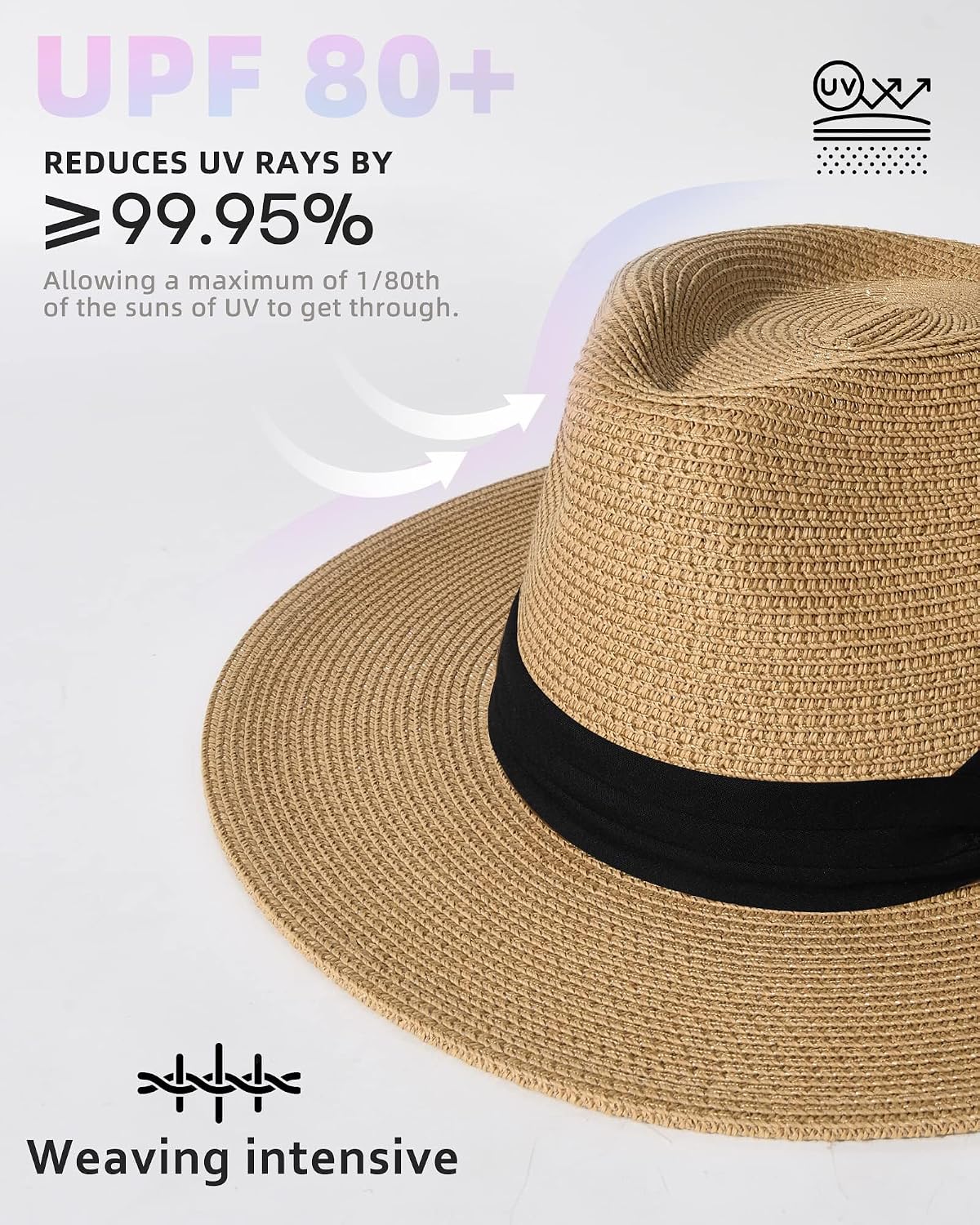
A felt fedora — that’s a hat with a pinched crown (the structured dome that sits on your head) and a brim that folds down in front — is one of the most satisfying things you can own in a hat wardrobe. It works at garden parties, races, and sharp-casual everyday dressing. The problem is that fedoras ordered online are a sizing gamble in a way that, say, a floppy straw hat mostly isn’t. Because felt is firm, even a quarter-inch variance between your head and the hat means the difference between a polished look and a disaster. If you’ve ever bought a fedora that either cut off your circulation or slid down to your eyebrows, you already know this. This guide is here to help you make a better-informed next purchase — whether you’re shopping with a head circumference under 21 inches or over 23, and whether you’re buying for yourself or sourcing for a client.
| EDITOR'S PICKPro Celia Big Wide Brim Women F… | Mid-tierFelt Wide Brim Fedora Hats for… | Budget pickFURTALK Womens Mens Wide Brim S… | |
|---|---|---|---|
| Material | — | Wool | Straw |
| Adjustable | — | ✓ | — |
| Head size | — | 22–22.875" | M–L |
| UPF rating | — | — | ✓ |
| Band detail | — | Belt buckle | — |
| Season | — | — | Summer |
| Price | $36.99 | $29.99 | $25.99 |
| See on Amazon → | See on Amazon → | See on Amazon → |
The Two Measurements Nobody Talks About Together
Most buyers think about hat sizing as one number: circumference. You wrap a tape measure around your head about an inch above your ears, note the measurement in inches or centimeters, and match it to a size chart. That’s the right first step. But circumference is only half the equation.
Crown depth — the vertical distance from the inner brim edge to the top of the hat’s interior — is the second measurement, and it’s almost never listed in product specs. Crown depth is why a reviewer on the DRESHOW felt fedora can write in the same sentence that the hat fits her large head (circumference covered) while wishing the crown were deeper. She has a proportionally taller skull. The hat circles her head correctly but sits higher than it should, like a cap that hasn’t been pressed down fully. That visual is the tell.
The practical distinction matters for purchasing decisions:
| Variable | What it controls | Listed in specs? |
|---|---|---|
| Circumference | Whether the hat physically goes on your head | Usually yes |
| Crown depth | How the hat sits — high, level, or low | Almost never |
| Head shape | Oval vs. round fit and balance point | Never |
As Who What Wear’s fit guide notes, head shape — specifically whether your skull is more oval (longer front-to-back than side-to-side) or rounder — affects how a hat balances even when circumference is correct. A hat blocked for a round head on an oval skull will tilt or rock. This is harder to solve than circumference and is worth knowing upfront: it’s why custom blocking exists, and why mid-range hat buyers who find a brand that fits them tend to be loyal to it.
What “Adjustable” Actually Means — and When It’s Enough
The word “adjustable” on a hat listing can mean three very different things, and they are not equally effective:
Drawstring adjusters run along the interior sweatband and cinch the hat smaller when pulled. These are the most functional option for genuine sizing range because they reduce circumference evenly around the full interior. They work well for roughly a one-size range (about half an inch of circumference adjustment).
Velcro tabs attach to a strip at the back of the interior band and can be pressed closer or farther from the crown wall. These work reasonably well for fine-tuning — perhaps a quarter inch — but they create a single-point adjustment at the rear of the hat, which means the front-to-back diameter shrinks while the side-to-side stays the same. For genuinely small heads, this produces an uneven fit that can cause the hat to tilt forward.
Foam inserts (sometimes called sizing foam or sizing strips) are adhesive-backed strips placed along the interior sweatband. These are the least dynamic option — they’re fixed once placed — but for buyers who’ve nailed their measurement and just need to take up a consistent quarter inch all the way around, they’re clean and reliable.
The FURTALK beach hat’s Velcro adjuster story is instructive here. A reviewer with a 21-inch head found the M-L too large, initiated a return, then reversed course after cutting a custom felt strip to supplement the Velcro. The improvisation worked — but it’s diagnostic: for heads under 21.5 inches, a single rear Velcro tab alone is probably insufficient, and you should budget for either a foam insert purchase or some DIY modification if you’re buying a hat with this adjuster type.
The Real Range: What Fits Heads Under 21 and Over 23 Inches
Per aggregated reviewer data across felt fedora categories, the practical fit range for most off-the-shelf felt fedoras tops out around 23 to 23.5 inches and bottoms out around 21 inches — and both ends of that range require careful attention.
For larger heads (23 inches and above): This is historically the more underserved segment in ready-to-wear hat retail. The Foeran cowboy-style felt hat earned an enthusiastic write-up from a self-described big-head buyer who described it as the first hat she’d been able to order online with confidence after years of avoidance. The key detail in her review: the hat listed explicit inch sizing rather than small/medium/large, which allowed her to match her actual measurement directly. That specificity — hats that size by actual inches rather than vague S/M/L/XL buckets — is the single most useful filter when shopping for heads over 23 inches. Elle’s fedora buying guide makes the same point: brands that publish circumference ranges in inches or centimeters rather than generic size tiers give large-headed buyers an actual decision variable.
For smaller heads (under 21 inches): The challenge is different. Most adjusters, as noted above, are calibrated for the middle of the range. Sizing down from a S/M into a genuinely small fit often means the hat is architecturally correct — the brim proportion, the crown shape — but physically too large to stay in place. Town & Country’s style features on hats consistently note that millinery fit for petite heads is one of the persistent gaps in ready-to-wear. The practical solution set: foam inserts added all the way around the sweatband, hat-sizing tape (a thin self-adhesive foam tape sold specifically for this), or the DIY felt-strip approach documented in the FURTALK review. None of these is glamorous, but all of them work — and a hat that fits correctly with a foam insert is categorically better than a hat that doesn’t fit without one.
By the numbers:
- Average adult head circumference (women): 21.5–22.5 inches (source: The Hat Magazine industry reference guide)
- Typical off-the-shelf felt fedora range: 21–23.5 inches across all size options
- DIY foam insert cost: under $8 for a roll that sizes multiple hats
- Custom blocking upcharge from an independent milliner: typically $40–$120 depending on maker
Why the Same Hat Gets “Too Big” and “Perfect” Reviews
This is the question that confuses buyers most, and the answer is almost always one of three things:
1. Different baseline circumferences. A reviewer with a 22-inch head calling a hat “perfect” and a reviewer with a 21-inch head calling it “too big” are both correct. The hat fits one of them. Size-S products often span a 21.5–22.5 inch range, and both ends of that range experience the hat differently.
2. Different crown-depth proportions. Two buyers with identical circumferences can experience the same hat differently if their skull heights differ. The buyer with a shallower skull finds the crown floats — it doesn’t press down to the brim edge naturally — and calls the hat “roomy.” The buyer with a taller skull finds it snug at the crown-to-brim junction and calls it “right.”
3. Hair volume at time of measurement. A buyer who measured over thick hair and bought accordingly will find the same hat too loose when worn over flat or fine hair. This is mundane but real — Smithsonian Magazine’s millinery craft feature notes that professional milliners traditionally fit clients with hair styled as they plan to wear it for exactly this reason.
The decision rule: when you see contradictory fit reviews on a felt fedora, look for whether reviewers specify their actual measurement in inches. Reviews that name a number (“fits my 23-inch head”) are more useful than qualitative assessments (“ran large”). The felt wide-brim hat with explicit inch sizing consistently receives more actionable reviews — not because buyers are more sophisticated, but because the product listing gave them a number to anchor to.
Frequently Asked Questions
What does “adjustable” actually mean — drawstring, Velcro, or foam insert, and which works best? Drawstrings offer the most even, reliable circumference adjustment across a range. Velcro tabs adjust at one point (the rear), which works for fine-tuning but can tilt the hat on genuinely small heads. Foam inserts are fixed once placed but create an even reduction all the way around — ideal if you know your measurement and just need to take up a consistent small gap.
Is crown depth listed anywhere, and why does it matter separately from circumference? Crown depth is almost never listed in product specs — it’s one of millinery’s most persistent disclosure gaps. It matters because it controls how the hat “sits”: a shallow crown will perch high on a taller skull even when circumference is correct, and a deep crown will press down too far on a shorter skull. Your best proxy: look for reviewer photos and note whether the hat appears to sit level or float. Brands that sell through specialty hat retailers sometimes list this measurement; mass-market listings rarely do.
What’s the best DIY fix if the hat is slightly too large? Hat-sizing tape — a thin self-adhesive foam tape made specifically for interior sweatbands — is the cleanest solution. It’s available from millinery supply retailers, reduces circumference evenly, and is removable if you’ve over-corrected. The felt-strip improvisation documented by the FURTALK reviewer (cutting a felt strip to match the sweatband curve) is a functional second option. Rolled tissue or scarves are temporary at best and tend to shift.
Do these hats genuinely fit heads over 23 inches? Some do, but you must read listings carefully. Off-the-shelf felt fedoras that publish circumference ranges in actual inches — and that extend their XL range to 23.5 or 24 inches — are increasingly available. The Foeran felt hat’s strong reviews from large-head buyers are tied directly to its explicit sizing. For heads above 24 inches, custom or made-to-measure from an independent milliner is the more reliable path.
Why does the same hat get “too big” and “perfect fit” reviews from different buyers? Almost always: different baseline circumferences within the same size bracket, different crown-to-skull depth ratios, or measurement taken over different hair volumes. Reviews that name actual inch measurements are far more useful than qualitative “fit” language. When shopping, weight numerical reviews heavily over adjective-only ones.
The clearest if/then decision frame for felt fedora sizing: if you know your circumference in inches and the listing publishes its range in inches, buy to that number and budget a few dollars for sizing tape as a backup. If the listing uses only S/M/L with no circumference ranges and you sit outside the 21.5–22.5 inch average, either contact the retailer for the actual measurement or factor a return into your plan. For heads above 23.5 inches, prioritize brands that extend explicitly to that range — or look to an independent milliner who can block to your measurement from the start. That last option costs more, but it’s the one that ends the cycle of online hat gambling for good.