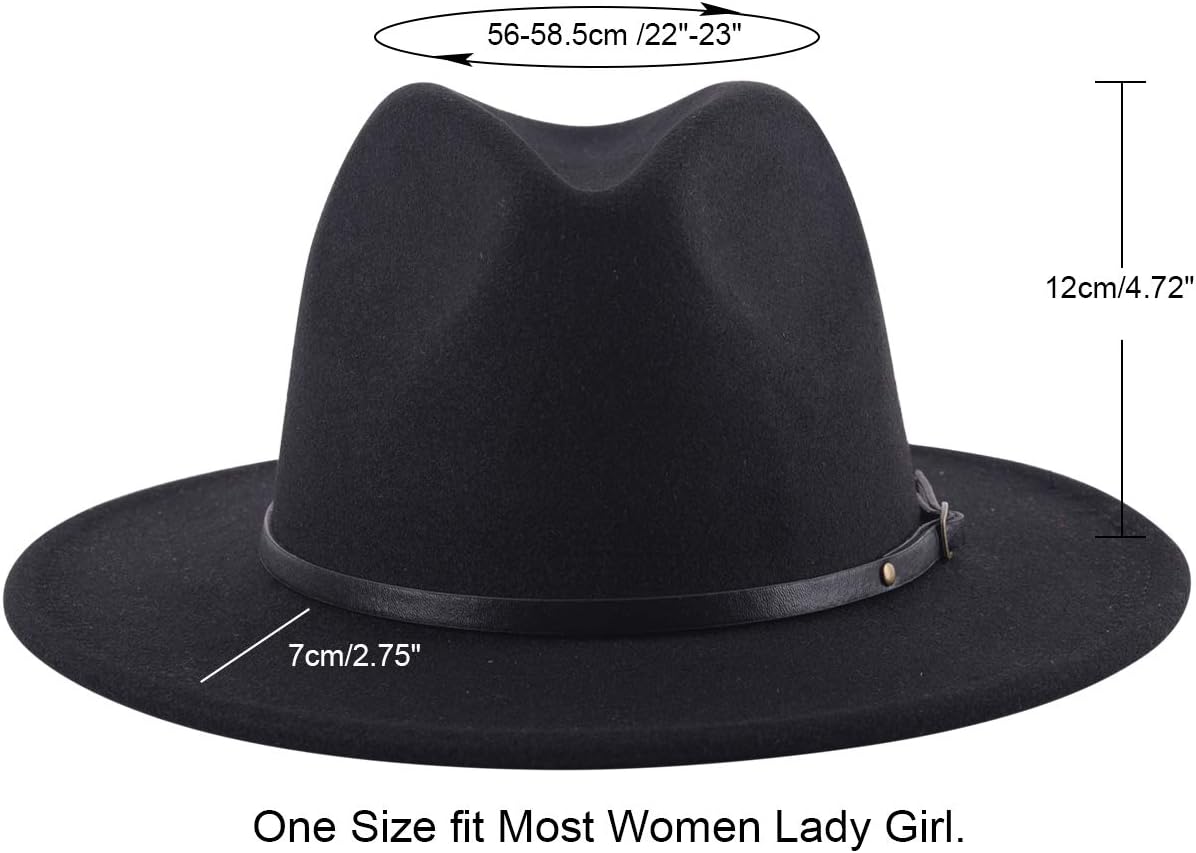
If you’ve ever ordered a hat online, loved it in the photo, and then felt a bit swallowed by it in your bathroom mirror — you are not alone, and the problem almost certainly wasn’t your head. It was the brim. The brim is the horizontal extension of a hat that surrounds the crown (the part that sits on your head), and its width is measured in inches from the edge of the crown out to the outer edge of the hat. A brim that reads as “effortlessly chic” on a five-foot-ten model in a product shot can read as “enormous beach umbrella” on a five-foot-two frame. This guide breaks down brim width proportions by body type — petite, average, and tall — and grounds every recommendation in what real buyers have actually reported, not in fashion-magazine abstractions. By the end, you’ll have a clear decision rule you can apply the next time you’re staring at a listing and trying to figure out whether that 4-inch brim is going to work for you.
| EDITOR'S PICKFLUFFY SENSE. Big Wide Brim Fed… | Mid-tierLanzom Womens Classic Wide Brim… | Budget pickFURTALK Womens Sun Straw Hat Wi… | |
|---|---|---|---|
| Material | Felt | Wool | Straw |
| Size | 6 3/4-7 3/8 | One Size | Medium-Large |
| Sun rating | — | — | UPF 80 |
| Foldable | — | — | ✓ |
| Packable | — | — | ✓ |
| Price | $42.99 | $27.99 | $23.39 |
| See on Amazon → | See on Amazon → | See on Amazon → |
Why Brim Width Is a Proportion Problem, Not a Style Problem
Fashion editors often talk about proportion as if it’s a vague aesthetic instinct. It isn’t. It’s geometry. Your hat’s brim needs to relate sensibly to your shoulder width, your height, and how much visual weight you’re already carrying. When buyers use words like “overwhelming,” “flattering,” or “just right” in reviews — and reviewers of wide-brim hats across multiple price tiers consistently reach for exactly that language, without being prompted — they are describing a proportion experience, not a style preference.
Vogue’s coverage of wide-brim hat styling specifically calls out shoulder width as the key calibration point: a brim should not extend meaningfully past your shoulders, or it creates a visual imbalance that reads as “costume” rather than “outfit.” Who What Wear’s proportion guide echoes this, noting that brim width is most flattering when it roughly mirrors the width of the wearer’s shoulder line, give or take an inch.
This isn’t a rule about what’s allowed — you can wear any brim width you like. It’s a frame for diagnosing why a hat feels off, so you can make a deliberate choice rather than a frustrated return.
By the numbers — common brim width categories:
| Label | Brim Width | Typical Use |
|---|---|---|
| Narrow | Under 2.5 inches | Fedoras, everyday felt hats |
| Mid-width | 2.5–3.5 inches | Versatile sun and occasion hats |
| Wide | 3.5–4.5 inches | Sun protection, beach, garden party |
| Extra-wide | 4.5 inches and up | Maximum sun coverage, statement looks |
Petite Frames: The Case for Mid-Width and Intentional Curves
If you’re under five-foot-four and/or have narrow shoulders, the extra-wide brim category (4.5 inches and up) is where most proportion problems live. It’s not that you can’t wear a wide brim — it’s that an uncurvered, extra-wide flat brim tends to extend past the shoulder line and create a silhouette that reads as hat-wearing-person rather than person-wearing-hat.
One buyer of the Roxy sun hat — self-identified as petite with a smaller head — flagged something that most product listings never explain: the brim on that hat curves downward slightly at the edges, and she specifically noted it provides more shade coverage than a previous straight-brimmed hat she owned. This is a meaningful distinction. A downward-curving brim (sometimes called a “downturned” or “floppy” brim) does two things simultaneously: it narrows the apparent horizontal footprint of the hat from the front, which reads as more proportionate on a smaller frame, and it redirects coverage downward toward the face and neck rather than outward toward the shoulders. The net result, as she described it, is more functional shade with less visual bulk.
This is the nuance most shoppers miss: brim angle and brim width are different variables. A 4-inch downturned brim can flatter a petite frame that a 4-inch flat brim would overwhelm. When you’re reading a listing, look for language like “floppy,” “flexible,” “downturned,” or “soft brim” — these signal a brim that will fall rather than project, which tends to read better on smaller frames.
For petite buyers who want a shorter brim as a deliberate choice rather than a compromise — the Lanzom packable sun hat comes up repeatedly in buyer reviews as exactly this: a buyer noted she specifically selected a shorter brim and wasn’t settling, she was deciding. A 2.5–3-inch brim on a petite frame can be every bit as polished and sun-protective as a wider brim on a taller frame, and it won’t require you to turn sideways to get through a doorway.
Harper’s Bazaar’s sun hat guidance advises petite shoppers to look for brims in the 3–4 inch range with some downward flexibility, which aligns with what petite buyers are self-reporting across review data.
Decision rule for petite frames: If you’re under 5’4” with narrow-to-average shoulders, aim for 2.5–4 inches and prioritize brim flexibility (floppy or downturned) over raw width. If you want maximum sun coverage, a curving 3.5–4 inch brim will outperform a flat 4.5-inch brim in shade delivered to your actual face and neck.
Average Frames: Where the Mid-Width Sweet Spot Lives
If you’re in the 5’4”–5’8” range with average shoulder width, you sit in the most forgiving brim-width window. Brims from 3 to 4.5 inches tend to work proportionately across this frame range without hitting the “overwhelming” threshold.
The FLUFFY SENSE sun hat draws consistent buyer praise for working equally well with jeans or dressed up — language that signals a brim width hitting a genuine versatile midpoint. That crossover appeal (casual-to-occasion) is only achievable when a hat’s proportions are neutral enough not to read as either “beach-only” or “garden party cosplay.” For average-frame buyers building a wardrobe hat rather than an occasion piece, this midpoint (roughly 3.5 inches, with medium flexibility) is the range to shop.
One FURTALK buyer at this frame range reported being able to read outside without sunglasses because of the brim width — a functional claim that deserves its own framing. A 4-inch-plus brim, positioned correctly on an average frame, can genuinely redirect enough sunlight that your face sits in shadow even in direct afternoon light. This matters if you’re buying for all-day outdoor events — a Derby tailgate, a garden wedding, a market morning — rather than transit between indoor and outdoor spaces.
Elle’s hat proportion coverage notes that average-frame buyers have the most latitude to experiment with brim width and that the primary calibration variable for this group is crown height: a taller crown with a wide brim works; a very low crown with a very wide brim can read flat. Keep that interplay in mind when reading listings.
Decision rule for average frames: You can work from 3–4.5 inches across most contexts. For versatility across occasions, land at 3.5 inches with medium flexibility. For functional sun coverage, go to 4–4.5 inches. Pair wider brims with a crown that has some height to maintain visual balance.
Tall Frames: When Wide Becomes Appropriate Rather Than Excessive
If you’re 5’8” and up with wider shoulders, the extra-wide category (4.5 inches and up) becomes genuinely proportionate rather than dramatic. The brim now has a shoulder span to relate to, and what reads as excessive on a five-foot-two frame reads as elegant on a taller one. This is why the same hat photograph can produce such different buyer experiences — the hat itself hasn’t changed; the frame it’s landing on has.
Tall buyers do have one specific tradeoff to manage: extra-wide flat brims can catch wind more aggressively than curved ones, making them impractical for any venue where you’ll be moving around rather than seated. If you’re buying for a race day, a ceremony, or an outdoor event with any breeze, look for brims with some structure (a wired edge helps) or the flexibility to curve and release rather than act as a sail.
Who What Wear’s proportion guidance specifically calls out tall buyers as the primary candidates for the “statement” brim category — hats that would overwhelm a smaller frame but create the intended silhouette on a longer one.
Decision rule for tall frames: If you’re 5’8”+ with average-to-wide shoulders, 4–5+ inches is proportionate. For windy occasions, prioritize a wired or structured brim over a purely floppy one to maintain shape. For seated events (Derby boxes, garden parties), extra-wide flat brims work beautifully.
Frequently Asked Questions
How wide is too wide for a petite frame? Most petite buyers report that brims over 4.5 inches on a flat, rigid profile cross into “overwhelming” territory. The threshold isn’t absolute — it shifts based on brim angle. A floppy or downturned 4.5-inch brim often reads smaller than a flat 3.5-inch brim because it directs coverage downward rather than projecting laterally past the shoulders.
Does a downward-curving brim actually provide more shade than a flat brim? Yes, and this is undersold in most listings. A downturned brim redirects coverage toward the face and neck rather than horizontally outward. One buyer of the Roxy sun hat specifically reported more shade coverage with a curving brim than with a wider flat-brimmed hat she’d owned previously. The geometry is simple: the brim is working with gravity to shade your face rather than creating a horizontal plane above it.
Can a wide-brim hat look appropriate for church or formal events? Absolutely — with the right materials and silhouette. A 4-inch sisal (woven plant fiber, lightweight and structured) or felt brim in a solid color reads formal. The same width in a floppy cotton canvas reads casual. Church hat culture in particular has a long tradition of wide brims in structured fabrications, and there is no proportion rule that disqualifies a wide brim from formal spaces. Material and styling do the occasion-signaling; width is a fit and proportion decision.
How do I estimate brim width from a product listing photo? Look for the listed measurement in the specs (it’s usually there if you scroll to product details). If you can only go by photo, use the model’s shoulder width as a rough scale reference. If the brim appears to extend near or past the shoulder tips in the photo, you’re looking at 4.5 inches or more. If it ends well inside the shoulder line, you’re likely in the 2.5–3.5 inch range.
What brim width is best for all-day sun protection versus occasional outdoor wear? The FURTALK buyer’s experience — reading outside without sunglasses — points to 4 inches and up as the functional threshold for genuine all-day coverage. For occasional outdoor wear (walking to a venue, an outdoor ceremony of an hour or two), a 3–3.5 inch brim is adequate and far more practical for transit. Buy for your longest continuous outdoor exposure, not your average use.
Is a super-wide brim practical for anything other than the beach? Yes — with venue awareness. Extra-wide brims work well for seated outdoor events (Derby boxes, race days, garden party lunches, outdoor ceremonies), where you aren’t navigating crowds or wind. They’re less practical for festivals, walking tours, or anywhere you’ll be moving through tight spaces or dealing with sustained breeze. If you need one hat to do both, look for a wired-edge wide brim that can maintain its shape in moderate wind while still providing the coverage of an extra-wide profile.