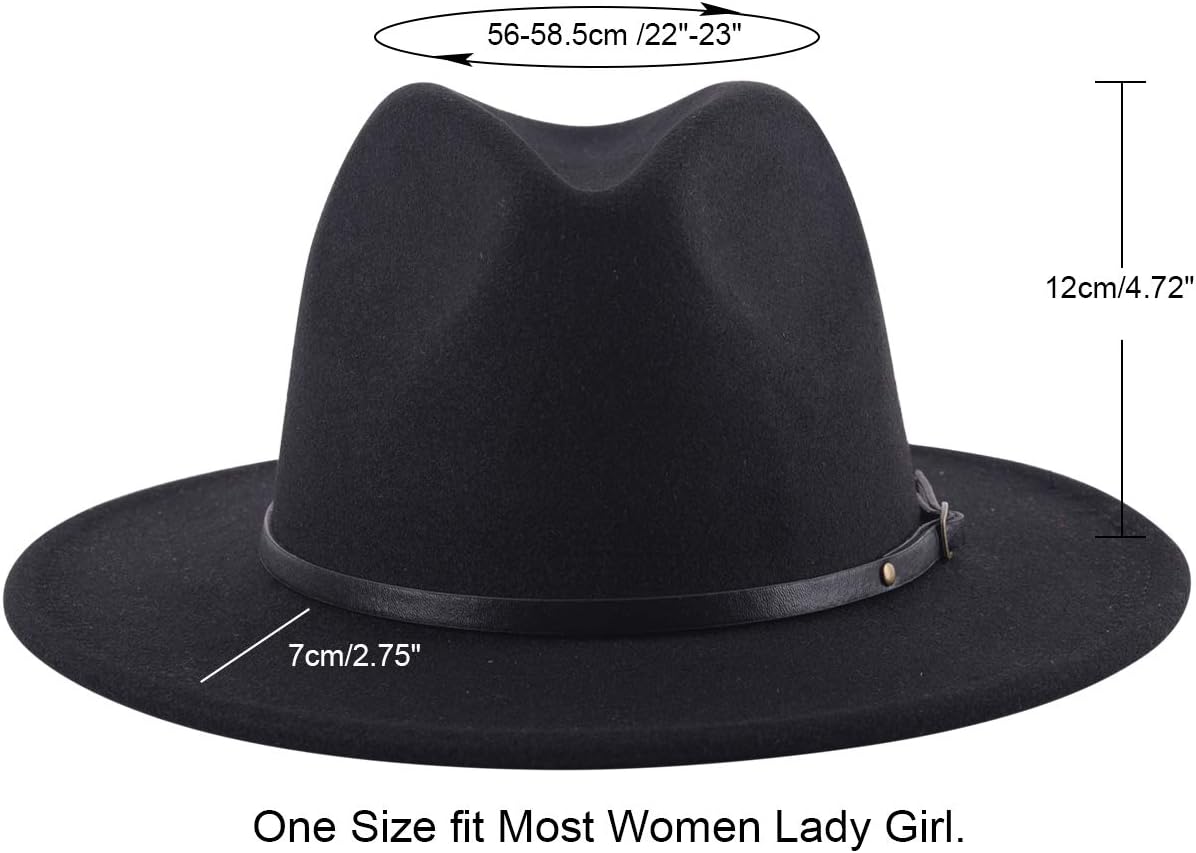
You ordered a hat for an occasion — a Kentucky Derby party, maybe, or a summer wedding — and the outer shipping box arrived without a scratch. You open it. The crown is dented, the brim is creased, and the hat looks like it spent three days under a stack of books. If that’s happened to you, you’re not alone. Across thousands of hat reviews, packaging damage is one of the most emotionally loaded complaints buyers mention — often more than sizing, color accuracy, or even material quality. Here’s the thing most people don’t realize: when a hat arrives crushed inside an intact box, the problem almost never starts with the shipper. It starts with a decision the brand made weeks before your hat left the warehouse. This guide will teach you how to read packaging cues as a quality proxy before you buy, what the internal hardware actually does, and how to make a clear return-or-reshape decision when things go wrong.
| EDITOR'S PICKWallaroo Hat Company Women’s Pe… | Mid-tierLanzom Womens Classic Wide Brim… | Budget pickFURTALK Womens Mens Wide Brim S… | |
|---|---|---|---|
| Material | 100% Wool Felt | Wool | Straw |
| UPF rating | UPF 50+ | — | UPF |
| Packable | ✓ | — | — |
| Adjustable | ✓ | — | — |
| Size | Small | One Size | Medium-Large |
| Brim style | Fedora | Wide Brim Floppy | Wide Brim |
| Price | $75.00 | $27.99 | $25.99 |
| See on Amazon → | See on Amazon → | See on Amazon → |
Why the Box Being Fine Is the Most Revealing Clue
The instinct when a hat arrives damaged is to blame the carrier. It’s understandable. But the telltale sign that carrier mishandling was not the culprit is an undamaged outer box — and that’s exactly the scenario that appears repeatedly in reviews of brands like Lanzom fedoras, where buyers describe crown indentations arriving inside boxes that showed zero external impact.
What’s actually happening: a hat shipped without internal structural support will compress under its own weight during stacking and transit vibration. The outer box doesn’t need to be dropped or crushed for this to occur. The cardboard shell is protecting itself. Without a crown form, tissue stuffing, or a rigid dome insert inside the hat, the crown is just a hollow structure with no resistance against downward pressure.
Vogue’s runway coverage of millinery construction notes that even modestly priced production hats are blocked — meaning shaped over a wooden mold under heat and pressure — which gives them a structural memory. But that memory only holds if the packaging supports the shape during shipping. An internally blocked hat shipped loose inside a generic box is essentially being asked to undo its own construction.
By the numbers:
- A standard USPS Flat Rate box exerts roughly 40–60 lbs of stacking pressure in a sorted facility (per Wirecutter’s fragile-item shipping guide).
- A fur felt hat crown, unsupported internally, can deform permanently under as little as 5–8 lbs of sustained pressure.
- The plastic crown dome insert added to FURTALK hat packaging costs manufacturers an estimated $0.30–$0.80 per unit — a trivial line item against a $40–$120 hat.
That last number is the most important. The decision not to include structural packaging is not a supply chain limitation. It’s a margin decision.
The Crown Dome Insert: What It Does and Why Buyers Notice
If you’ve ordered from FURTALK and read the reviews, you’ve seen a recurring note: buyers specifically praise the plastic dome insert that sits inside the crown. This isn’t just a nice unboxing moment — it’s a functional component. The insert fills the interior crown cavity and distributes pressure outward toward the brim rather than downward onto the top of the crown. It’s the difference between a hat that arrives as a hat and one that arrives as a flattened approximation of one.
The millinery industry has used crown stuffers — tissue, paper cones, wooden forms — for over a century. Harper’s Bazaar’s sun hat coverage consistently notes that how a hat is stored and transported between seasons directly affects whether the block shape holds. The plastic dome version is simply a cost-engineered, repeatable solution to the same problem.
For buyers building sourcing intuition, the presence or absence of a crown form in the product photos or in reviewer unboxing mentions is one of the most reliable proxies for how seriously a brand takes its own hats. A brand that invests $0.50 in a crown dome is signaling, at minimum, that someone in their supply chain has thought about what happens to the hat after it leaves the factory.
Conversely, the FADVES sinamay fascinator case — where buyers report the hat arriving bent after being shipped in an air-filled poly mailer rather than a box — represents the bottom of the packaging quality spectrum. A sinamay fascinator (sinamay is a stiff woven fiber made from the abacá plant, commonly used in occasion headpieces) has almost zero compression tolerance. Shipping one in an envelope is, as one reviewer put it, “unacceptable for a $42 hat.” The price point makes that framing interesting: the expectation of basic structural packaging scales with price, but even at $42, buyers feel the breach.
How to Read a Product Listing for Packaging Signals Before You Buy
This is a practical skill that takes about 90 seconds per listing and will save you a return cycle.
Step 1: Check the review photos, not the product photos. Brand-controlled product shots show hats in ideal conditions. Review photos show what actually came out of the box. Sort reviews by most recent and look specifically for unboxing images. Crown dents, brim warps, and crushed toppers will appear here before they’re reflected in the aggregate star rating.
Step 2: Search the Q&A section for “packaging” and “arrive.” On most major retail platforms, buyers ask how the hat arrives. If a brand’s customer service team answers with “we use a rigid box with interior support,” that’s a real signal. No answer, or a vague one, tells you something too.
Step 3: Look at the shipping weight listed in the product specs. A hat shipped in a purpose-built rigid box with interior padding will typically show a shipping weight meaningfully higher than the hat’s stated weight. A hat whose shipping weight is close to its product weight is likely shipped in minimal packaging.
Step 4: Check for brand-specific fulfillment notes. The Wallaroo Hat Company, for example, has a strong brand reputation — but a repeat Wallaroo buyer gave the Petite Aspen Fedora a 3-star review specifically for poor packing, noting she otherwise loves the brand. This is an important nuance: premium brands are not immune to fulfillment failures. Brand equity doesn’t guarantee packaging quality on every SKU, especially as brands scale their direct-to-consumer operations or shift warehouse partners.
Town & Country’s Derby hat coverage regularly notes that even well-regarded millinery brands can have fulfillment inconsistencies at high-volume moments — race season, wedding season — when pick-and-pack speed takes priority over structural care.
The Return-or-Reshape Decision Tree
When a hat arrives damaged, you’re essentially running a quick triage on two variables: reversibility and value.
Can the damage be reversed at home?
Felt and wool hats — including fur felt fedoras and pressed wool wide-brims — have moderate reshape tolerance. Steam is your tool. Hold the damaged area 6–8 inches above a steaming kettle (or use a garment steamer), work the felt with your hands as it softens, and reblock against a rounded form — a bowl, a balloon, even your own head. The structural memory baked in during blocking can often be partially restored this way. The key word is partially: deep set creases in fur felt, especially on high-grade material, may not fully release, and repeated steaming can affect the finish.
Straw hats — parisisal, toyo, sinamay, and paper braid — are far less forgiving. These materials are woven or wired, not blocked, and a bent brim or crushed crown generally does not steam back cleanly. Sinamay fascinators in particular are almost non-recoverable once creased, because the stiffening agent (a resin sizing applied during fabrication) breaks down at the crease point.
Is it worth returning if the hat is otherwise good?
Run this math explicitly:
- If the damage is steamer-reversible and the hat is otherwise correct (size, color, brim width), the 90 seconds of reshaping is almost always worth the avoided return friction.
- If the damage is structural — a broken wire in the brim, a cracked buckram underlining, a sinamay fascinator with a permanent crease — return it. The hat’s structural integrity is compromised regardless of surface appearance.
- If you’re in a time-sensitive situation (the wedding is in four days), do the steam repair and document the damage with photos for a partial refund request. Most brands and platforms will process a partial credit for shipping damage without requiring the hat back.
Per Wirecutter’s guidance on fragile-item returns, photographing damage immediately upon opening — before any reshaping attempt — is essential documentation for any claim.
Frequently Asked Questions
Can a crushed felt or wool hat be reshaped at home with steam? Yes, with conditions. Fur felt and wool felt respond reasonably well to steam reshaping, especially for crown dents and minor brim warps. Hold the hat over steam, work it gently with your hands, and let it cool on a form. Deep creases and sharp folds are harder to release completely. Straw and sinamay hats are much less forgiving — steam can actually worsen the damage on these materials.
What does a plastic crown form inside a hat actually do? It fills the interior crown cavity to prevent the crown from collapsing inward under stacking pressure during transit. Without it, even modest weight on top of the hat transfers directly to the crown structure. With it, pressure is distributed outward. It’s a simple, low-cost insert that signals the brand has thought about structural protection — reviewers of FURTALK hats specifically name it as a differentiating detail.
Why does a hat arrive dented even when the outer box looks fine? Because the damage happened inside the box, not to it. An undamaged outer box with a dented crown almost always means insufficient internal packaging — no crown form, no tissue stuffing, no structural brace. The carrier didn’t drop or crush the box; the hat compressed under its own weight during stacking and vibration. This is an internal fulfillment decision, not a shipping carrier failure.
Is it worth returning a hat just for shipping damage if the hat itself is otherwise good? It depends on whether the damage is reversible. Steam-responsive damage on felt hats often isn’t worth the return friction. Structural damage — broken brim wire, cracked foundation material, permanent creases in sinamay — is worth returning regardless of how much you like the hat otherwise. When in doubt, document the damage immediately and contact the brand; many will offer partial refunds without requiring a return shipment.
How can I tell from a product listing whether a hat ships with structural protection? Check review photos for unboxing images showing how the hat arrived. Look at the Q&A section for buyer questions about packaging. Compare the listed shipping weight to the hat’s own weight — a meaningful difference suggests a purpose-built box with padding. And search recent reviews for keywords like “arrived,” “dented,” or “packaging.” Brands that invest in structural packaging tend to have buyers who specifically mention it as a positive; brands that don’t tend to have the opposite pattern.
The bottom line for anyone building sourcing intuition in this space: packaging is not a logistics afterthought. It’s a product decision that tells you, before you even open the box, whether the brand believes in what it made. When a $0.50 crown dome is the difference between a hat arriving as designed and arriving as a problem, its presence or absence is one of the clearest quality signals in the whole category.