“Hats don’t suit me.” It’s one of the most common things first-time hat shoppers say — and nine times out of ten, it isn’t true. What’s actually true is that a particular hat, in a particular size, worn at an unconsidered angle didn’t suit them. That’s a fit problem, not a face problem. A hat is a piece of constructed headwear — think of it like a structured garment: a blazer that’s two sizes too large doesn’t mean blazers don’t suit you. The same logic applies here. Proportion — the relationship between the hat’s brim width, crown height, and your own facial structure, shoulder width, and overall frame — is the real variable. Get that right and the hat works. Get it wrong and even a beautiful piece reads off. This guide is about learning to read those variables clearly, so your next purchase lands instead of ending up in the back of a closet.
If you’ve already bought a hat or two and something felt slightly wrong but you couldn’t name it, this is the article that names it for you.
The Measurement You’re Probably Skipping
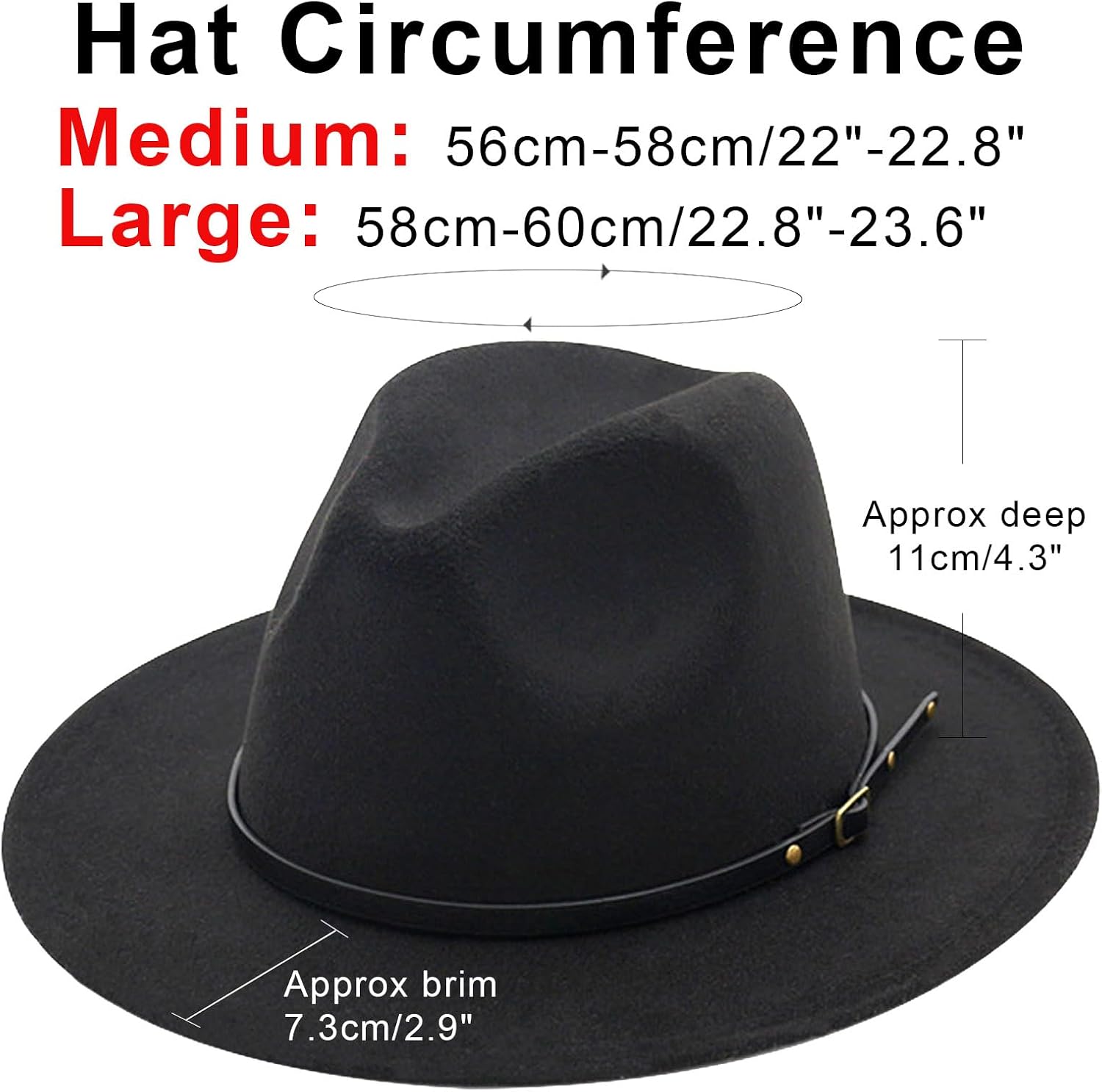
Before proportion, there’s a more basic variable most first-time buyers ignore entirely: head circumference. This is the measurement in inches or centimeters around the widest part of your head — typically about an inch above your ears and across the mid-forehead. Millinery sizing (the formal term for hat-making and hat sizing, from the trade) runs in whole and half sizes: 6⅞, 7, 7⅛, 7¼, and so on. Most ready-to-wear hats sold at the $80–$250 price point ship in S/M/L conversions that flatten these distinctions, which is part of why so many hats feel either loose and clownish or tight enough to leave a red line on your forehead.
By the numbers:
- Average adult head circumference (women): 54–58 cm / 21.25–22.75 in
- Average adult head circumference (men): 56–61 cm / 22–24 in
- One hat “size” step = approximately 1.3 cm / 0.5 in
- A hat sitting more than 1 cm too low or too high will visually distort brim proportion
Harper’s Bazaar’s hat styling coverage notes that a hat worn too loosely tends to tilt forward unprompted, which reads as costume rather than intention. That tilt is the first thing people notice when they say a hat “doesn’t suit” someone — but the tilt is structural, not aesthetic. Fit the head correctly and the tilt disappears.
Measure with a soft tape measure or a piece of string held against a ruler. Do it twice. If you’re between sizes, buy up and use a hatband insert (a thin foam or grosgrain strip that many milliners include or sell separately) to take in the fit. A hat that’s too small cannot be adjusted without damaging the structure; a hat that’s slightly too large almost always can.
The Proportion Variables That Actually Matter
Once fit is calibrated, proportion is where the real decision-making lives. There are three axes worth naming:
1. Brim Width Relative to Shoulder Width
This is the rule most style editors are gesturing at when they say “choose a brim that balances your frame.” Vogue’s styling coverage on hat-wearing consistently returns to the shoulder-to-brim relationship as the primary proportion anchor. The practical read: your brim should not extend significantly wider than your shoulders when viewed from the front. A woman with narrow shoulders wearing a 5-inch brim hat will often feel overwhelmed by it — not because the hat is wrong, but because the ratio is off.
The actionable version:
- Narrow shoulders / petite frame: Brim widths of 2–3.5 inches tend to read as intentional rather than overwhelming. A structured shorter crown adds height without width.
- Average shoulders: 3–4.5 inch brims are the widest reliable zone. Wide-brim sun hats (the Eric Javits or Lack of Color category) work here with the right crown proportion.
- Broad shoulders / taller frames: 4–6 inch brims become available without the scale tipping. This is the frame range where a full-scale Philip Treacy or a wide parisisal (a woven palm-fiber brim material common in luxury sun hats) reads as balanced rather than theatrical.
Who What Wear’s face shape hat guide notes that most people conflate “face shape” rules with what is actually a shoulder-and-height proportion issue — worth keeping in mind before you go down the oval/heart/square face rabbit hole.
2. Crown Height Relative to Face Length
Crown height — how tall the structured upper part of the hat sits — has a direct visual effect on face length. A tall crown (think a classic cattleman or high-blocked felt fedora) visually elongates the face. A low, flat crown (a floppy sun hat, a beret-adjacent shape) shortens it. Neither is inherently wrong; both are tools.
The working decision frame:
- Longer face: Lower to mid crowns (2–3 inches) horizontally interrupt the vertical line and add visual width. Brims that angle slightly downward at the sides — rather than a flat, level brim — also help.
- Round or shorter face: A taller crown (3.5–5 inches) creates upward visual movement and adds apparent length. Asymmetric brims that dip on one side (common in fascinators and occasion hats) draw the eye diagonally, which reads as lengthening.
- Neutral or oval face: The widest range of crown heights work. This is the face proportion that actually suits most hats — which is why stylists at The Cut have noted that when oval-faced clients say “hats don’t suit me,” the culprit is almost always fit or wearing angle, not shape.
3. Wearing Angle — The Variable Nobody Talks About
A hat’s intended wearing angle is set during the blocking process (the stage of hat-making where the felt or straw is shaped over a wooden mold while damp). Most hats are blocked for a specific tilt — typically 0–15 degrees toward the right brow. When you jam a hat straight down over your head centered and level, you’re often fighting the hat’s architecture.
Pick up the hat, hold it at its intended angle, and place it on your head that way. For a structured felt fedora, that often means setting the brim just above the right brow, with the left side sitting slightly higher. For a fascinator (a small, decorative headpiece that clips or pins to the hair rather than sitting on the crown), the angle is almost the whole game — Town & Country’s Derby hat coverage consistently advises positioning a fascinator at the 11 o’clock position above the right eye, secured with pins through the base, rather than centered on top of the head where it reads as an afterthought.
Wearing angle also affects how brim width reads. A brim that looks too wide worn flat can read balanced when the hat is tilted slightly toward the face, because the forward tilt foreshortens the brim visually.
The Tradeoffs by Price Tier (Where Fit Gets Easier)
Here’s the honest calibration most buying guides skip: proportion problems are harder to solve at the entry price tier, and easier at the mid-to-high tier — but not for the reasons most people assume.
At the $28–$80 tier (mass-market straw and felt hats), the primary issue is that sizing is compressed. Most hats ship in S/M or one-size formats with minimal internal structure adjustment. The brim and crown proportions are set for an average model head, not yours. You can still find a hat that works — but you’re doing more filtering, more trying-on, and more accepting that a $40 straw hat won’t be blocked to your specific crown shape.
At the $100–$250 tier (Eric Javits, Lack of Color, Brixton, Janessa Leone), sizing starts to differentiate meaningfully. More of these brands publish measured head circumference ranges per size rather than just S/M/L. The brim constructions are stiffer and hold their designed shape more reliably. Reviewers across multiple platforms consistently note that Janessa Leone hats, for example, run true to their stated circumference sizing in a way that fast-fashion straw hats rarely do.
At the $300–$800+ tier (Gladys Tamez custom work, Eugenia Kim statement pieces, Maison Michel couture), you’re often working directly with a milliner or with a bespoke-adjacent process where your head measurement is built into the hat from the start. Harper’s Bazaar’s coverage of the bespoke millinery market notes that the primary thing a custom hat does that a ready-to-wear hat cannot is solve the wearing-angle problem by design — the milliner blocks the crown to sit correctly on your specific head shape without adjustment on your part.
The tradeoff to name clearly: A $150 hat that fits your head circumference correctly will almost always look better than a $600 hat that’s a half-size too large. Fit is upstream of price. If you’re operating at the mid-range tier and a hat feels slightly off, check the head size before assuming the shape is wrong for you.
The “If X, Then Y” Decision Rules
For the reader with a hat purchase pending — an occasion coming up, a budget in mind, a lingering suspicion that hats just aren’t for you:
If your hat keeps sliding forward: It’s too large. Size down, or add a foam insert strip inside the sweatband before you return it.
If you feel the hat is “too big” but the circumference fits: The crown is too tall for your face length. Try the same silhouette in a shorter crown variant, or tilt the hat more aggressively forward to reduce visual crown height.
If you’ve tried on wide-brim hats and felt overwhelmed: Check whether the brim is wider than your shoulders. If yes, drop to a 2.5–3.5 inch brim before deciding wide brims aren’t for you.
If fascinators looked strange: They were probably centered on your head. Move it to the right side, angle it toward the brow at roughly 11 o’clock, and look again. The Cut’s styling coverage notes this is the single most common fascinator mistake.
If you’ve tried multiple hats and something always feels off but you can’t name it: Measure your head circumference. A large percentage of “hats don’t suit me” cases resolve at this step. Most people have never measured their head for a hat, which means most people have never worn a correctly fitted hat and genuinely know what that feels like.
The hat almost certainly suits you. It just needs to fit.