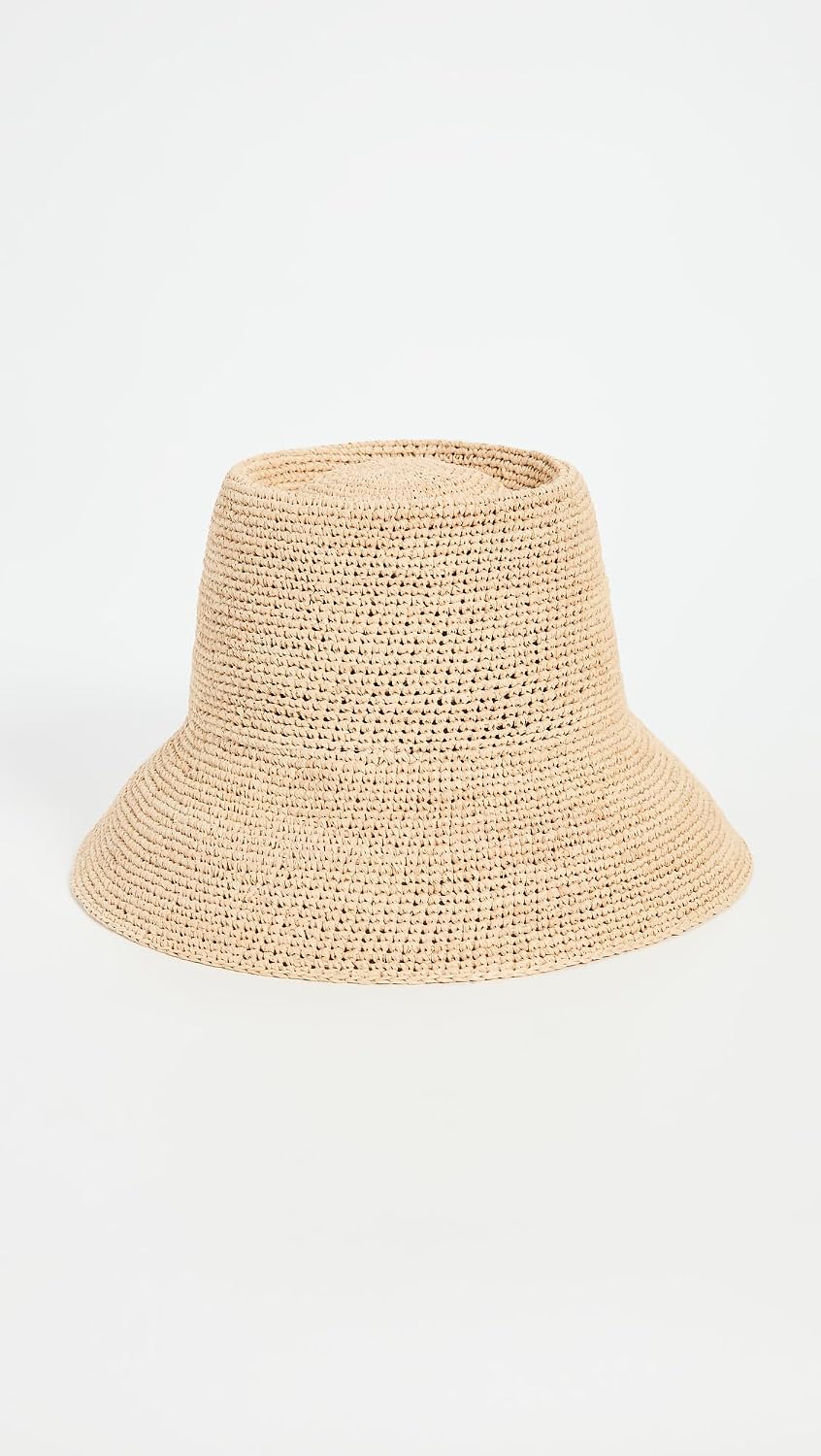
If you’ve been shopping for a good straw hat — the kind you can wear to a summer wedding, a Kentucky Derby party, or honestly just a long Saturday at the farmers market — you’ve probably noticed that straw hats occupy a wildly wide price range. You can find a serviceable straw fedora for $30 at a department store, a solid mid-range option from Lack of Color or Eric Javits for $120–$180, and then there’s Janessa Leone, a Los Angeles–based brand whose signature styles sit mostly between $200 and $320. That gap is real enough to give anyone pause. A straw hat is, at its core, a woven plant fiber on your head. Why would one cost $277 when another costs $38?
This article is here to answer that question honestly — no brand cheerleading, no hand-waving about “quality.” We’ll look at what Janessa Leone is actually selling at that price point, what the construction differences mean in practical terms, and when the math works in your favor versus when a less expensive hat makes more sense. If you’re a first-time hat buyer who just wants a straight answer, you’ll have one by the end. If you’re a stylist or seasoned hat collector weighing whether this brand belongs in your rotation, we’ll go deeper on the tradeoffs.
| EDITOR'S PICKJanessa Leone Women's Tinsley S… | Mid-tierJanessa Leone Women's Sherman S… | Budget pickFURTALK Womens Mens Wide Brim S… | |
|---|---|---|---|
| Brand | Janessa Leone | Janessa Leone | FURTALK |
| Style | Tinsley | Sherman | Panama / Fedora |
| Size | Small | Large | Medium-Large |
| Color | Natural | Natural | Khaki |
| Brim | — | — | Wide brim |
| UPF rating | — | — | ✓ |
| Price | $297.00 | $287.00 | $25.99 |
| See on Amazon → | See on Amazon → | See on Amazon → |
What You’re Actually Paying For: Materials and Construction
The central variable in straw hat pricing is the straw itself — specifically, what kind it is, how finely it’s woven, and whether it was shaped by hand or by machine.
Janessa Leone’s signature hats are made primarily from toquilla straw (the same material used in traditional Panama hats, harvested from the Carludovica palmata plant in Ecuador) and parisisal (a refined, smooth-finish straw made from sisal fibers, often used in mid-to-high millinery for its clean drape and light weight). Both are significantly finer and more flexible than the wheat straw or paper straw you’ll find in mass-market hats. Smithsonian Magazine’s coverage of traditional Ecuadorian hat-making notes that fine toquilla weaves can take artisans weeks to complete; the tightness of the weave directly determines the hat’s breathability, its ability to hold a block shape, and how gracefully it ages.
Janessa Leone publishes construction details that distinguish their hats from the mid-market: hand-finishing on brims and crowns, UPF 50+ ratings on most styles (meaning the weave is tight enough to block more than 97% of UV radiation, per the brand’s published specs), and a proprietary straw blend on several styles that allows the brim to be rolled and packed without permanent creasing. That last feature — packability without damage — is something you simply don’t get in cheaper straw, which is typically too brittle to fold without cracking the weave.
By the numbers:
| Price tier | Typical straw type | UPF rating | Packable? | Hand-finished? |
|---|---|---|---|---|
| $28–$80 | Paper straw, wheat straw | Unrated or UPF 15–30 | Rarely | No |
| $100–$180 | Raffia, basic sisal | UPF 30–50 | Sometimes | Partially |
| $200–$320 (Janessa Leone) | Toquilla, parisisal, proprietary blends | UPF 50+ (published spec) | Yes, most styles | Yes |
| $400+ (Eric Javits, Gladys Tamez) | Fine parisisal, fur felt crossovers | UPF 50+ | Varies | Yes |
The $277 price point lands you squarely in a tier where the construction details are genuinely different — not marginally different.
The Honest Tradeoffs: Where Janessa Leone Wins, and Where It Doesn’t
Here’s where we get into decision-making territory. The craft case for Janessa Leone is legitimate, but it doesn’t automatically mean it’s the right hat for every buyer or every situation.
Where the investment holds up:
Owners across aggregated reviews — pulled from editorial coverage at Who What Wear, Vogue, and Harper’s Bazaar, all of which have featured Janessa Leone in summer hat roundups — consistently flag longevity and packability as the brand’s strongest real-world differentiators. A $38 paper straw hat bought for a beach trip in 2024 is frequently a trash-bin casualty by 2025; the weave loosens, the brim warps in humidity, and the interior sweatband degrades. Reviewers who’ve owned Janessa Leone styles over multiple seasons report the opposite pattern — the hats hold their block (the three-dimensional shape set during manufacturing), the finish stays clean, and the packability means the hat actually travels instead of sitting in a closet.
The UPF 50+ spec matters more than casual buyers often realize. Dermatologists cited in Elle’s sun protection coverage have noted that loosely woven straw provides far less UV protection than it appears to, because light passes through the gaps between fibers. A tighter, finer weave at UPF 50+ is meaningfully different for anyone wearing a sun hat for actual sun protection rather than pure aesthetics.
For occasion dressing — specifically Kentucky Derby, bridal luncheons, and summer galas — the silhouette quality also justifies the price. Town & Country’s Derby hat coverage has named Janessa Leone among its recommended brands for the reason that the brim holds its curve under outdoor conditions where cheaper straw goes limp or asymmetrical in humidity.
Where the investment is harder to justify:
If your use case is genuinely one-time — a single outdoor wedding you’re attending in June, in a climate where you won’t be outdoors for extended periods — the durability premium is paying for a feature you may not use. A $120–$150 Lack of Color or Brixton straw in this scenario is more defensible, and both brands produce clean, well-finished work at that tier.
Janessa Leone’s palette and silhouette vocabulary also tends toward the minimal and architectural — clean brims, muted naturals, restrained trim. The Cut’s coverage of the brand describes the aesthetic as “quiet luxury for the outdoor set,” which is accurate but also means buyers seeking bold color, elaborate trim, or fascinator-adjacent drama should look at different brands entirely. Philip Treacy, Maison Michel, and Eugenia Kim occupy the statement-piece tier for a reason.
There’s also a size-and-fit caveat. Janessa Leone hats are produced in a limited head-circumference range (most styles fit a 56–58cm head circumference, per the brand’s published sizing), and the brand does not offer bespoke sizing. Buyers outside that range — particularly those with smaller or larger heads — may find fit adjustments compromise the clean lines the hat is designed for. A custom milliner like Gladys Tamez, working in a comparable or higher price range, will block to your exact measurements.
How This Brand Sits in the Broader Market
Janessa Leone is genuinely occupying a specific and coherent niche: technically superior straw construction at a price point below couture, with a design vocabulary that appeals to the understated-luxury buyer rather than the occasion-maximalist. That’s a real value proposition, not marketing language.
The comparison point most buyers should be making isn’t Janessa Leone versus a $40 hat at a department store — the construction differences there are so significant that it’s nearly an unfair comparison. The meaningful comparison is Janessa Leone versus Eric Javits’ Squishee line (roughly $150–$220, packable, well-constructed) and versus the lower end of custom millinery.
Eric Javits’ Squishee hats use a proprietary synthetic fiber that is extremely packable and very light, but they lack the natural-fiber texture and the visual depth that toquilla and parisisal provide. Reviewers who’ve owned both consistently describe the Janessa Leone as “richer-looking” and “more substantial” in person — though the Javits wins on weight and packability in high-volume travel scenarios. Vogue’s sun hat coverage has recommended both brands in the same roundups, distinguishing them primarily by use case rather than declaring a hierarchy.
Against the entry point of custom millinery — think a hand-blocked sinamay or parisisal hat from an independent regional milliner at $300–$450 — Janessa Leone holds up on materials but cedes ground on uniqueness, fit customization, and the specific occasion-wear architecture that a trained milliner builds into a hat for a particular event and wearer. If you’re dressing for a high-visibility occasion (a notable Derby box, a formal bridal role, Royal Ascot), the custom millinery argument strengthens considerably above the $300 threshold.
The Decision Rule
If you’re sitting with a purchasing decision right now, here’s how to run it:
If X is “I need a hat I’ll wear regularly across two or more seasons, outdoors, in genuine sun, and I want it to travel well” — then the $277 Janessa Leone is defensible and probably the right call. The construction quality means you’re not re-buying in year two, the UPF rating is doing real work, and the packability means the hat actually integrates into your wardrobe rather than sitting in a box.
If X is “I need a hat for one specific occasion and I don’t have a strong hat habit yet” — spend $100–$150 on a Lack of Color or Eric Javits, wear it well, and revisit the Janessa Leone tier once you’ve confirmed that hats are a real part of how you dress.
If X is “I’m buying for a high-profile occasion where the hat is a primary style statement” — the Janessa Leone is a beautiful hat, but you’ve crossed into territory where a custom or couture piece from a milliner who can build for your specific silhouette, scale, and occasion dress code is worth the price difference.
If X is “I’m a stylist or wardrobe consultant sourcing for clients with moderate-to-strong hat budgets” — Janessa Leone belongs in your toolkit as the strong, reliable mid-luxury option. It photographs well, travels well, and communicates deliberate taste without the fragility of more elaborate occasion pieces. Stock the knowledge; recommend it to clients whose aesthetic runs toward the architectural and restrained.
The $277 price tag is honest for what it is. The question was never whether it’s worth the materials — it is. The question is whether the materials match your actual use case. Now you have the frame to answer that for yourself.