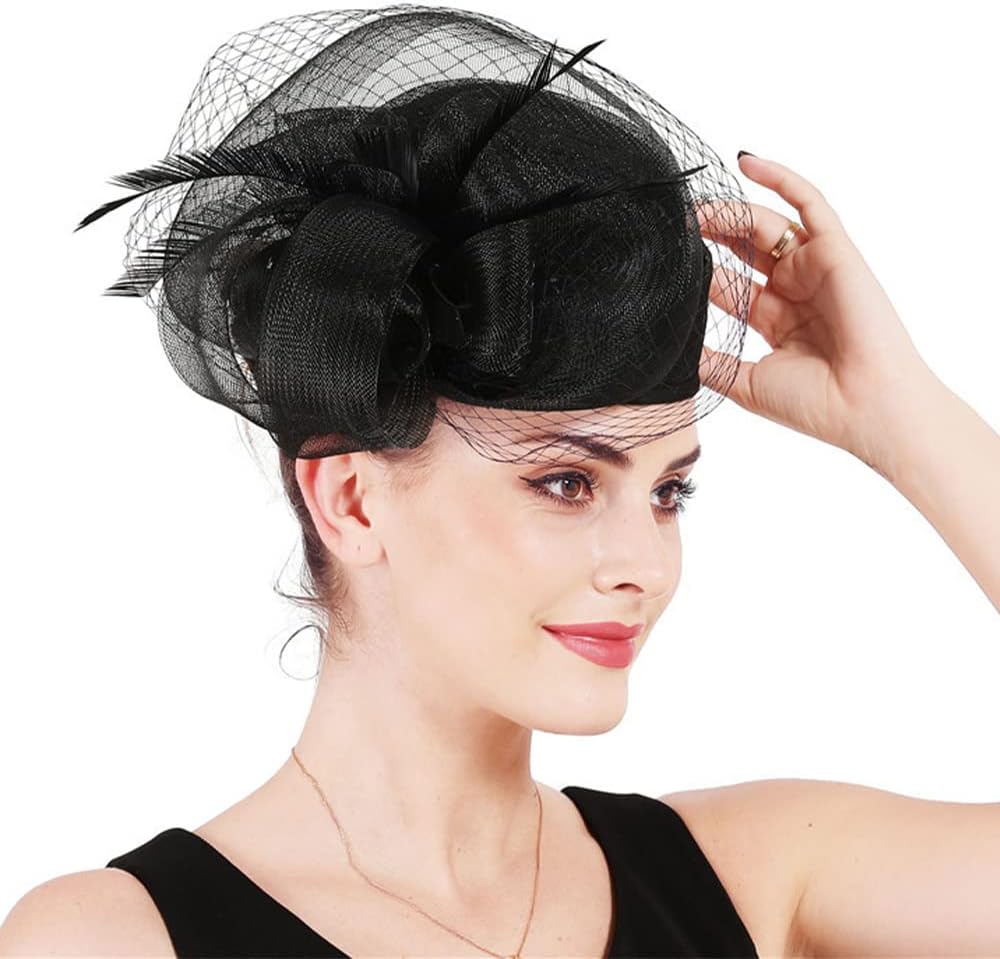
If you’re shopping for a Kentucky Derby hat — either for the actual race in Louisville or a Derby party — you’ve probably noticed the price range is almost comically wide. You can spend $19 on a mesh fascinator from a party supply site, or $600 on a hand-blocked sinamay sculpture from an independent milliner. The word “sinamay,” by the way, refers to a woven fabric made from the stalks of the abacá plant (a relative of the banana tree, native to the Philippines); it’s the single most common material in Derby millinery, prized because it can be stiffened, shaped into almost anything, and holds color beautifully. “Mesh” or “crinoline” is a stiffer synthetic netting — it looks similar in a product photo but behaves very differently on your head. So before you click buy: this guide breaks down exactly where price makes a real difference in Derby headwear, where it doesn’t, and how to make the call based on your specific situation. Whether you’re buying your first fascinator or curating a rack for clients, the decision rules here will save you from an expensive mistake — or from overspending when you didn’t need to.
| EDITOR'S PICKHIMESPORT Retro Sinamay Veil Fl… | Mid-tierBABEYOND Tea Party Fascinator K… | Budget pickBABEYOND Tea Party Fascinator H… | |
|---|---|---|---|
| Style | Sinamay veil bowler | Pillbox fascinator | Pillbox fascinator |
| Mount | — | Headband | — |
| Color | Black | White | Nude pink |
| Feather detail | ✓ | — | — |
| Veil | ✓ | — | — |
| Size | Medium | — | One size |
| Price | $66.90 | $42.99 | $26.99 |
| See on Amazon → | See on Amazon → | See on Amazon → |
Why the Material Gap Is Real (and the Photo Gap Is Deceptive)
The core problem with Derby hat shopping online is that a $23 synthetic mesh disc and a $67 hand-shaped sinamay piece can look almost identical in a product listing photo. Both are round. Both come in blush or black or white. Both have a ribbon and maybe a feather. The difference only shows up in person — and by then you’re at the track.
Smithsonian Magazine’s overview of Derby hat history notes that the tradition of elaborate millinery at Churchill Downs dates to the event’s Victorian origins, when natural straw and blocked felt were the only real options. That material legacy matters because sinamay, parisisal (a twisted straw fiber, slightly more refined than sinamay), and blocked felt all share one property that synthetic mesh does not: they respond to humidity, pressure, and heat in a controlled way. A well-made sinamay hat can be gently re-shaped if it gets crushed in transit. Synthetic mesh crinoline, once bent or creased, stays bent.
Vogue’s breakdown of the Derby dress code is blunt about one thing: the hat should hold its architecture for the duration of the event. That’s roughly six hours of outdoor wear, variable weather, and a lot of photo moments. Reviewers who’ve worn budget crinoline pieces consistently report the same issue — the brim droops by mid-afternoon, the coq feathers (that’s the curly rooster plumage you see on most Derby hats) come loose because they’re glued rather than wired, and the headband attachment feels insecure. None of this happens dramatically — it creeps up on you.
The honest summary: If the hat is going on your head for more than two hours in outdoor conditions, synthetic mesh is a gamble. Sinamay at any quality level is a safer structural bet.
The Price Ladder, Broken Down Honestly
Here’s where the money actually goes at each tier — and what you’re giving up when you step down.
$15–$35: Synthetic Mesh Fascinators and Party-Supply Pieces
What you get: A silhouette. The color you need. Something that photographs fine.
What you don’t get: Structural integrity past the second hour, any meaningful millinery craft, or the ability to re-wear this next year without visible degradation.
When it’s the right call: Derby watch party at a friend’s house. You need pink, you need it Tuesday, and you’re never wearing it again. No judgment — this is a legitimate use case. Town & Country’s Derby hat coverage has noted that watch-party dressing operates under completely different stakes than Churchill Downs attendance, and the $25 option genuinely serves that context.
When it’s the wrong call: Actual race attendance, mother-of-the-bride adjacency, any event being professionally photographed.
$40–$80: Entry Sinamay — The Sweet Spot Most People Underestimate
This is the tier this article title is defending, because it’s the one most shoppers skip.
At $50–$80, you start seeing genuine sinamay construction — the fabric is stiffer, the brim is wired (meaning a thin wire runs the perimeter and holds the shape), and the millinery trim (ribbon, feathers, florals) is sewn rather than hot-glued. Owners of hats in this range consistently report that they survived rain, wind, and multi-hour wear without structural failure. The hat you see in the morning is roughly the hat you’re wearing in the winner’s circle photo.
Harper’s Bazaar’s Derby shopping features have repeatedly flagged this tier as the value inflection point — the zone where craft catches up to occasion demand. The aesthetic ceiling is lower than it is at $150+, but the floor is dramatically higher than the mesh tier.
The tradeoff: Color options narrow. Silhouette options narrow. You’re buying proven construction in a more limited range of shapes.
$90–$180: Mid-Tier Branded Sinamay and Parisisal
Brands like Betmar, San Diego Hat Company, and Scala sit here. At this level, you’re getting sinamay or parisisal (the finer, slightly silkier cousin) with more considered proportions, better blocking (the process of shaping the material over a wooden mold, which creates more defined curves and structure), and trims that are both sewn and wired.
Who What Wear’s trend coverage of Derby 2025 noted that wide-brim silhouettes in the 16–20 inch range have dominated recent races — and reliably executing a wide brim without structural sag requires the kind of internal blocking that only starts appearing reliably at this price point.
The tradeoff you should know: A lot of hats at $100–$150 are still factory-produced overseas, just in better factories than the $25 tier. You’re buying better materials and better quality control, not handcraft. That’s fine — but it’s worth naming.
$200–$500: Designer Sinamay, Eric Javits, Lack of Color Wide-Brims
At $200+, you begin to encounter hats where a named designer or atelier is making real silhouette decisions, not just running a commodity shape in new colorways. Eric Javits’ squishee construction (a proprietary flexible braid that packs flat and springs back) has developed a genuine following among women who travel to races, because it survives a carry-on without trauma. Lack of Color’s wide-brim sinamay pieces at $180–$280 consistently earn high marks from owners for color saturation and brim proportion.
The honest price justification here is twofold: you’re paying for aesthetic differentiation (these hats read as intentional from across the room) and for re-wear value. A $250 Javits hat worn to four occasions over two years has a lower cost-per-wear than a $60 hat worn once.
The tradeoff: You’re not yet in bespoke territory. Lead times at this tier are retail, not custom. If you need an unusual size or a specific color match to a dress, this tier may frustrate you.
$500–$800+: Hand-Blocked Bespoke and Couture-Adjacent
Philip Treacy, Gladys Tamez, Eugenia Kim, and independent milliners working in hand-blocked felt or couture sinamay live here. At this level, the price buys provenance, fit consultation, and genuine one-of-a-kind construction. Harper’s Bazaar has covered the Philip Treacy atelier process specifically, noting that each piece begins with a personal conversation about silhouette proportion relative to the client’s face shape — something no retail hat can offer.
When this tier is worth it and when it isn’t:
If you’re a bridal stylist or wardrobe consultant sourcing for a client who will be photographed extensively, the $600 hat is meaningfully better because the construction reads differently on camera — the blocking is crisper, the silhouette holds its integrity in every frame, and the piece has a story. If you’re a first-time Derby attendee who just wants to look great at Churchill Downs, this tier is probably not your decision right now. The $67 sinamay will serve you well.
By the Numbers
| Price Tier | Construction | Wear Duration | Re-wear Value |
|---|---|---|---|
| $15–$35 | Synthetic mesh, glued trim | 2–3 hours reliably | Low to none |
| $40–$80 | Sinamay, wired brim, sewn trim | Full-day outdoor | Moderate (2–3 seasons) |
| $90–$180 | Parisisal/sinamay, blocked shape | Full-day, travel-friendly | Good (3–5 seasons) |
| $200–$500 | Designer sinamay, proprietary construction | Multi-occasion | High |
| $500+ | Hand-blocked bespoke | Heirloom | Potentially indefinite |
The Fit Variables That Change the Math
One thing the price ladder can’t fully account for: fit. A $67 sinamay hat on the wrong head size will look worse than a $23 mesh piece that happens to sit correctly. The standard adult hat size runs 56–58cm in circumference (measured around the widest part of the head, just above the ears). Many fashion hats ship in a single size with an interior band that can be adjusted by about 2cm in either direction using foam inserts.
If your head measures outside the 55–60cm range, that changes your options at every tier. Below $100, fit customization is essentially unavailable. The $200+ tier starts to offer size options; bespoke milliners offer full fit consultation. This is the single most underrated reason to spend more, and the reason the “just buy the cheap one” logic breaks down for buyers at the size distribution’s edges.
The Decision Rule
Here’s the if/then framework, stated plainly:
-
If you’re attending a watch party or low-stakes occasion, wearing the hat for under three hours, and you own a specific color that’s hard to find in sinamay: then the $23–$35 mesh is defensible. Buy it, enjoy it, don’t expect a second season.
-
If you’re attending an actual race, garden party, or event where you’ll wear the hat for four-plus hours and be photographed: then the $50–$80 sinamay tier is your floor. Don’t go below it. The structural difference is real.
-
If you’re a repeat Derby attendee building a hat wardrobe, or a stylist sourcing for clients: then the $150–$300 range is where your cost-per-wear math works out most favorably. You’re buying re-wearability and aesthetic range.
-
If the occasion is a high-profile event — race day with a box, bridal, gala — or if provenance and fit matter: then bespoke is worth exploring. The $600 hat isn’t about vanity; it’s about a piece that’s built for your head, your dress, and your specific moment.
The sinamay wins at $67 not because it’s luxurious — it isn’t — but because it delivers what the occasion actually requires. The mesh at $23 looks similar in a thumbnail and fails you where it counts. Knowing that difference, and knowing exactly when it matters, is what moves you from hat buyer to hat person.