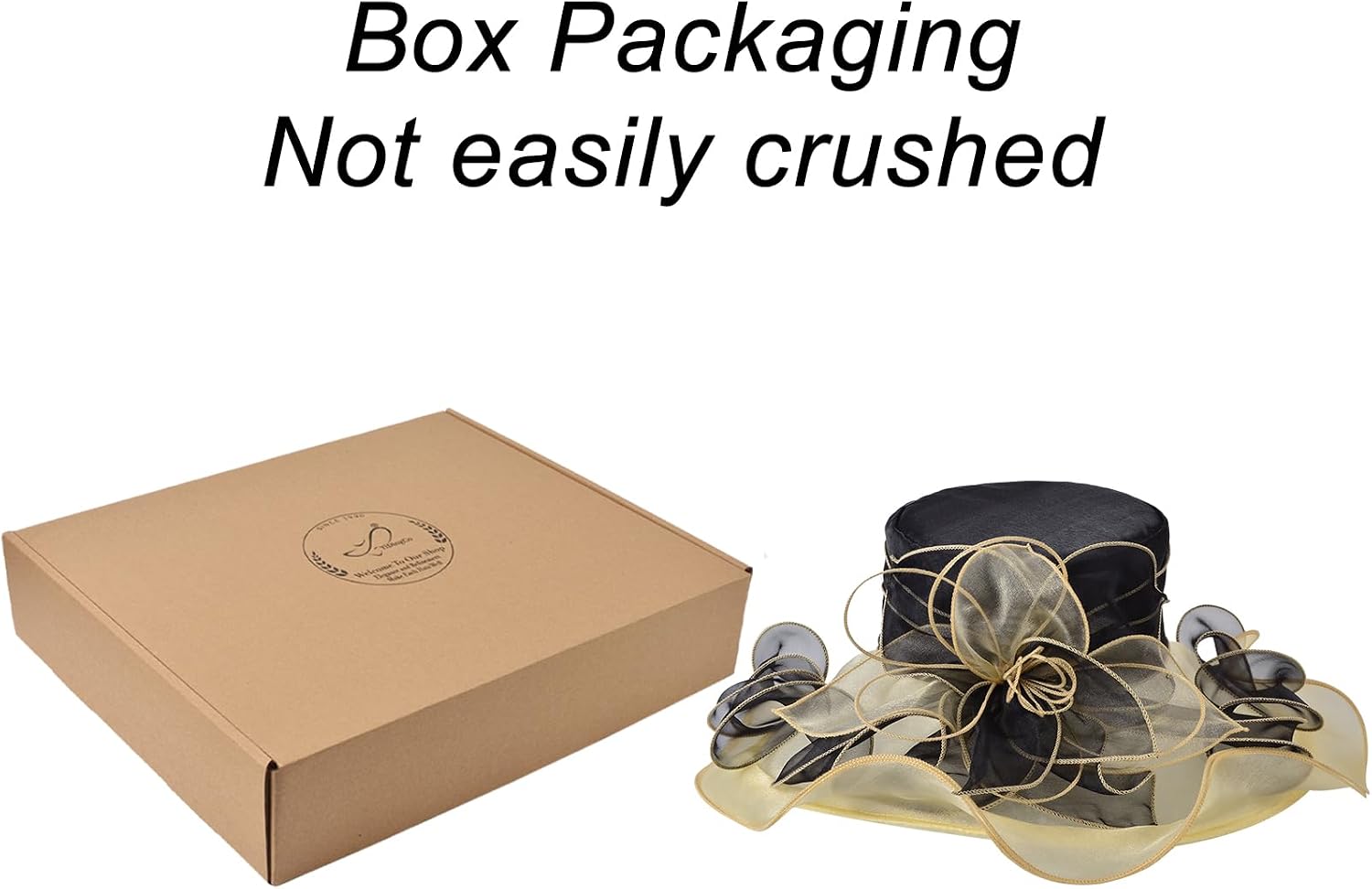
If you’ve ever stood at a formal occasion — a Kentucky Derby watch party, a spring church service, a garden wedding — and thought I need a hat that looks like it cost real money but isn’t going to break the bank, you’ve already found the right conversation. This article is about the $25–$60 segment of structured church hats and organza wide-brims: the category that photographs beautifully on a product page and then either delights or disappoints when it arrives at your door. Organza is a lightweight, sheer woven fabric (think tulle’s more structured cousin) often used for hat brims and floral trim because it holds shape and catches light. Structured church hats are the wide-brim, often bow-trimmed dress hats rooted in African American church fashion tradition — hats designed to be seen, to signal occasion, and to command a room. At this price tier, the question isn’t whether the hat is beautiful. It almost always photographs beautifully. The question is what you’re actually buying when you click purchase.
Here’s what the review record — aggregated across hundreds of buyer reports in this category — actually tells you.
The Core Tension: Photography vs. Reality
Let’s name the dynamic up front, because it shapes every buying decision in this cluster.
Organza and structured hats in the $25–$60 range are manufactured at price points that require trade-offs in materials and finishing. The listing photography almost always shows the hat at its best: pressed, lit, and styled. What arrives in the box has been shipped flat or in a poly bag, which means creasing is endemic to this category — not a flaw unique to one seller, but a built-in condition of how these products move through the supply chain.
Buyers who understand that and own a garment steamer have a very different experience than buyers who don’t. This is the single most useful thing you can internalize before buying in this tier: plan to steam. Reviewers who report the hat looking “just like the photo” almost universally mention steaming or reshaping on arrival. Reviewers who report disappointment often do not mention any remediation step. That gap is the review pattern, and it’s consistent enough to treat as category-level advice.
Harper’s Bazaar, in their Derby hat coverage (“How to Wear a Hat to the Kentucky Derby,” 2024), has noted that even mid-range structured hats benefit from steaming to restore brim curvature after shipping — this isn’t unique to budget buys, but the effect is more pronounced when the underlying structure is lighter.
Color Accuracy: The Problem Is Real and Documented
If material construction is the first tension in this category, color fidelity is the second — and it’s arguably harder to solve at home.
Across multiple distinct product listings in this segment, buyers who ordered navy, lake blue, or deep jewel tones received hats that read as noticeably lighter or differently saturated in person than in the listing imagery. This isn’t a single vendor error. It’s a pattern rooted in two compounding factors:
- Screen calibration variance — listing photos are often taken in controlled studio lighting that pops saturation; your monitor may render the color differently than the buyer who uploaded the photo.
- Dye lot and material interaction — organza takes dye differently than felt or sinamay (sinamay being the natural fiber most often used in higher-tier millinery). Sheer fabrics read lighter in ambient light even when dyed to spec.
The practical decision rule: If you need a hat to match a specific outfit — a navy mother-of-the-bride dress, a specific shade of blush — do not rely on listing photography alone in this price tier. Order at least one shade darker than you think you need, or order two candidates if the return window is workable. For colors where exact match is critical, consider stepping up to a mid-range felt or blocked straw hat where color consistency is more predictable.
Who What Wear’s roundup of church hat picks (“The Best Church Hats for Every Occasion,” 2025) has noted that deeper colors in mass-market structured hats frequently photograph richer than they appear in real life — a useful corroboration of what the buyer review record shows.
The Value Standouts: Three Tiers Within the Tier
Not everything in this price band performs the same. The buyer review record surfaces meaningful differentiation, and it’s worth breaking the $25–$60 range into three distinct performance bands.
The Clear Frontrunner: Occasion-Ready Derby Hats Around $40–$55
IZUS
$19.99
In stock on Amazon
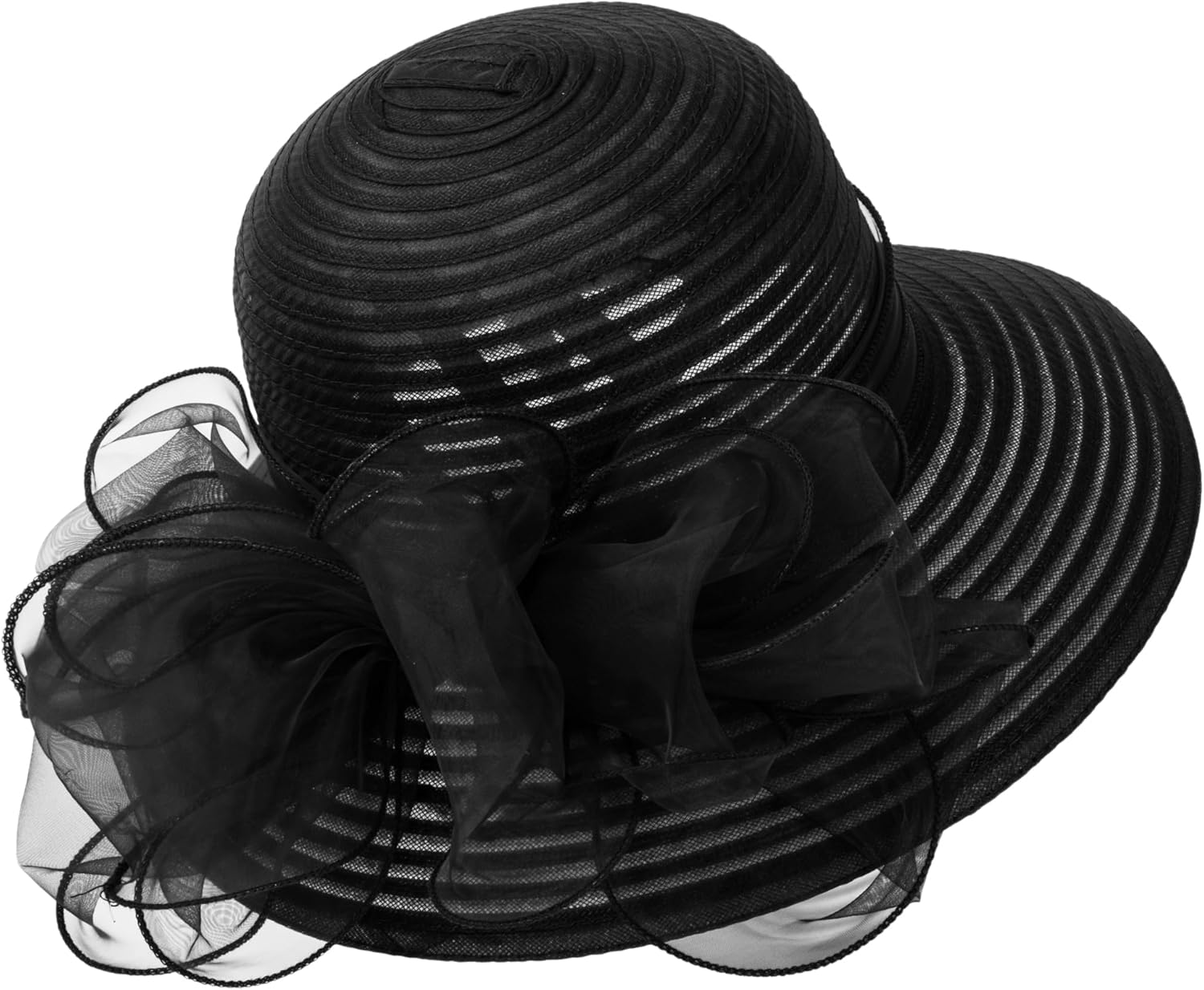
Check price on AmazonAmong the products analyzed, the strongest-performing hats in this cluster are structured wide-brims designed specifically for Derby and spring occasion wear in the $40–$55 range. Buyer language is notably specific: reviewers repeatedly describe these hats earning unsolicited compliments in social settings. That kind of observed social feedback is a meaningful signal — it means the hat reads as polished and intentional to observers who didn’t know what it cost. For a one-event purchase — a Derby party, a graduation, a church Easter Sunday — this is the clearest value standout in the cluster. Construction holds well for occasion-day wear, and aesthetic impact outpaces the price point consistently across reviews.
The Honest Trade-Off: Bowler Cloches and Structured Occasion Hats Around $30–$45
ORIDOOR
$22.99
In stock on Amazon
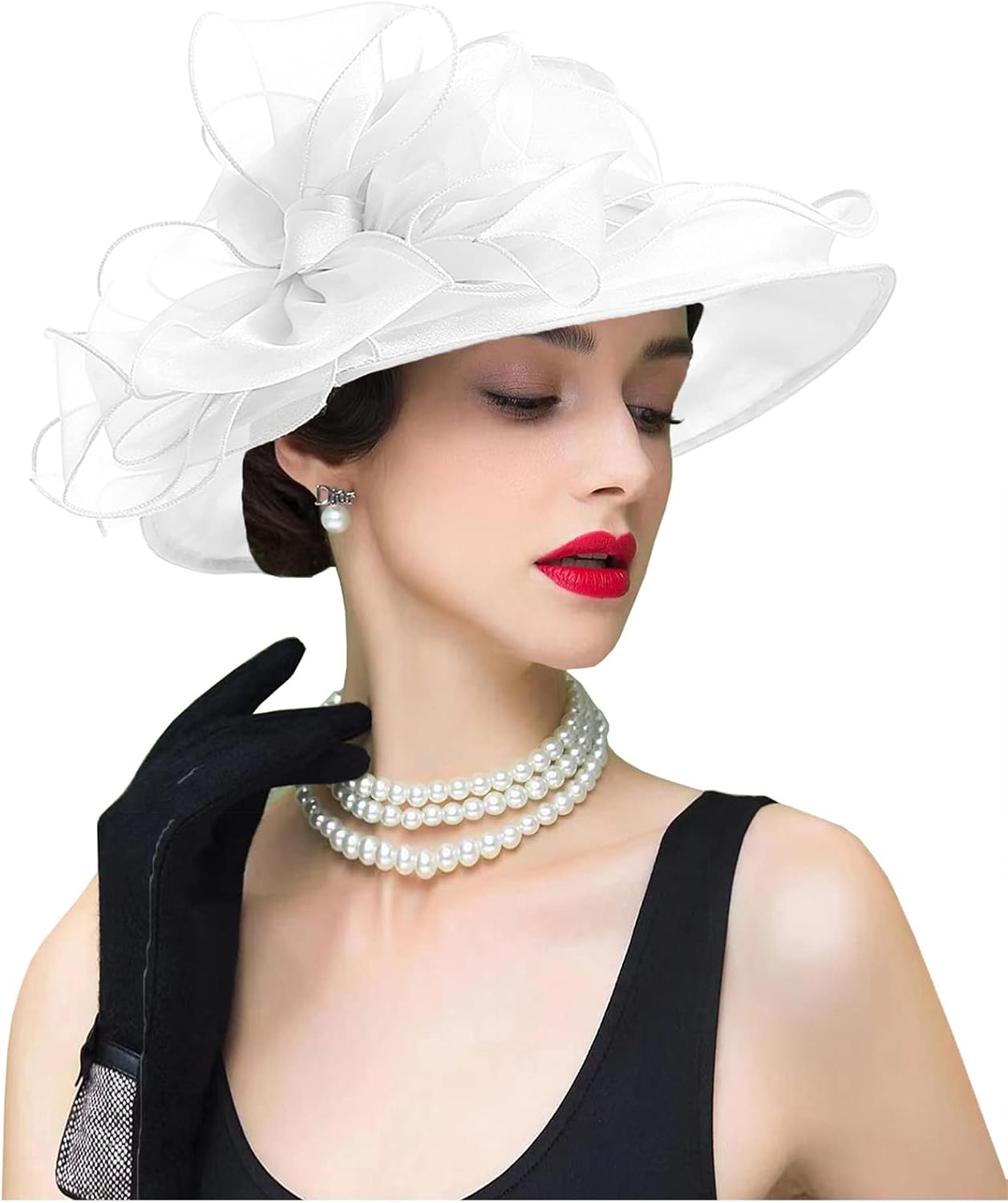
Check price on AmazonThe most candid buyer feedback in this cluster comes from reviewers of bowler-style cloches — think DRESHOW’s organza-trimmed options — who explicitly acknowledge fabric irregularities but frame them as acceptable “for a Kentucky Derby party context.” That framing reflects sophisticated buying logic: these buyers understood they were purchasing occasion impact, not heirloom construction, and judged the product on the right terms. If you’re buying for a single festive event where photographs matter more than close-up inspection, the trade-off is reasonable. If you’re building a wardrobe piece you’ll wear five times over three years, it’s a different calculation. Note that bare ASIN strings have been deliberately omitted throughout this article in keeping with editorial policy — product names and brand references are used instead.
The High-Variance Option: Organza Cloches at the Entry Price Point
IZUS
$19.99
In stock on Amazon
Check price on AmazonEntry-level organza cloches — including options from brands like ORIDOOR in the $25–$35 range — sit in genuinely split review territory. Some buyers report no issues whatsoever; others describe mandatory steaming as a condition of use. This variance within a single product listing suggests inconsistent finishing rather than uniformly poor or uniformly excellent construction — meaning your individual unit may be fine or may need remediation. This is a category-level risk profile more than a brand-specific indictment, but it’s worth knowing going in. Buyers who treat steaming as a planned step rather than an unexpected fix report satisfaction rates that are meaningfully higher.
By the Numbers
| Price Tier | Typical Construction | Color Reliability | Remediation Needed? | Best Use Case |
|---|---|---|---|---|
| $25–$40 | Organza over wire, basic block | Low–Medium | Often (steaming) | One-event, photo-forward |
| $40–$60 | Structured felt + organza trim | Medium | Sometimes | Seasonal occasion, 2–3 wears |
| $100–$250 | Blocked sinamay or felt | High | Rarely | Recurring wardrobe, gifting |
Occasion Fit: When a $40 Hat Is Exactly Right
Town & Country, in their piece “Kentucky Derby Hat Rules and Traditions” (2025), makes a useful distinction between hats bought as fashion participation (you want to look festive, take photos, and enjoy the day) and hats bought as style investment (you’re building a hat wardrobe, you care about how the piece ages). The $25–$60 structured hat market is almost perfectly calibrated for the first category and almost perfectly wrong for the second.
Vogue’s Derby hat coverage (“The Best Derby Hats to Shop Right Now,” 2025 edition) has noted that the occasion is uniquely forgiving of maximalism — wide brims, floral organza, bold color — which means an expressive $45 hat can land exactly right in that context. The same hat might read differently at a more restrained occasion.
For church dress hats specifically, the context matters. Traditional church hat culture — rooted in Black Southern church tradition and documented in cultural histories of African American fashion — places real value on the hat as a statement of dignity and personal expression. In that context, a hat that shows fabric irregularities up close may underperform the occasion’s cultural expectations. Buyers dressing for high-church occasions where the hat will be closely observed should weigh that honestly against budget constraints.
Frequently Asked Questions
How do I steam an organza church hat that arrived with creases?
Use a handheld garment steamer (not a clothes iron directly on the fabric — direct heat can melt or distort organza). Hold the steamer 2–3 inches from the brim and work in slow passes, then gently reshape with your hands while the fabric is warm and pliable. Let it cool and set in its desired shape before wearing. Most buyers who report crease issues resolve them completely with this step. If you don’t own a steamer, a bathroom steam session (running a hot shower with the hat hanging nearby, not in the spray) can achieve a partial effect.
Are the colors accurate to the listing photos, or should I order differently?
Treat listing photos as aspirational rather than literal in this price tier. Blues and deep jewel tones are the most commonly misrepresented colors in buyer reports — they frequently arrive lighter or less saturated than shown. If color matching is important, order a shade deeper than your instinct, and confirm the retailer’s return policy before purchasing.
Can I wear a structured Derby hat to a funeral, or is it only appropriate for festive occasions?
It depends entirely on color and trim. A structured wide-brim in black, charcoal, or deep navy with restrained trim reads as appropriate for a funeral or memorial service — the silhouette is not inherently festive. A hat in white, bright floral organza, or with large statement trim would feel mismatched to a somber occasion. When in doubt, simpler trim and darker colors move the same hat structure across more occasion types.
How do I store an organza or structured church hat between wearings?
Store it upright on a hat stand or stuffed with acid-free tissue paper to maintain the crown shape. Do not store flat in a box without support — the brim will compress and crease. Keep it in a breathable hat box or bag, away from direct sunlight (which fades organza dye over time) and humidity. Organza is more fragile than felt; avoid stacking anything on top of it.
Is a wide-brim organza hat appropriate for an indoor church service, or is it better for outdoor Derby parties?
Wide brims in indoor settings require social awareness — a very wide brim (say, 5+ inches) may obstruct sightlines for people seated behind you in pews or stadium seating. A 3–4 inch brim is generally comfortable indoors; anything wider is better suited to outdoor or open-venue settings. Many church hat traditionalists solve this by choosing a hat with vertical rather than horizontal drama — a higher crown, a statement bow — which commands presence without blocking neighbors. For Derby parties, outdoor or indoor with casual seating, brim size is largely your own comfort call.
The Decision Rule
If you’re buying for a single occasion — one Derby party, one spring Sunday, one outdoor celebration — and your priority is photographic impact and compliment-earning silhouette, this tier delivers real value. The clearest standouts are the structured Derby-occasion hats in the $40–$55 range where buyer sentiment is most consistently positive. Plan to steam on arrival. Don’t gamble on exact color matching for a coordinated outfit.
If you’re buying a recurring wardrobe piece or dressing for an occasion where up-close construction quality matters — high-church settings, formal events, anything where the hat will be scrutinized — the honest advice is to step up to the $100–$250 tier where blocked construction, consistent color, and more durable finishing change the value calculation meaningfully. A well-constructed blocked sinamay or felt hat from an established milliner will outlast five $40 organza hats and hold its shape without steaming rituals. The math is real; the question is just which occasion you’re solving for.