If you’re staring at a suitcase and wondering whether to roll your hat or just stuff it in and pray — this article is for you. A “packable hat” sounds simple in theory, but the word is doing a lot of heavy lifting depending on which material the hat is made from. Paper straw, synthetic weaves, and cotton-linen blends each have genuinely different tolerances for compression, heat, and sweat — and the difference between a hat that bounces back from a squished carry-on and one that arrives looking like a sad taco is mostly a materials question. What follows is a frank comparison of all three, built from aggregated buyer reports, published editorial coverage, and pattern-matching across real-owner reviews.
| EDITOR'S PICKSolbari Women’s Ultra-Wide Cott… | Mid-tierFURTALK Womens Beach Sun Straw… | Budget pickFURTALK Womens Sun Straw Hat Wi… | |
|---|---|---|---|
| Material | Cotton Linen | Straw | Straw |
| UV Protection | UPF 50+ | UV Protection | UPF 80 |
| Brim | Ultra-Wide | Foldable | Wide |
| Adjustable | ✓ | — | — |
| Ponytail Hole | ✓ | — | — |
| Price | $79.00 | $25.99 | $23.39 |
| See on Amazon → | See on Amazon → | See on Amazon → |
What “Packable” Actually Means — And Why the Word Is Doing Too Much Work
Let’s draw a line that most product listings quietly blur. A foldable hat can bend in half without cracking. A truly packable hat can be crumpled, stuffed, compressed, or sat on — and recover its shape without human intervention beyond a quick shake. That’s a meaningful distinction when you’re deciding whether to gate-check your bag.
Paper straw hats sit in the middle of that spectrum. Owners of well-reviewed paper straw packable hats consistently report folding them into quarters for carry-on travel with full shape recovery. One reviewer described folding a hat in half twice — not a careful roll, an actual second fold — with no permanent creasing. That’s a stronger packability story than the category usually gets credit for. But the operative word is “paper straw”: the weave has memory, not infinite forgiveness. Stuffed aggressively into a checked bag under three pairs of shoes? Reviewers don’t promise that’s a safe experiment.
Synthetic hats — typically woven from polyester-based braid or nylon-infused straw lookalikes — are the most geometrically forgiving. They’ll compress into almost nothing, survive the bottom of a duffel, and spring back reliably. What they trade away is breathability, and we’ll get to that shortly.
Cotton-linen blends behave differently again. They pack compactly, don’t crack the way stiff straw can, and hold a roll well — but they’re not as snap-back resilient as synthetic. They need a light reshaping after compression, more like a linen blazer than a rain jacket.
The practical decision frame: If you’re a chronic over-packer who will genuinely stuff your hat rather than protect it, synthetic is your safest bet. If you’re a careful packer willing to give the hat its own corner of the bag, paper straw gives you the better-looking, better-breathing result.
Heat and Breathability: Where Natural Fibers Win Clearly
This is where the comparison gets honest in a way that product listings rarely are.
Buyers who leave candid long-wear reviews of synthetic packable hats — including hats that receive strong overall ratings — include a recurring observation: synthetic hats can feel uncomfortably hot during extended wear in extreme heat. That admission tracks with what material science tells us. Synthetic weaves trap warmth against the scalp; natural fibers wick and release it.
Elle’s coverage of sun-protection hats (“Sun Protection Hats That Are Actually Stylish,” Hearst Magazines) specifically calls out linen’s natural ability to absorb moisture and release it quickly — which is why a linen hatband against your forehead reads as “cool” even in direct sun. That detail explains why the better-designed paper straw hats pair a paper outer shell with a linen inner forehead band. The combination isn’t an accident; it’s a deliberate answer to the breathability gap that an all-paper or all-synthetic construction leaves open.
Buyers drawn to high-linen-content sun hats often report making a considered switch away from synthetic after experiencing heat discomfort in the field. An 80% linen hat isn’t a casual preference — it’s a material decision made by someone who has worn synthetic hats in sustained heat and knows the difference.
By the numbers:
- Natural fiber (paper straw, linen, cotton): passive breathability — air circulates through the weave
- Synthetic weave: blocks UV effectively but traps heat; multiple owner reports flag discomfort at 90°F+ after three to four hours
- Cotton-linen blend: middle ground — breathes better than synthetic, packs more forgivingly than rigid paper straw
If your travel involves sustained outdoor activity — hiking, beach walking, outdoor markets — natural fiber is the clear recommendation. Synthetic earns its place in lower-intensity situations: a shaded resort terrace, a quick transfer between sites, an afternoon that won’t run to six hours.
Material-by-Material Comparison
Paper Straw: The Breathable Frontrunner With Limits
Paper straw is the most aesthetically traditional of the three materials, and it earns its reputation for airflow. The open weave lets heat escape continuously, making it the right call for all-day beach or resort wear. Wirecutter’s sun hat coverage (“Best Sun Hats,” The New York Times Company) consistently identifies brim width as the primary protection variable — and paper straw hats are most commonly cut in wider brims, which pays dividends for nose, cheek, and neck coverage.
The limitation is structural. Paper straw has memory, not rubber-band resilience. Careful folding — into halves or quarters, with the weave oriented along its natural flex point — produces reliable shape recovery. Careless compression does not. For travelers who pack with precision, paper straw is a genuine option. For travelers who stuff everything in at midnight, it carries real risk.
A well-constructed paper straw hat designed for travel typically includes: a linen or cotton inner sweatband (not bare straw against skin), a brim of at least three inches, and explicit folding guidance from the brand. Those three details together separate a travel-capable paper straw hat from a pretty hat that will not survive your carry-on.
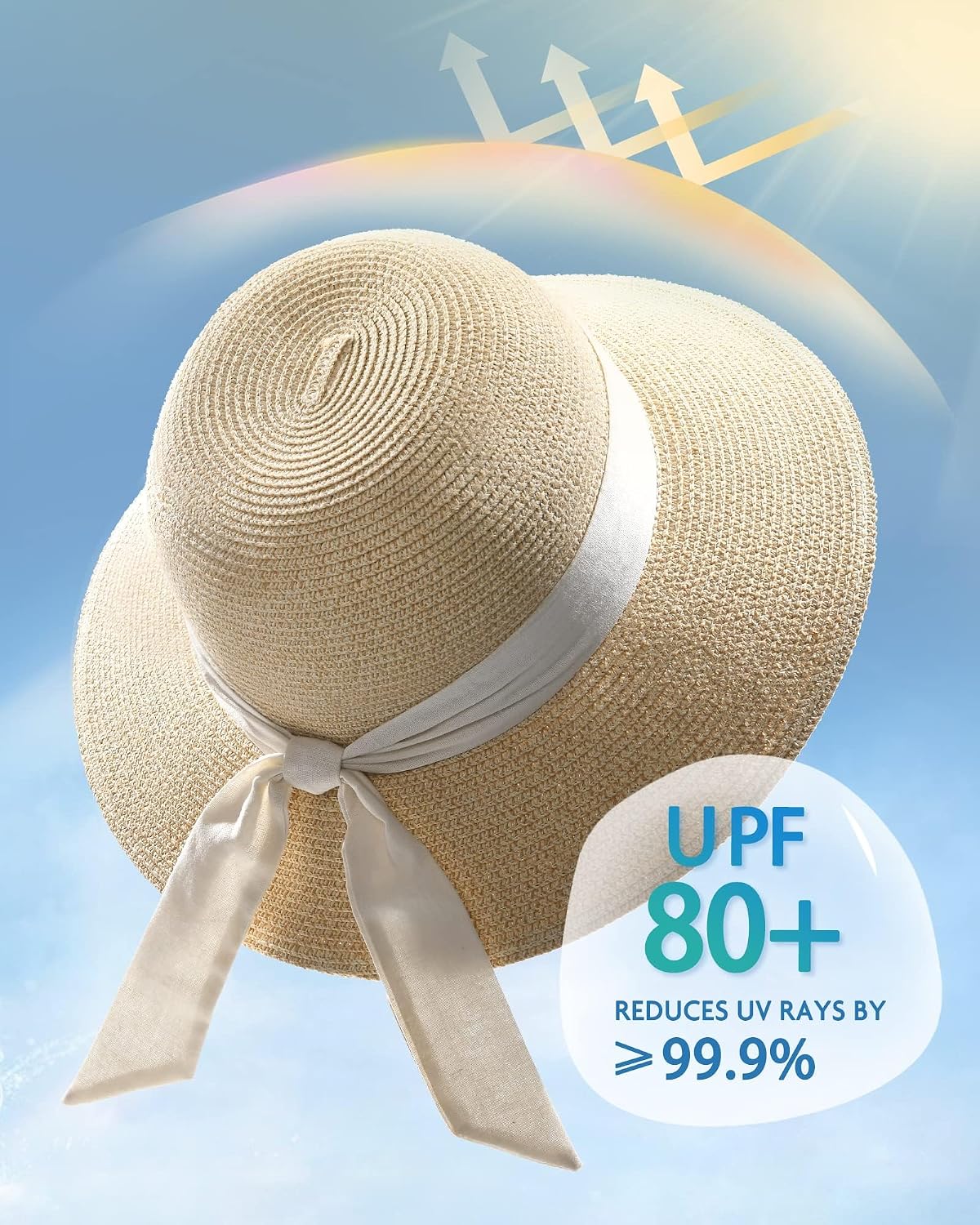
FURTALK
$25.99
In stock on Amazon
Check price on AmazonSynthetic Weave: The Compression Champion With a Heat Trade-Off
Synthetic packable hats — polyester braid, nylon-based straw lookalikes, and similar constructions — win the compression test cleanly. They roll into almost nothing, live at the bottom of a duffel without complaint, and spring back with a shake. Vogue’s roundup of summer sun hats (“The Best Sun Hats for Every Summer Activity,” Condé Nast) notes that synthetic weaves increasingly mimic the visual texture of natural straw while delivering reliability that natural fibers can’t match under rough handling.
The honest limitation is heat. Synthetic materials block UV effectively — many carry UPF 50 ratings or higher — but they don’t breathe the way open natural weaves do. Reviewers who flag heat discomfort are not outliers; they’re describing a material property. For low-to-moderate intensity use in managed environments, that trade-off is acceptable. For sustained outdoor activity in real summer heat, it’s a problem.
Synthetic is the right answer when: your hat is going to get stuffed, your itinerary is unpredictable, and you’d rather sacrifice some breathability than arrive with a misshapen hat.
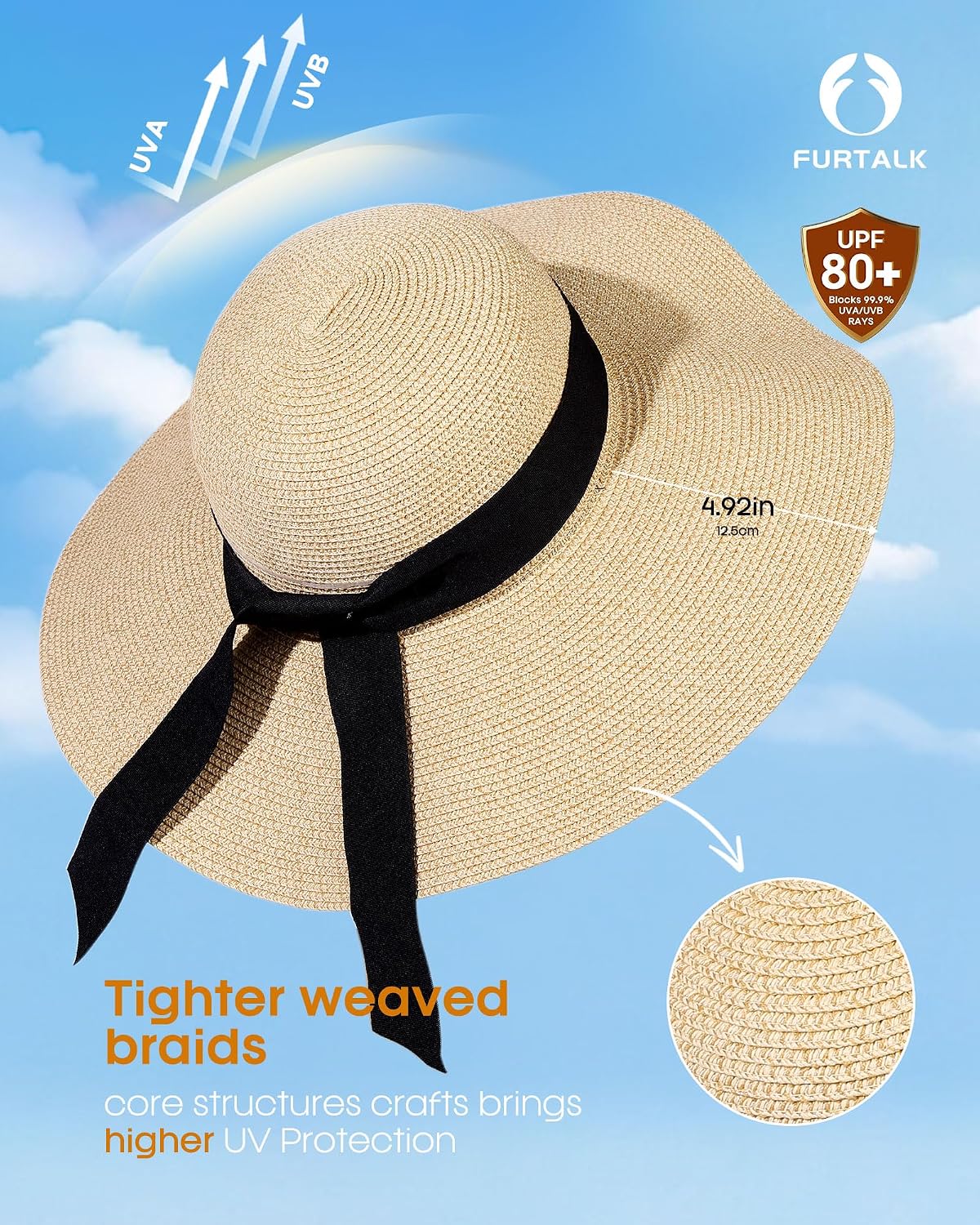
FURTALK
$23.39
In stock on Amazon
Check price on AmazonCotton-Linen Blend: The All-Rounder for Mixed-Use Travel
Cotton-linen blends occupy a genuinely useful middle position, and they’re underrepresented in most packable hat comparisons. They breathe materially better than synthetic — linen’s moisture-wicking properties extend to blended fabrics — and they compress without the cracking risk that paper straw carries. They don’t snap back as instantly as synthetic, but they reshape easily with one hand.
Harper’s Bazaar’s travel hat coverage (“Best Packable Hats for Travel,” Hearst Magazines) identifies cotton-linen blends as a strong choice for travelers whose trips mix active and leisure days — exactly the traveler who needs the hat to perform on a morning hike and still look presentable at an outdoor dinner. A medium brim width in cotton-linen is the most versatile geometry: wide enough to provide meaningful face coverage, short enough to stay on in light wind without a chin cord.
The bucket silhouette in cotton-linen is particularly well-suited to active days: lower profile, wind-resistant, easy to compress into a daypack pocket, and quick-drying if caught in a brief rain.
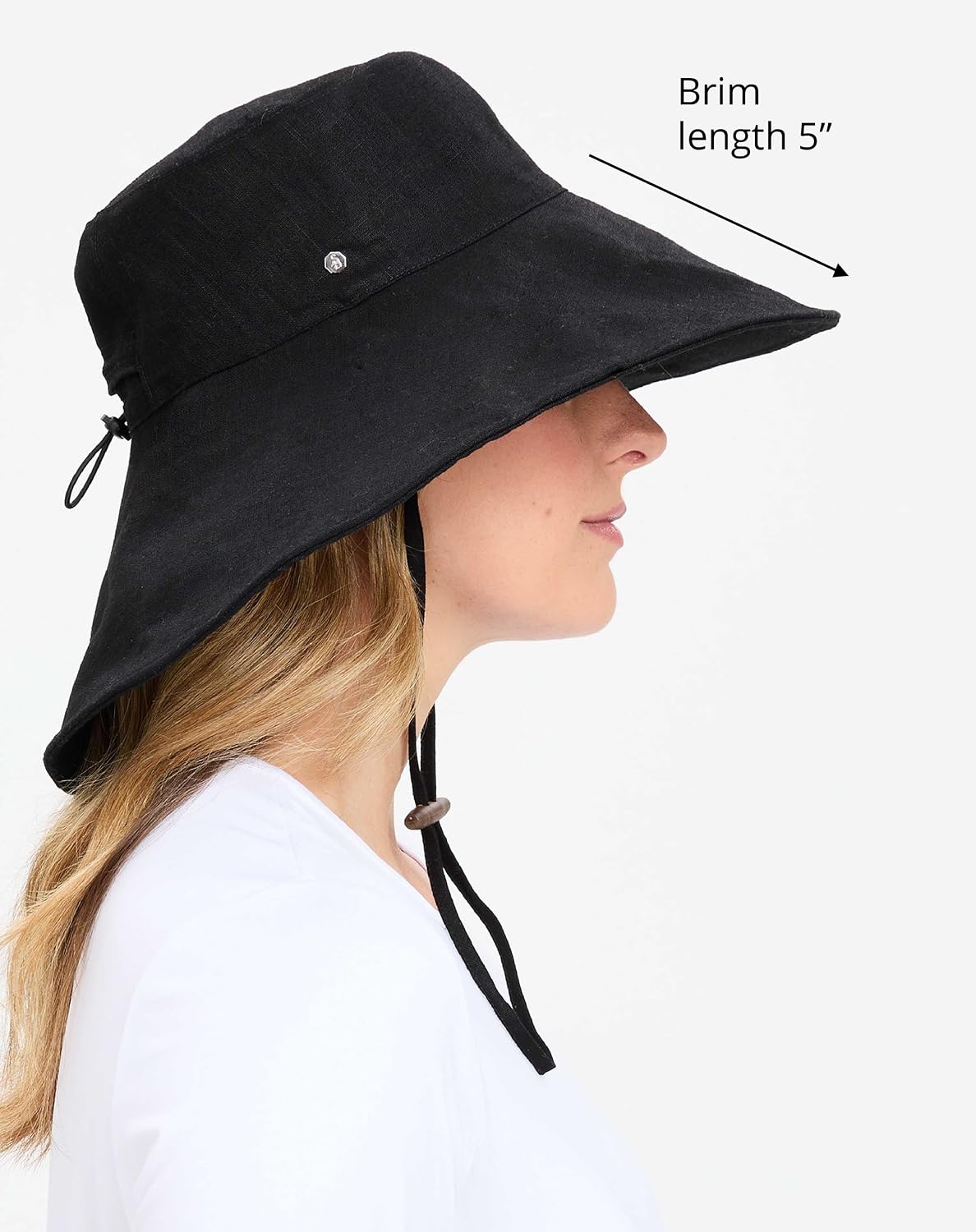
Solbari
$79.00
In stock on Amazon
Check price on AmazonUPF Ratings and Real Sun Protection: Does the Number Matter?
UPF (Ultraviolet Protection Factor) is the textile equivalent of SPF — it rates how much UV radiation the fabric blocks. UPF 50 blocks roughly 98% of UV rays. UPF 80 blocks approximately 98.75%. Harper’s Bazaar’s coverage of sun-protective clothing (“Best Packable Hats for Travel,” Hearst Magazines) notes that the real-world difference between UPF 50 and UPF 80 is minimal for most people — both ratings represent excellent protection by any dermatological standard.
Where it becomes meaningful: people with photosensitive conditions or a history of skin cancer are often advised by their physicians to layer every marginal gain. For that population, the extra fraction of a percentage point matters. For everyone else, chasing UPF 80 over UPF 50 is a nice-to-have, not a necessity — and it shouldn’t be the deciding factor if UPF 50 gets you the material and packability profile you actually need.
The clearer sun protection variable in a hat is brim width, not UPF rating. Wirecutter’s sun hat coverage (“Best Sun Hats,” The New York Times Company) consistently flags that a three-inch or wider brim protects the nose, cheeks, and neck in a way that no fabric rating can replicate on a narrower hat. Build your shortlist around brim first, UPF second.
Design Details That Actually Travel Well
The design details that separate a genuinely travel-ready packable hat from a hat that merely claims the label are consistent across materials:
- Interior sweatbands made of linen or cotton, not bare synthetic. A linen band against the forehead manages sweat and stays comfortable across a full day of wear in a way that a polyester band does not.
- Chin cords or adjustable drawstrings for beach and active use. Wind is the enemy of a wide brim, and a cord is lighter and less conspicuous than a hat pin.
- Detachable bag clips. A clip that lets you attach the hat to a bag strap when you’re not wearing it is the kind of practical detail that prevents you from sitting on the hat at a café or leaving it on a bus.
- Packability instructions included in the box. A brand that tells you how to fold, roll, and store their hat is a brand that has thought about the post-purchase experience.
Resort Lounging vs. Active Use: Different Hats, Different Asks
For resort lounging — pool deck, beach chair, outdoor dining, slow coastal walks — you want maximum breathability, UV coverage, and style staying power. Paper straw and cotton-linen both serve well here. The brim can be wider, the weave can be more open, and packability is a moderate concern since you’re probably toting the hat onto the pool deck rather than compressing it into a bag.
For active use — hiking, market days, extended walking tours, beach activities that involve real movement — the calculus shifts. You want a hat that stays on, doesn’t funnel sweat into your face, and tolerates being shoved into a pack when you duck into a building. A bucket hat silhouette often wins here: lower profile, no brim to catch wind, easier to compress. A clip system for attaching the hat to a bag is specifically useful for go-in, come-out active itineraries. Cotton-linen in a bucket or shorter brim beats a wide paper straw brim for anything that involves sustained physical effort.
The if/then decision rule:
- If resort lounging is your primary use and breathability is your top concern → paper straw with a linen sweatband
- If active travel is your primary use and packing simplicity wins → synthetic or cotton-linen bucket silhouette
- If you’re doing both on the same trip → cotton-linen blend at a medium brim width is the most honest all-rounder; it breathes well enough for the beach and compresses reliably for the trail
Frequently Asked Questions
What is the difference between a hat that is foldable and one that is truly packable? A foldable hat can bend without cracking and will recover when you gently reshape it. A truly packable hat survives being compressed or stuffed and recovers with minimal effort, often just a shake. Synthetic hats are more reliably “truly packable.” Paper straw hats that carry the packable label are generally foldable-to-packable depending on how aggressively you treat them.
Will a paper straw hat recover after being stuffed in a checked bag? It depends on construction and how well the bag is packed around it. Owners report strong recovery after controlled folding — quarters, or half-twice — but checked bag stuffing with weight on top is a riskier test. If your checked bag is tight, give the hat a protective position near the top or use a packing cube as a buffer. Paper straw is more resilient than it looks, but it is not indestructible.
Are cotton-linen sun hats actually cooler to wear than synthetic ones? Yes, meaningfully so in sustained heat. Natural fibers wick moisture and allow air to move through the weave. Synthetic materials block UV effectively but trap warmth. Multiple owners of synthetic hats specifically flag heat discomfort after several hours in direct sun — an honest limitation that even strong-overall-rating reviewers mention. For all-day outdoor wear, natural fiber is the right call.
Does UPF 80 provide meaningfully better protection than UPF 50 for sensitive skin? For most people, the practical difference is small. UPF 50 blocks approximately 98% of UV radiation; UPF 80 blocks approximately 98.75%. For people with photosensitive conditions or medical vulnerability to sun exposure, that margin has real value. For general use, UPF 50 is excellent protection, and brim width remains a larger variable in overall face and neck coverage.
Can I fold these hats wet after a beach day? Not recommended for any of the three materials. Wet paper straw is significantly more vulnerable to permanent creasing. Wet cotton-linen can stretch and lose shape if stored compressed. Synthetic is the most tolerant of damp folding, but even synthetic hats benefit from drying in shape before being packed. Let any hat air dry before compressing it for storage or transport.
Which packable hat is best for active use versus resort lounging? For active use: a cotton-linen or synthetic bucket silhouette with a chin cord or clip system — lower profile, stays on, packs tight. For resort lounging: a paper straw or cotton-linen wide brim, ideally with a linen sweatband, prioritizing breathability and UV coverage over compression tolerance. If your trip mixes both, a cotton-linen medium brim is the most honest all-rounder.