If you’ve been eyeing one of those wide-brimmed straw cowboy hats — the kind with a brim you can curl, press, and reshape to your preference — you’re looking at what the hat world calls a shapeable brim style. That just means the brim is woven or treated in a way that holds a pinched, curled, or flat position when you work it with your hands, rather than springing back immediately to its factory shape. Most of the hats in this conversation are made from woven straw (natural or synthetic plant fibers braided into a structured crown and brim), which gives them their signature breathability and lightweight feel. They sit comfortably in the “fashion western” category — less about ranch utility, more about looking genuinely good at a country concert, rodeo, beach trip, or outdoor festival without the costume-y stiffness of cheaper novelty hats. This guide is for buyers who already know they want one of these and are trying to figure out how much to spend and what the real tradeoffs are at each price point.
What the Price Ladder Actually Looks Like Right Now
The shapeable straw cowboy market in 2026 stacks into three fairly honest tiers:
| Tier | Typical Price Range | What You’re Buying |
|---|---|---|
| Entry | $25–$55 | Fashion western aesthetic, synthetic or low-grade natural straw, basic band |
| Mid | $55–$120 | Better weave density, improved internal structure, some natural fiber content |
| Investment | $150–$300+ | Graded natural straw (parisisal, toyo), hand-finished edges, serious provenance |
This article focuses on the entry-to-mid range because that’s where most of the buyer confusion lives — and where the gap between “fine for one festival” and “hat I’ll actually wear repeatedly” is sharpest. Harper’s Bazaar, in its western trend reporting (“Western Trend Report: How the Cowboy Hat Became a Year-Round Staple”), notes that the cowboy silhouette has moved firmly into year-round wardrobe territory since 2023, which means buyers are increasingly asking whether a $35 hat will hold up across multiple occasions, not just one afternoon.
The short answer: sometimes yes, sometimes emphatically no. Here’s how to tell the difference.
The Variables That Separate a $35 Hat from an $85 One
Weave Density and Fiber Type
This is the biggest functional differentiator. Who What Wear’s straw hat buying guide (“The Straw Hat Guide: What to Know Before You Buy”) is explicit on this point: tighter weaves — fewer gaps between fibers — hold a reshaped brim better and resist distortion longer. Loosely woven hats may feel similar in hand but will relax and lose their shaped curl faster, especially in humidity.
Synthetic straw (usually polypropylene or paper-wrapped wire) is standard at the entry tier. It’s not inherently bad — it handles light moisture better than pure natural straw — but it tends to have a slight plastic sheen and a stiffer, less organic drape. Natural straw fibers (wheat, toyo, paper braid) cost more to source and process, and that cost shows up in the price.
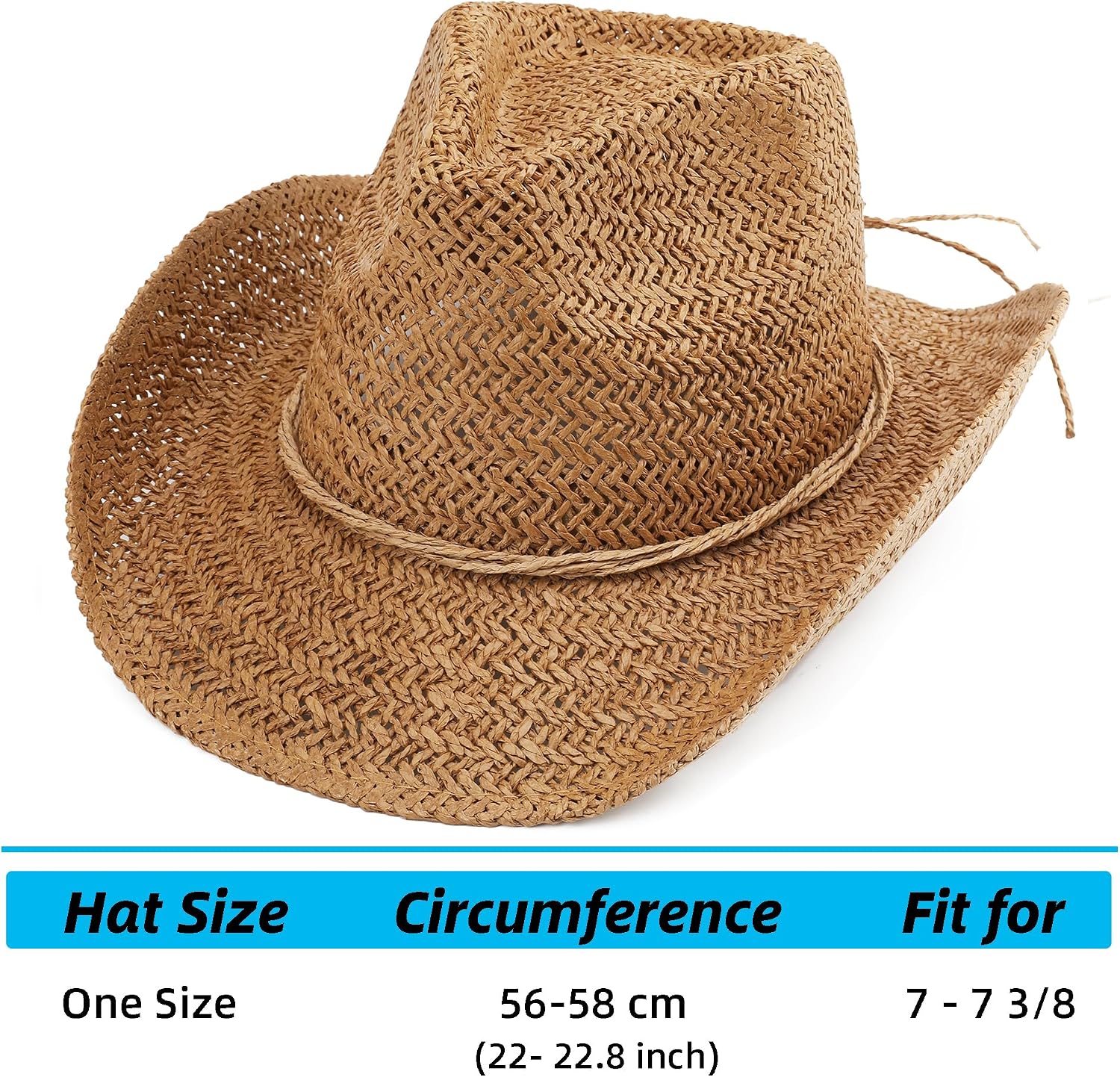
H3: Entry-Tier Pick — The Foeran Shapeable Straw Cowboy Hat
BESOOGII
$28.99
In stock on Amazon
Check price on AmazonReviewers of the Foeran shapeable straw cowboy hat consistently praise the weave quality as above-average for the price point, calling out the lightweight, breathable feel even in direct sun — which is the tell for a reasonably tight natural-blend weave. Owners note it doesn’t trap heat the way some synthetic-heavy hats do. Packaging arrives on a plastic dome form, which is a meaningful signal: manufacturers who ship on dome forms are building hats designed to hold crown structure rather than self-support. Reviewers specifically call out good packaging, noting the hat arrived without the crown dents that plague loosely packed alternatives.
One important caveat: the Foeran runs small. Reviewers flag that head circumference trends toward the maximum end of the listed range, and buyers with head measurements above roughly 23 inches should size up rather than trusting the label.
BESOOGII
$28.99
In stock on Amazon
Check price on AmazonH3: Mid-Tier Pick — The WQWOVRVO Shapeable Western Hat
Foeran
$35.88
In stock on Amazon
Check price on AmazonThe WQWOVRVO style earns similar breathability notes to the Foeran across aggregated reviews, with owners reporting it doesn’t trap heat the way synthetic-heavy hats do. Where it distinguishes itself at the mid-tier is in brim memory under real outdoor conditions — Town & Country, in its Derby and festival hat coverage (“Derby and Festival Hat Guide”), notes that brim memory becomes noticeable exactly when you need it most: outdoor events where you’re moving, sweating, and not babying the hat. The WQWOVRVO’s combination of fiber stiffness and internal sizing holds a shaped position through sweat and light humidity rather than wilting.
Fit caveat applies here as well: reviewers offer a blanket caution that this style runs small as a general rule. Between sizes, size up.
Foeran
$35.88
In stock on Amazon
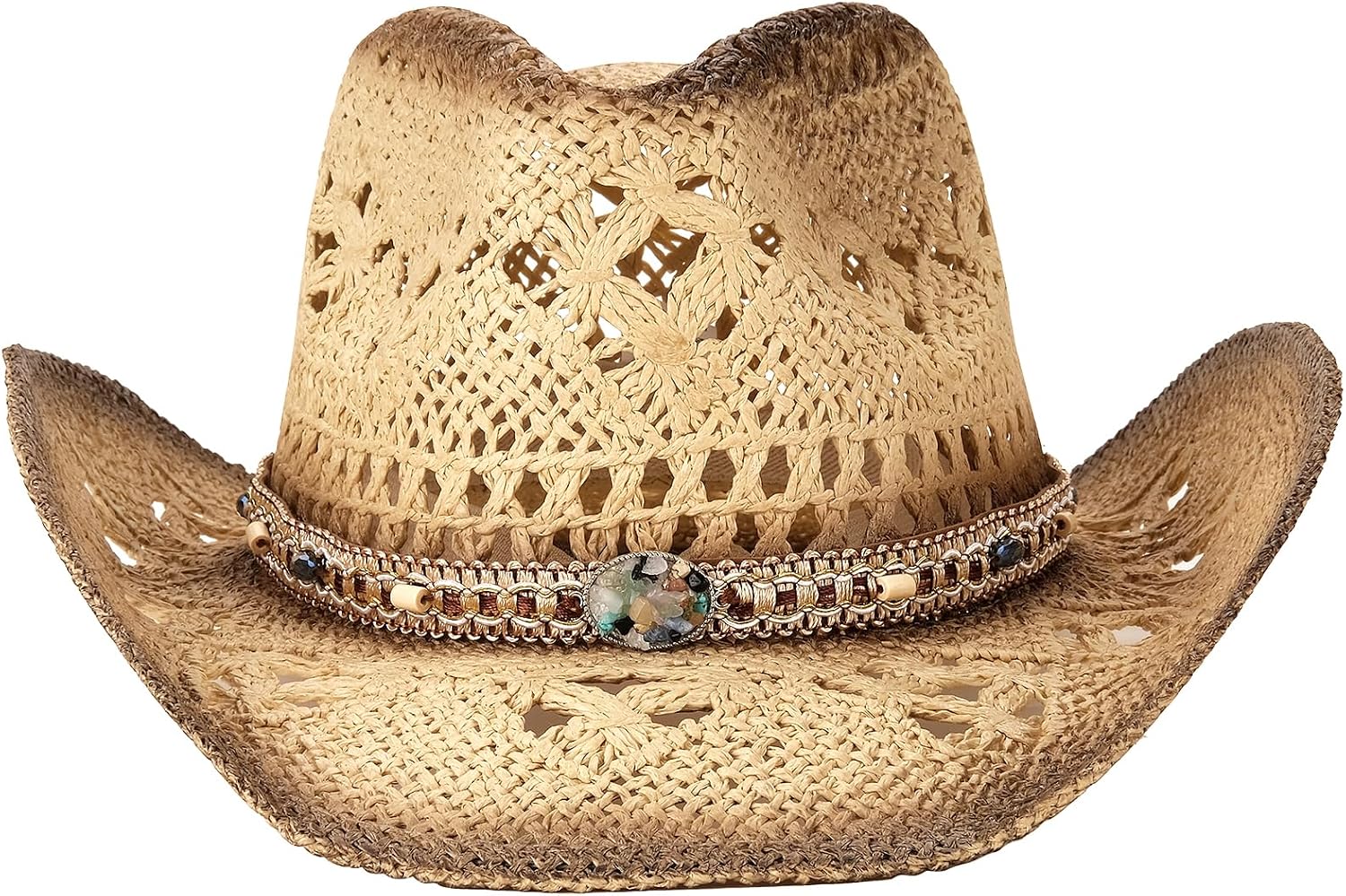
Check price on AmazonH3: Detail-Forward Pick — The Cosweet Beaded-Band Straw Cowboy Hat
Foeran
$35.88
In stock on Amazon
Check price on AmazonThe Cosweet style is praised specifically for its beaded band detailing, which owners report elevates the hat from generic to genuinely finished-looking. Importantly, reviewers confirm the beaded band is included with the hat — not sold separately — which addresses one of the more common disappointment vectors at this price tier. Listing photos sometimes show trim that turns out to be styled separately; the Cosweet’s band is documented by buyers as part of the purchase.
The Cosweet shows up consistently in the pattern of reviews from self-described non-hat-wearers who were converted to wearing western styles. The common thread in those reviews is the aesthetic: structured but not stiff, proportional brim, trim that’s interesting but not theatrical. If you’re buying your first shapeable straw cowboy hat and you’re uncertain whether you’re a “hat person,” the Cosweet’s finish-forward design is a lower-risk entry point than plainer alternatives.
Foeran
$35.88
In stock on Amazon
Check price on AmazonInternal Structure and Dome Support
Here’s the thing most buyers don’t think about until they open the box: how a hat ships tells you something about how it’s built. Hats that arrive on plastic dome forms are doing so because the manufacturer knows the crown structure benefits from that support. A hat that ships on a dome form is almost always a hat that will hold its shape better post-purchase, because the manufacturer designed the crown to be supported rather than self-supporting. It’s a small signal, but a reliable one — and it’s the detail that separates hats that survive their first season from hats that arrive looking great and sag by week three.
Brim Malleability vs. Brim Memory
A “shapeable” brim is a spectrum, not a binary. At the entry end, you can fold the brim up — once — and it stays. Push it back down and it stays again. This is wire-edge construction: a thin wire runs the brim perimeter and holds whatever angle you set. That’s functional and fine for most buyers.
Better hats use a combination of fiber stiffness and internal sizing (the starch or resin treatment applied during manufacturing) to give the brim “memory” — it holds a shaped position through sweat and light humidity rather than wilting. Wire-edge brims hold position reliably but are vulnerable to repeated reshaping: the wire fatigues over time. Better-constructed hats use a combination of wire and stiffened fiber, which holds a bent position without repeated wire stress.
Sun Coverage: Not All Wide Brims Are Equal
Not all wide brims perform the same way for sun protection, even at identical brim measurements. The BESOOGII short-brim shapeable straw cowboy hat earns notable praise from reviewers specifically for shoulder and chest coverage despite what the name implies — the “short brim” refers to the front profile (less dramatic forward projection) while the side and back coverage remains generous. Owners mention pool-adjacent and beach wearability as a primary use case, which is meaningful: a hat that survives a pool environment is a hat with either good synthetic content or a tight enough weave to resist rapid moisture absorption.
BESOOGII
$28.99
In stock on Amazon
Check price on AmazonBy the Numbers:
- Brim width under 3 inches: face-forward coverage only, neck exposure significant
- Brim width 3–4 inches: standard coverage, adequate for most outdoor use
- Brim width 4+ inches with shapeable sides: shoulder-grazing coverage when sides are down
- UPF rating: only meaningful if explicitly stated in the product listing — do not assume
Vogue, in its sun hat roundup (“The Best Sun Hats to Shop Right Now”), consistently notes that fit is the single variable most buyers underestimate — a hat that sits too high on the head looks costumey regardless of quality. A properly seated crown, where the hat rests about a finger’s width above the ears, is the baseline for western silhouettes to read as wearable rather than playful.
Packing and Travel: The Honest Assessment
Multiple owners across this category report packing these hats in luggage and having them survive the trip. The pattern is more consistent for hats with firmer internal structure and tighter weave. The method reviewers describe: stuff the crown with soft items (socks, underwear), flatten the brim minimally against the side of a hard-shell suitcase, and pack clothing loosely around it rather than on top of it.
What doesn’t survive luggage: hats with very loose weaves that can’t resist lateral compression, and hats where the brim wire is thin enough to kink rather than bend smoothly. If packability is a primary purchase driver, prioritize listings where reviewers specifically mention luggage travel — not just “travel” in a general sense.
Hard-shell luggage is significantly better for hat transport than soft duffels. This sounds obvious until it isn’t — a duffel compresses from all sides under adjacent baggage, while a hard shell holds its volume.
The “I’m Not a Hat Person” Signal
One of the more interesting patterns across reviews of this category: multiple buyers who describe themselves as non-hat-wearers report that these western styles converted them. The common thread in those reviews is the aesthetic — genuinely wearable western, not costume-western. A hat that reads as costume-western in photos will read that way in person; a hat that reads as fashion-western in photos (structured but not stiff, proportional brim, neutral or minimal trim) is almost always the safer bet for someone building their first hat relationship.
If you are buying your first shapeable straw cowboy hat and you’re not sure you’re “a hat person,” lean toward the styles that converted skeptics — structured weave, moderate brim width (3.5–4 inches), and trim that’s interesting but not theatrical. The Foeran and Cosweet styles show up in this pattern most consistently in aggregated reviews.
Frequently Asked Questions
Can I get this wet or wear it near a pool? Light splashing and sweat are generally fine for synthetic-blend straw hats. Full submersion will stress the brim wire and may compromise the internal sizing that holds the shape. The BESOOGII short-brim style is the one owners most specifically mention for pool-adjacent use — “pool wearable” in reviews typically means poolside, not in-water. Natural straw hats are more vulnerable to moisture damage; if wet use is a regular scenario, prioritize synthetic or mixed-fiber construction.
Will the brim stay shaped after I adjust it? Wire-edge brims hold position reliably but are vulnerable to repeated reshaping — the wire fatigues over time. Better-constructed hats use a combination of wire and stiffened fiber, which holds a bent position without repeated wire stress. Most reviewers report good shape retention across normal use, including being packed in luggage.
Does this hat fit a large or plus-size head? These hats run small as a category. If your head measures 23 inches or above in circumference, look for explicit maximum circumference measurements in the listing, and size up whenever a range is offered.
How do I pack this in a suitcase without crushing it? Stuff the crown with soft items to maintain its shape. Position the hat crown-down against a flat suitcase wall, brim curved against the interior, and pack soft clothing loosely around — not on top of — the brim. Hard-shell luggage is significantly better for hat transport than soft duffels.
Do the decorative bands and chains come included or are they sold separately? Varies by listing. The Cosweet’s beaded band is reported by owners as included. For any style where trim is a purchase driver, confirm it’s listed as included in the product description — don’t rely solely on the listing photo.
Is this hat actually breathable in hot weather? Tighter natural or natural-blend weaves breathe well — this is a consistent point of owner praise for both the Foeran and WQWOVRVO styles. Very tight synthetic weaves can trap heat slightly more than open natural straw. In general, straw western hats outperform felt and fabric hats in heat by a significant margin; the breathability question within this category is more about degree than kind.