A straw cowboy hat — a wide-brimmed hat woven from natural or synthetic straw, shaped into a western silhouette with a pinched crown — sounds like a simple buy. Pick one, wear it, done. But if you’ve spent any time reading buyer reviews across the crowded $25–$50 tier, you already know the category is messier than the listings suggest. “One size fits most” turns out to be a negotiation, not a promise. “Shapeable brim” can mean anything from genuine flexibility to a light suggestion of bend before the straw snaps back. And “straw” itself covers a spectrum of materials — from tightly woven paper-based fiber to looser seagrass weaves — that perform very differently at a full-day outdoor event versus a casual weekend errand. This guide maps that spectrum. Whether you’re buying for a summer festival, a Kentucky Derby party, a pool day, or just want something to wear in dry desert heat, the decision frame here will help you narrow to the right hat without a return label in your future.
Why “One Size” Is the Most Contested Claim in This Category
If there’s one theme that rises to the surface across aggregated reviews of straw cowboy hats in the $25–$50 range, it’s this: the fit experience varies more than the product listings imply, and the variance tends to cluster by head size and crown depth.
The Snug-Crown Hat: Best for Smaller to Mid-Range Head Sizes
Some of the most popular two-colorway straw cowboy hats in this tier illustrate the fit split cleanly. Reviewers consistently describe the fit as “snug across the crown” — and that description reads very differently depending on who’s writing it. For buyers with a 56–57 cm head circumference (a size S/M in most hat sizing guides), “snug” reads as a compliment: the hat sits without sliding, holds through wind, and doesn’t require constant adjustment. For anyone pushing 59 cm or above, that same snugness tips into discomfort after an hour. The listing doesn’t distinguish between those two experiences, and neither does the product photography.
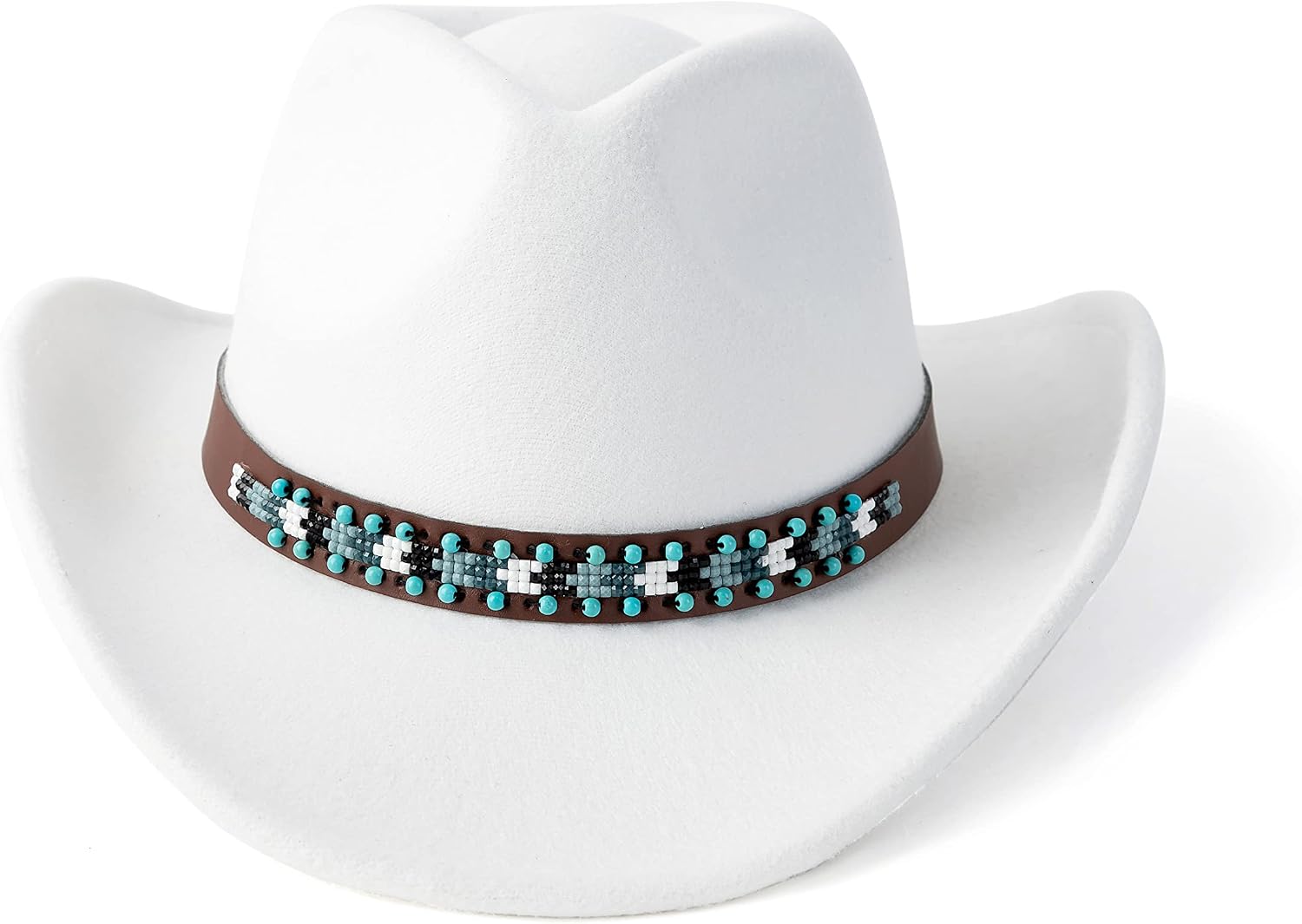
Western
$14.51
In stock on Amazon
Check price on AmazonThe Adjustable-Band Hat: A Workable Fix That Requires Advance Planning
One approach to the one-size problem — documented in buyer reviews rather than product descriptions — involves purchasing a replacement hat band, removing the sewn-in interior band entirely, and cinching the replacement tight enough to create a custom fit. That’s a workable solution, and buyers who’ve done it report satisfaction with the outcome, but it’s worth naming honestly: you’re doing millinery alteration on a $30 hat. If you have the patience and a spare 20 minutes, a hat built this way can be made to fit well. If you’re buying two days before an event, plan accordingly and check whether modification is feasible.
Western
$14.51
In stock on Amazon
Check price on AmazonThe Larger-Head-Friendly Hat: Rare and Worth Naming
Some straw cowboy hats at this price tier earn their most emotionally resonant reviews from buyers who report having wanted this style since their teenage years and describe genuine relief that the hat fit a larger head without requiring a store try-on. That’s not a small thing. Hat shopping for larger head circumferences — 60 cm and above — is genuinely difficult at this price tier, and a hat that fits without modification at the high end of the size range is worth calling out explicitly. When a product’s review set includes multiple reports of success from buyers who typically can’t find off-the-shelf hats that fit, that signal matters.
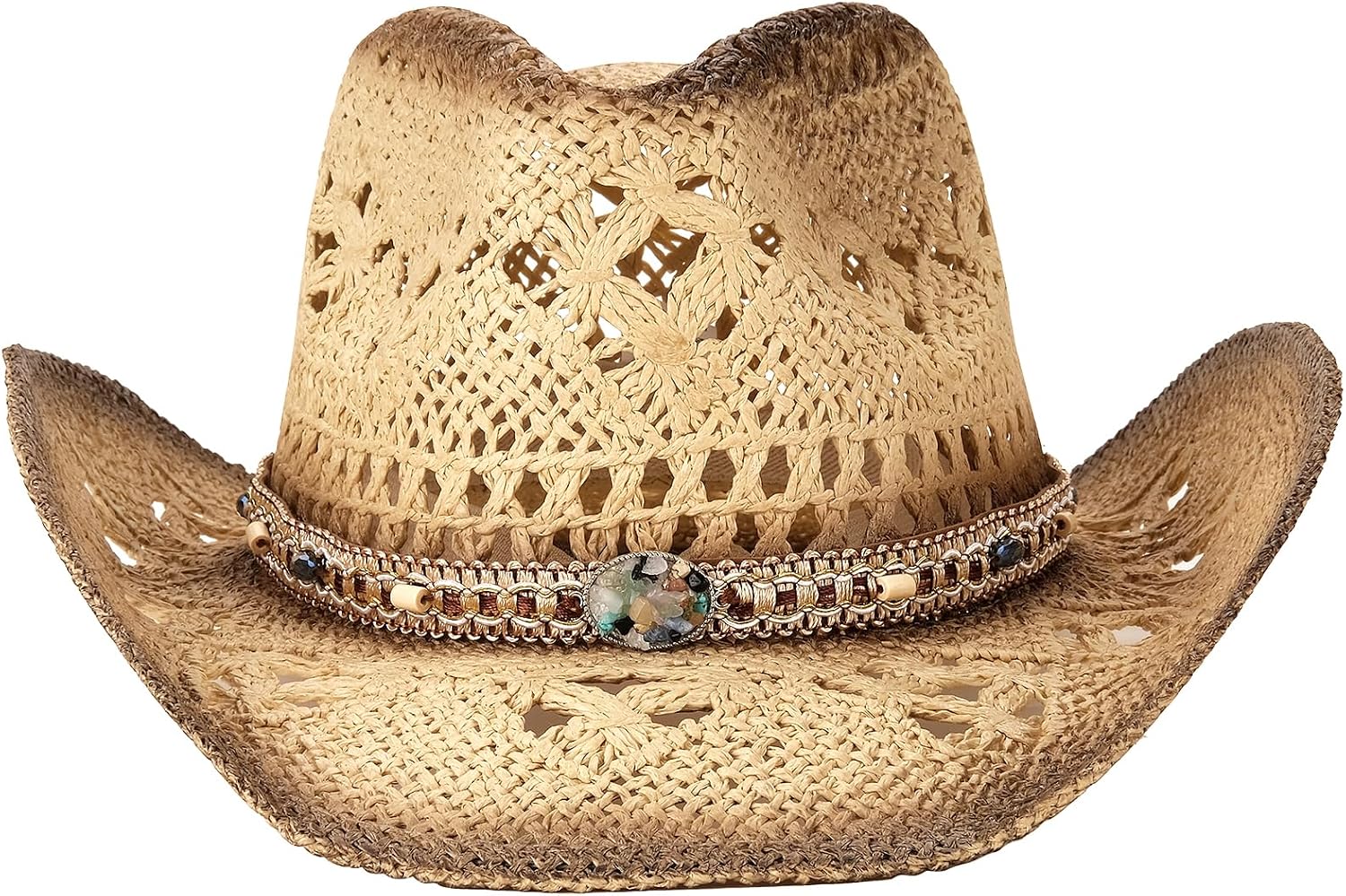
Foeran
$35.88
In stock on Amazon
Check price on AmazonBy the numbers — straw cowboy hat fit, at a glance:
| Head Circumference | Typical Experience at “One Size” |
|---|---|
| 55–57 cm (S/M) | Fits well; often snug in a comfortable way |
| 57–59 cm (M/L) | Usually fits; may need interior foam tape for security |
| 59–61 cm (L/XL) | Contested territory; some hats work, many don’t |
| 61 cm+ | Expect to modify or size up deliberately |
Stiffness Is the Hidden Variable Nobody Talks About Enough
The sharpest reviewer splits in this category aren’t about quality — they’re about stiffness. Five-star reviews on stiffer-weave hats come from buyers who wore them through a full summer of pool days and water parks, praising durability and packability. One-star reviews on those same hats come from buyers who found them to have “no bend” and feel “weird stiff.” These are not contradictory experiences. They’re the same hat, evaluated against incompatible expectations.
The Stiff-Weave Pool and Water Park Hat
Stiffness in a straw cowboy hat is a genuine tradeoff, not a defect. A stiffer weave holds its shape under humidity, sun, and physical contact — exactly what you want for a water park or beach afternoon where the hat is going on and off constantly. That same stiffness is what makes a hat feel rigid and unforgiving on the head, especially if the crown depth doesn’t match your anatomy. Short-brim versions of stiff-weave hats are particularly well-suited to active wear: the narrower brim doesn’t catch wind, doesn’t interfere with slides or physical movement, and the stiff construction means the hat snaps back to shape after being stuffed in a bag.
Elle’s coverage of western style’s ongoing mainstream moment — in the feature “Western Style Is Not Going Anywhere” — notes that the category has expanded far beyond traditional western workwear, which means buyers arriving from a fashion context often expect a degree of drapey softness that genuine straw construction doesn’t naturally provide. If you’re coming to this category from fabric hats or packable sun hats, recalibrating your stiffness expectations before you buy will save you a return.
Western
$14.51
In stock on Amazon
Check price on AmazonThe Styled Everyday Hat: When Aesthetics Do Real Work
Some straw cowboy hats at this tier read as styled rather than merely functional — and the difference usually comes down to band and trim details. A hat with a beaded or printed band gets called out specifically in reviews as a differentiator that makes the hat feel finished and intentional rather than generic. Vogue’s roundup “The Best Sun Hats for Every Summer Occasion” notes that band and trim details are among the fastest ways to elevate an entry-level straw hat, and buyers who want their everyday hat to do aesthetic work consistently respond to that distinction. A hat worn in dry desert heat for everyday western casual use, if it has a well-executed band, reads as a considered choice rather than a placeholder.
Foeran
$35.88
In stock on Amazon
Check price on AmazonThe Premium-Feel Hat: Band-Swap Versatility and Occasion Range
At the upper end of this price tier, some straw cowboy hats ship with two interchangeable bands — one casual, one occasion-appropriate — that genuinely extend the hat’s range without requiring a second purchase. The interchangeable band concept is useful: swapping a solid band for a beaded or printed one takes less than two minutes and meaningfully changes the hat’s register from casual to occasion-dressed. Who What Wear’s western hat styling guide “How to Style a Cowboy Hat” specifically notes that band details are the lever most buyers underestimate when building an outfit around a western silhouette. The caveat worth naming: confirm in the listing or reviews whether the outer band is truly removable as a separate piece, or whether it’s sewn over a structural inner band that isn’t meant to come off.
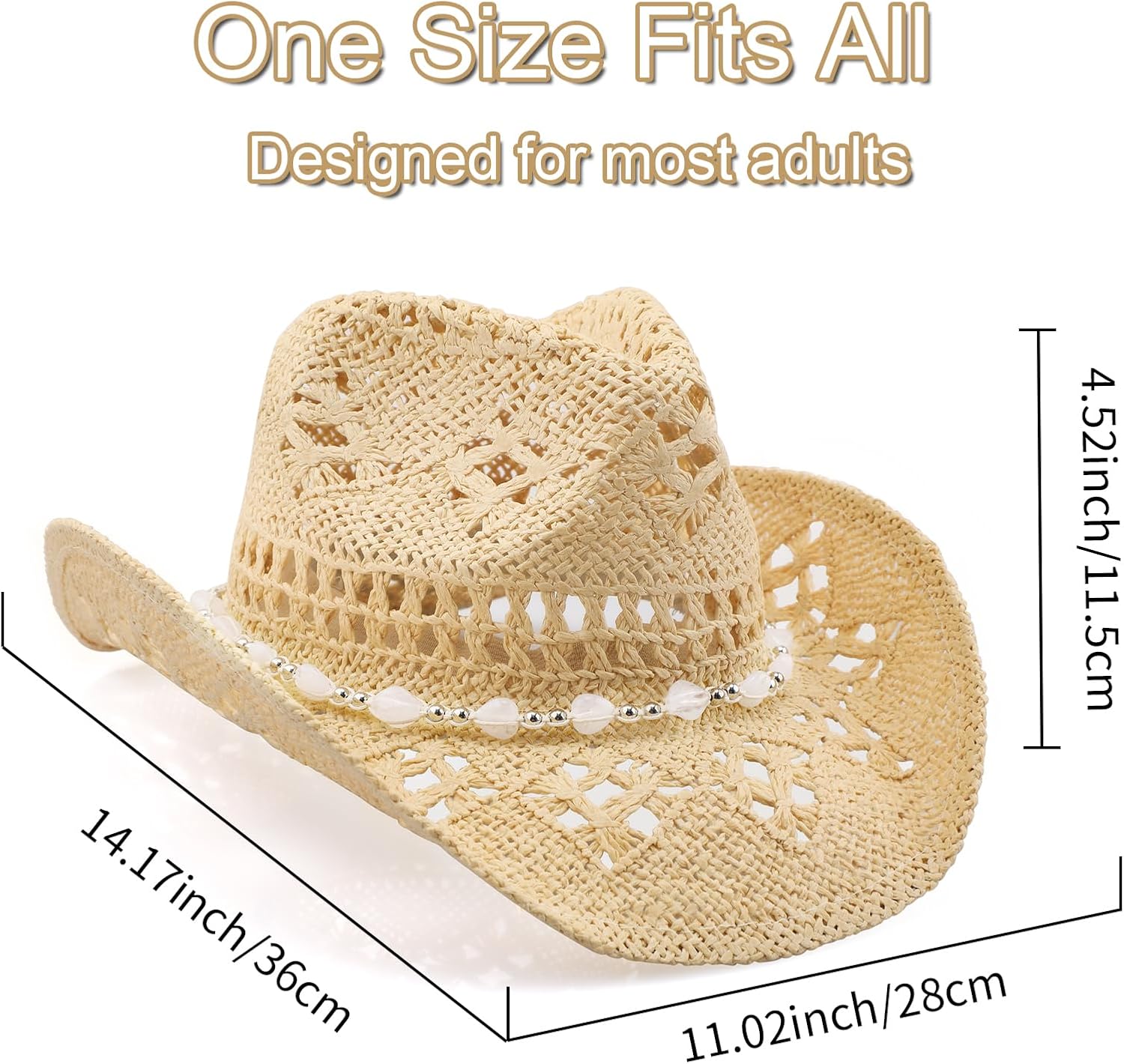
WQWOVRVO
$35.99
In stock on Amazon
Check price on AmazonShort Brim vs. Standard Brim: A Real Sun Protection Tradeoff
This is worth addressing directly because the brim-length choice has functional consequences that go beyond aesthetics.
A standard-brim straw cowboy hat — typically 3 to 4 inches from crown to brim edge — provides meaningful shade coverage for the face, the back of the neck when tilted, and the upper chest in direct overhead sun. Harper’s Bazaar’s sun hat coverage in “The Best Wide-Brim Hats for Sun Protection” consistently emphasizes that a minimum 3-inch brim is the practical threshold for real UV protection at a full-day outdoor event. Below that threshold, you’re getting the silhouette without the function.
A short-brim cowboy hat sits closer to 2 to 2.5 inches. That narrower brim is why pool and water park buyers favor it — it doesn’t catch wind as aggressively, doesn’t interfere with physical activity, and feels less obtrusive in active settings. But if you’re standing in a field at a summer festival or sitting in the infield at a Derby party for six hours, that shorter brim will leave your nose and upper cheeks without meaningful coverage by mid-afternoon.
The decision rule is straightforward: if you’re stationary or slow-moving at an event, go standard brim. If you’re active, moving through a crowd, or the hat is going on and off frequently, the short brim’s practicality begins to justify the sun coverage tradeoff. Who What Wear’s western hat styling guide also notes that the short brim reads more playfully casual and less occasion-formal — so there’s an aesthetic argument alongside the functional one.
Frequently Asked Questions
Can I wear a straw cowboy hat in water or at the beach?
It depends on the construction. Natural straw — paper-braided, seagrass, or wheat straw — will soften, distort, and eventually degrade with repeated water exposure. Synthetic straw (polypropylene braid, often labeled “paper straw” in budget listings but identifiable by a slightly plastic sheen) handles moisture significantly better and can tolerate light splashing or sweat. If water exposure is a priority, check whether the product description mentions “water resistant” or “synthetic straw” — natural straw hats should be treated as dry-occasion items only.
What does “shapeable brim” actually mean at the $25–$45 price tier?
At this price point, “shapeable brim” almost always means the brim can be bent and will loosely hold a new position — not that it will hold a precise curl or roll the way a felt hat does with steaming. In practice, you can coax the front edge of the brim upward or downward, and the straw will settle into that position partially. Humidity, sun, and time will gradually flatten it back. If you see “wire brim” in the product description, that’s a meaningful upgrade: a thin wire inside the brim edge allows intentional shaping that holds far longer. Without the wire, manage expectations accordingly.
How do I fix a straw cowboy hat that is too big?
The most reliable fix — documented by reviewers and consistent with standard millinery finishing technique — is to add foam hat tape or a replacement interior hat band. Foam hat sizing tape adheres to the interior sweatband and reduces the effective circumference by one to two sizes depending on thickness. For a more structured fix, a replacement hat band pulled tighter than the original can take up significant volume. Neither fix requires skill, but both require that the interior band be accessible, which is worth checking before you buy.
Will a straw cowboy hat hold its shape at a full-day outdoor event?
A stiffer weave hat in dry conditions: yes, with minimal drift. A more pliable or natural-straw hat in high humidity or intermittent rain: expect gradual softening at the brim edges and possible crown settling over six to eight hours. If your event is in a humid climate or there’s rain in the forecast, either choose a synthetic straw construction or pack a hat form or rolled towel to reshape the crown at the end of the day. Reviewer accounts from summer outdoor events consistently note that hats worn in dry heat look the same at 7 p.m. as they did at noon, while reviewers at Gulf Coast events report more brim drift by mid-afternoon. Climate matters as much as construction at this price tier.
Are two-band accessory sets as useful as they look in listings?
Mostly yes, with one caveat. The interchangeable band concept is genuinely useful, and swapping bands takes less than two minutes when the design supports it. The caveat: many budget straw cowboy hats have a sewn-in interior band that is load-bearing for fit, with the decorative outer band sitting over it. Removing the outer band is easy; removing the inner one to replace it is the kind of modification that takes time and sometimes a seam ripper. If you’re buying for band-swap versatility, confirm in the listing or reviews whether the outer band is truly removable as a separate piece before you commit.