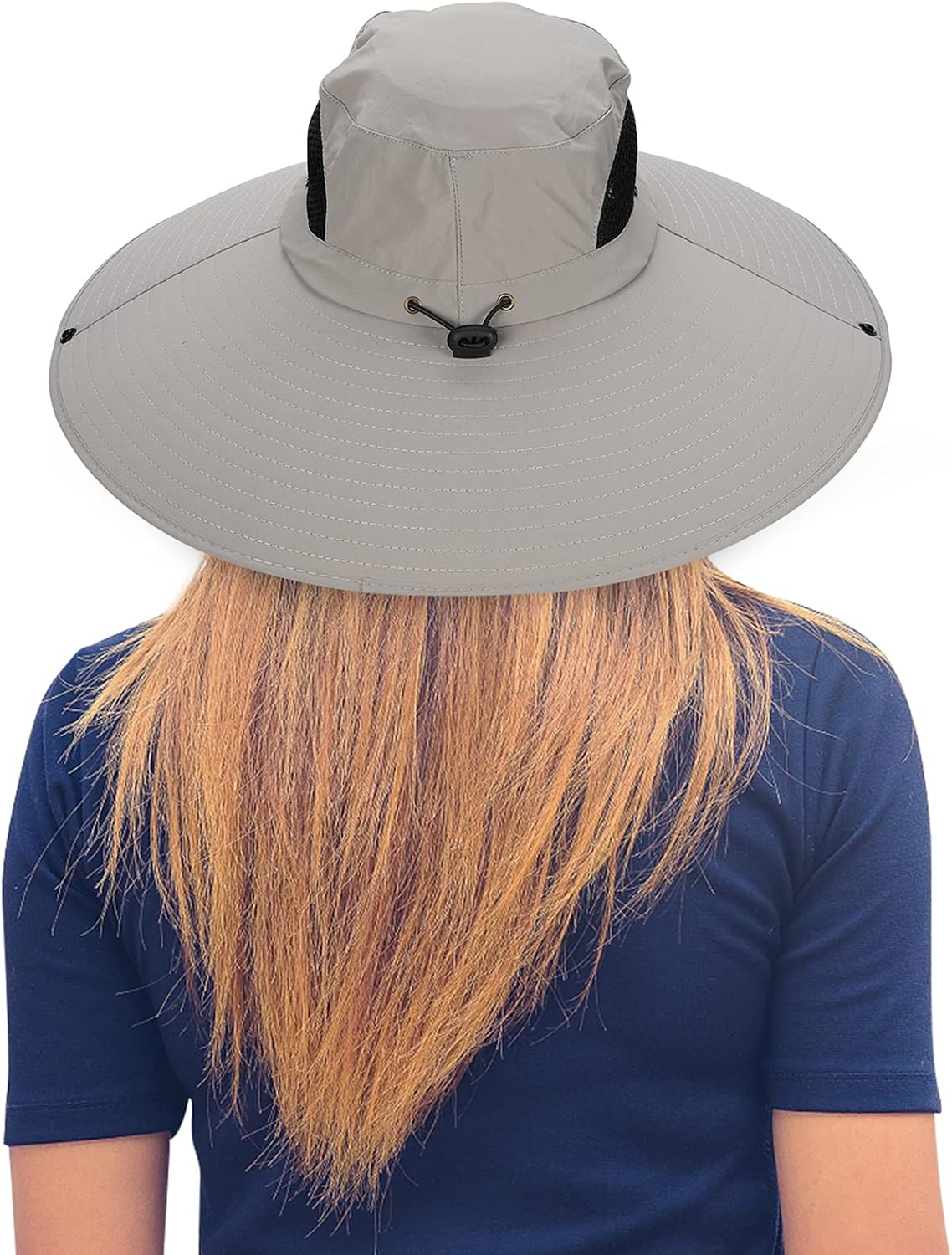
If you landed here because a dermatologist handed you a prescription and added, almost as an afterthought, “and wear a wide-brimmed hat every day, even when it’s cloudy” — welcome. You are not hat shopping for fun. You are hat shopping because your skin is currently operating with fewer defenses than usual: maybe you’re in the early weeks of tretinoin (a vitamin A derivative that accelerates skin-cell turnover and dramatically increases UV sensitivity), maybe a rosacea diagnosis just explained years of mysterious flushing and burning, or maybe fair skin and a recent surgery have pushed sun avoidance from “good idea” to genuine medical necessity. This guide is built around buyers in exactly that position. It translates the specs that actually matter — UPF rating, brim width, weave density, neck coverage — into plain-language decisions. By the end, you’ll know which hat category fits your situation and why.
Why This Purchase Is Different From a Fashion Hat Buy
Most hat guides optimize for style, packability, and price. You need to optimize for those things and reliable UV attenuation. That’s a meaningfully different decision tree, and the tradeoffs are real.
The core concept: UPF. UPF — Ultraviolet Protection Factor — is to fabric what SPF is to sunscreen. A UPF 50 garment blocks approximately 98% of UV radiation; UPF 50+ is the top rating in most textile testing standards. UPF 80, a rating some manufacturers now publish, theoretically blocks 98.75% — a statistically real but clinically modest difference in most outdoor scenarios. We’ll return to that gap in the FAQ, because it matters more for certain buyers than others.
The brim geometry question. A brim that looks wide on a product page may not shade your neck, ears, or décolleté when the sun drops below 45 degrees — which it does for most of the day outside of solar noon. Reviewers shopping with medical intent are notably more precise about this than fashion shoppers. One Leotruny wide-brim buyer, who described herself as “just starting my Tretinoin journey,” specifically noted that her Amazon Pharmacy doctor recommended a wide-brimmed hat alongside sunscreen, and that she chose the hat partly on brim measurement rather than aesthetics alone. That’s the right instinct.
The “good enough” trap. A floppy straw hat from a resort gift shop is not a UPF-rated hat. Weave density, fiber type, and whether the fabric has been tested all determine whether the rating is real. The Skin Cancer Foundation’s sun-protective clothing resource notes that looser weaves — even in natural fibers — can allow significant UV transmission, particularly when wet or stretched. If the label doesn’t say UPF 50+, assume it doesn’t deliver 50+.
The Reviewer Map: Four Buyer Profiles and What They Chose
Because this guide draws on verified buyer observations rather than lab testing, it’s worth naming the profiles explicitly so you can locate yourself.
Profile 1: Early tretinoin user, sun-avoidance protocol, everyday wear. The Leotruny buyer above represents a growing cohort. Tretinoin users are typically advised by dermatologists to treat UV exposure as they would during a sunburn recovery — meaning layered protection (sunscreen plus physical barrier) becomes non-negotiable. The FURTALK UPF 80 wide-brim hat draws this buyer type as well; one reviewer in this category was diagnosed with rosacea and ocular rosacea and noted that her medication increased her photosensitivity. Her priorities: style she’d actually wear in public, comfort for all-day use, and structural integrity that didn’t require reshaping after shipping. She praised the FURTALK UPF 80 hat on all three counts.
Profile 2: Fair-skinned or bald buyers needing neck and scalp coverage. A self-described “fair-skinned bald guy” reviewing the FURTALK neck-flap safari hat was explicit that the removable neck flap — not the crown coverage — was the feature he was buying. He valued the slide-off design specifically: coverage when outdoors, easy removal when he moved inside or into shade. This buyer is solving a geometry problem that a standard brim can’t fully address.
Profile 3: The UV-verifier. A FURTALK ponytail bucket hat buyer disclosed she used UV-test cards — small indicator cards that change color under UV exposure — to personally verify the hat’s protection claims before relying on them. Her dry observation that “aging started without my permission” signals a buyer who is informed, slightly skeptical of marketing claims, and doing her own validation. This is a sensible posture, and the FAQ below addresses what those cards actually measure.
Profile 4: Occasion-to-everyday transition buyers. Some buyers start hat-shopping for a specific event — a Derby party, a beach trip — and discover they need a hat that crosses into medical-utility territory. These buyers often underestimate brim requirements and overweight style, then recalibrate after their first outdoor hour.
The Decision Matrix: Matching Hat Type to Skin Condition
By the numbers:
| Hat Category | Typical Brim Width | Neck Coverage | Packability | Best For |
|---|---|---|---|---|
| Wide-brim sun hat (UPF 50+) | 4–5 in | Partial (varies by angle) | Often foldable | Tretinoin users, general photosensitivity |
| UPF 80 structured wide-brim | 4–5 in | Partial | Less foldable | Rosacea + medication photosensitivity |
| Neck-flap safari hat | 3–4 in + flap | Full (ears, neck) | Moderate | Bald/fair-skinned, scalp concern |
| Ponytail bucket hat | 2.5–3 in | Minimal | High | Active use, casual daily wear |
If you’re on tretinoin: The wide-brim category — minimum 4 inches — is your baseline. Reviewers in this situation consistently prioritize brim measurement over fashion silhouette. Pair with broad-spectrum SPF 30+ sunscreen (the American Academy of Dermatology’s rosacea treatment guidance recommends mineral-based formulations for reactive skin) because no hat provides 360-degree facial coverage. The hat handles overhead and angle UV; sunscreen handles reflected UV off pavement, water, and sand.
If you have rosacea or medication-induced photosensitivity: Structured brims perform better than floppy ones because they maintain their geometry when wind or movement shifts them. Floppy brims can blow back and expose exactly the areas — cheeks, nose, décolleté — that rosacea patients most need to protect. The FURTALK UPF 80 structured option has drawn consistent praise from this buyer segment for holding its shape without requiring a hat rack or careful storage.
If scalp and neck coverage are the primary concern: The neck-flap design is not a compromise — it’s the correct tool. The fair-skinned bald reviewer’s endorsement of the FURTALK neck-flap safari hat isn’t a niche use case; dermatologists increasingly recommend neck-flap designs for patients with a history of skin cancer on the scalp or neck, where standard brims simply don’t reach.
If packability matters more than maximum coverage: The ponytail bucket hat sacrifices brim width for convenience and ponytail accommodation. Wirecutter’s sun hat buying guide notes that UPF ratings on bucket-style hats can vary significantly by weave density, and buyers using these hats for medical purposes should verify the UPF claim rather than assume it from the category. The FURTALK ponytail bucket hat carries a stated UPF rating; the UV-card-testing reviewer was specifically verifying that claim, which is a reasonable step for any hat in this tier.
Frequently Asked Questions
What brim width is wide enough to actually shade the neck without a neck flap?
According to modeling published in the Skin Cancer Foundation’s clothing resource, a 3-inch brim provides meaningful shade to the face at solar noon but limited protection to the neck and ears as the sun angle drops. A 4-inch brim significantly improves cheek and lateral coverage; 5 inches or more begins to provide some neck protection — but the geometry depends on your height, posture, and time of day. The honest answer: if neck coverage is the goal, a brim alone is not a reliable solution. A neck flap is the mechanically correct choice. A 4–5 inch brim plus sunscreen applied to the neck is an adequate substitute for most situations.
Is UPF 80 meaningfully better than UPF 50 for someone on tretinoin?
In absolute terms, the difference is real but small: UPF 50 blocks ~98% of UV; UPF 80 blocks ~98.75%. In a strictly physics-based analysis, that fraction matters less than consistent wear and adequate brim width. However, for buyers with significantly compromised skin barriers — early tretinoin use, active rosacea medication, post-procedure skin — some dermatologists recommend maximizing every layer of protection, in which case UPF 80 provides a small but non-zero additional margin. The FDA’s guidance on sun-protective products notes that diminishing returns above UPF 50+ are well-established; choose UPF 80 if your dermatologist explicitly recommends it, not as a default upgrade.
Do foldable hats lose UV protection when the weave is stretched?
Potentially, yes. The Skin Cancer Foundation notes that any weave that is mechanically stretched — through repeated packing, rolling, or tension — can develop micro-gaps that increase UV transmission. Hats rated at UPF 50+ when flat-woven may drop below that rating if the weave is significantly distorted. For medical buyers, this suggests: (a) prefer hats with tight, dense weaves over open-pattern straws if packability is a priority; and (b) inspect the weave periodically, especially at fold lines. A hat that looks slightly “opened” at a crease is probably transmitting more UV at that point.
What does a UV test card actually test, and should I trust it?
UV indicator cards — the type used by the FURTALK ponytail hat reviewer — typically detect the presence or absence of UV light by a color-change reaction, not the precise quantity. They confirm that UV is being blocked but don’t measure UPF with the precision of accredited textile testing. They are a reasonable consumer verification tool: if a card placed under a hat in direct sun shows no color change, that’s a meaningful positive signal. If it does change color, that’s a red flag worth acting on. They should not replace reliance on independently tested and labeled UPF ratings, but as a field sanity check, the reviewer’s approach is sensible.
Are natural fiber hats more breathable than synthetic UPF hats for long wear?
Reviewers consistently describe natural-fiber hats (raffia, parisisal, shantung) as more comfortable in high heat — the open weave that makes them breathable is also what limits their UV protection unless a UPF-rated liner or tighter weave is incorporated. Synthetic UPF-rated fabrics (nylon-spandex blends, polyester microfibers) can feel warmer in still air but often perform better with airflow. For long outdoor wear in genuine heat — a full Derby day, a beach afternoon — mesh panels and moisture-wicking sweatbands matter as much as fiber content. The FURTALK UPF 80 hat’s consistent all-day comfort reviews suggest its construction manages this tradeoff reasonably well, though individual heat tolerance varies.
Is a neck-flap hat awkward to wear in everyday situations?
The fair-skinned bald reviewer addressed this directly: he specifically valued that the FURTALK neck-flap safari hat allows the flap to slide off or be tucked when not needed. Modern neck-flap designs have moved significantly away from the purely utilitarian look of earlier outdoor styles. Whether a neck flap reads as “awkward” in an everyday context depends on your geography and social environment — in sun-belt cities and beach communities, they are increasingly normalized. In urban professional settings, the flap-off configuration looks like a standard wide-brim outdoor hat. For buyers whose skin condition makes neck coverage genuinely necessary, that trade is usually an easy one to make.
The If/Then Decision Rule
If you’re hat-shopping on a doctor’s recommendation and photosensitivity is the primary driver — choose the widest brim you’ll realistically wear every day, in UPF 50+ or above, with a structured crown if rosacea is part of your profile. A hat that stays on your head beats a perfect hat that stays in your car.
If neck and scalp coverage are your specific vulnerability — skip the wide-brim entirely and go directly to a neck-flap design. The geometry problem is real and a flap solves it in a way no brim width reliably can.
If you’re an evidence-oriented buyer who wants to verify what you’re buying — the UV-card approach is a legitimate and low-cost sanity check, not overkill. Trust the rating, then verify. That’s not paranoia; that’s appropriate diligence for a purchase that has actual health stakes.