If you’ve ever stood in front of your closet before a formal event and wondered whether the hat you bought for the Kentucky Derby could possibly work at a memorial service next month — you’re not overthinking it. That’s a real question with a real answer, and it depends almost entirely on the style of the hat, not just the color. A fascinator is a small decorative headpiece, typically attached to a headband or clip, that sits at an angle on the head rather than sitting fully on top of it. A pillbox is a structured, brimless hat with a flat crown — think of the kind Jackie Kennedy made iconic. Both styles are commonly worn to weddings, race days, and formal luncheons. But as it turns out, they don’t all travel equally well between a celebration and a grief occasion, a garden party and a church pew. This guide builds a clear decision framework — so when you’re choosing a hat that needs to earn its cost across multiple events, you know exactly what to buy and what to skip.
| EDITOR'S PICKBABEYOND Tea Party Fascinator K… | Mid-tierBABEYOND Tea Party Fascinator H… | Budget pickFascinators Hat Clip Hat Weddin… | |
|---|---|---|---|
| Style | Pillbox | Pillbox | Fascinator |
| Mount | Headband | — | Clip |
| Color | White | Nude Pink | Blush Pink |
| Gloves | ✗ | ✗ | ✓ |
| Size | — | One Size | Medium |
| Occasion | Tea, Derby | Derby, Church | Wedding, Tea |
| Price | $42.99 | $26.99 | $18.99 |
| See on Amazon → | See on Amazon → | See on Amazon → |
The Core Framework: Occasion-Neutral vs. Single-Register Hats
The most useful lens for cross-occasion buying is emotional register — the feeling a hat signals before you’ve said a word. Some hats have a low register: they’re elegant and quiet enough that the occasion does the contextual work, not the hat. Others have a high register: feathers, cascading florals, bold color-blocking. Those hats tell a story on their own terms, and that story is usually celebration.
Here’s the working rule:
Occasion-neutral hats sit in a neutral-to-elevated emotional range. They read as “formal and appropriate” in almost any context because their decoration is restrained and their silhouette is classic. A funeral crowd reads them as respectful. A Derby crowd reads them as polished. A bridal brunch reads them as chic.
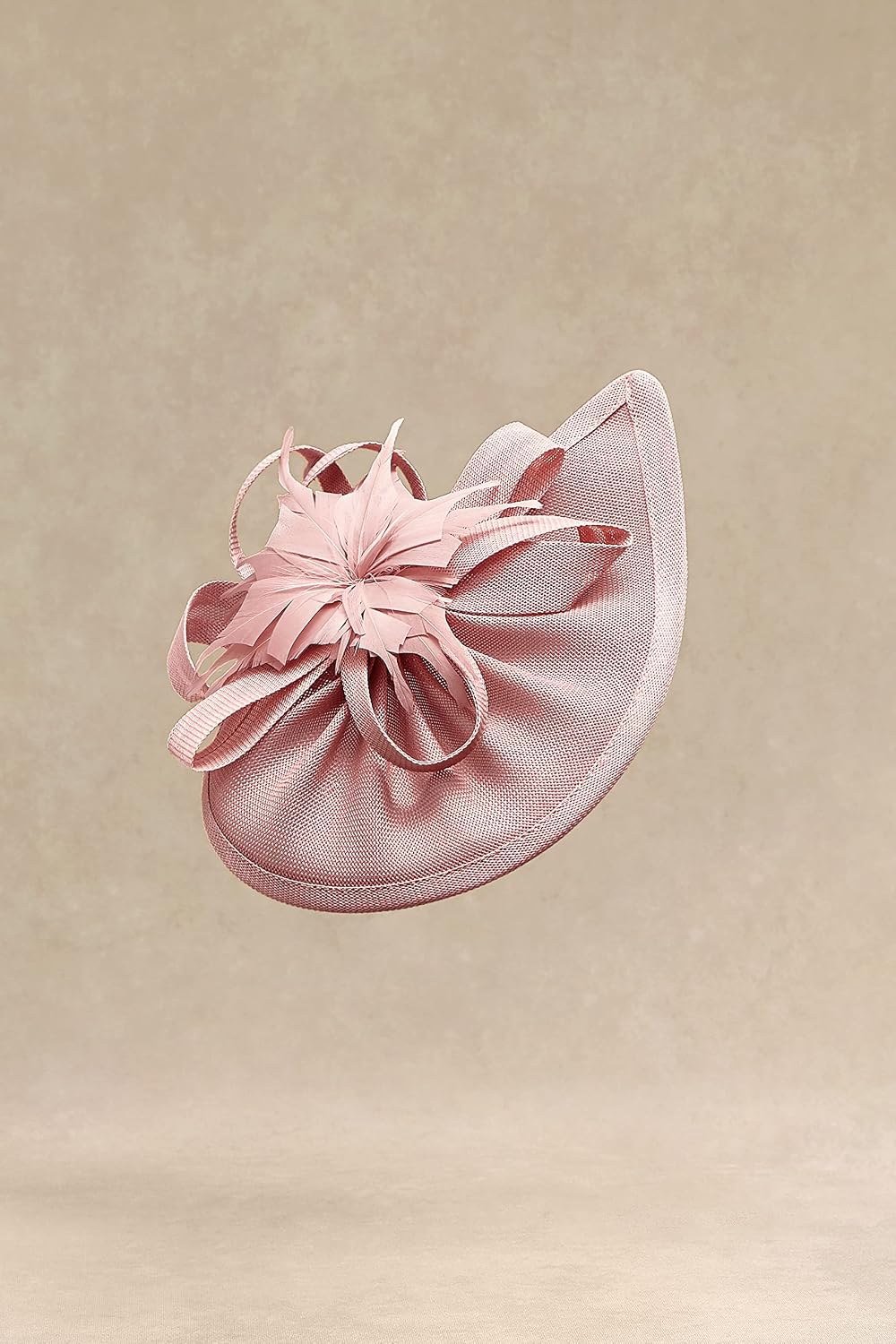
Single-register hats are emotionally committed. A wide-brim sinamay hat loaded with silk peonies and trailing feathers is telling everyone within twenty feet that something festive is happening. That’s wonderful at Churchill Downs. It’s a misread at a graveside service.
The tradeoff isn’t that single-register hats are lesser hats — often they’re more beautiful, more memorable, and more fun to wear. The tradeoff is that they don’t amortize across your calendar the way occasion-neutral hats do. If you’re building a formal hat wardrobe on a finite budget, this distinction directly affects your cost-per-wear math.
The Pillbox Case Study: One Hat, Two Funerals, One Tea Party
Among the styles reviewers consistently describe as crossing occasion lines, the sinamay pillbox (sinamay is a lightweight woven fiber — stiff enough to hold structure, breathable enough for warm-weather wear) comes up again and again as the workhorse of the formal hat wardrobe.
Owners of sinamay pillbox styles report wearing the same hat to a funeral and a formal tea party — emotionally opposite events — and finding it appropriate at both. That’s not an accident of styling. It’s structural. The pillbox’s brimless profile keeps it from reading as theatrical. The sinamay material reads as formal without the festive connotations of heavy silk flowers or trailing feathers. The proportions are controlled. Nothing about the silhouette competes with a somber context, but nothing about it looks out of place at a luncheon table either.
Who What Wear’s 2025 feature on the pillbox revival specifically notes its crossover appeal: the style’s association with mid-century formality gives it an “above-the-occasion” neutrality that more trend-driven headpieces can’t claim. It reads dressed-up in almost any formal setting because it references a moment when getting dressed was itself a serious cultural act.
The practical implication: If you’re buying one formal hat that needs to carry multiple occasions — including grief occasions — a structured sinamay or felt pillbox in black, ivory, or deep navy is your lowest-risk investment. It’s also typically mid-range in price, which makes the cost-per-wear math work faster.
Fascinators: Where the Calculation Gets Complicated
A well-chosen fascinator can absolutely cross occasions. A poorly chosen one locks you into exactly one event type.
The differentiator is decoration density and color register.
Reviewers of the Coucoland pearl fascinator consistently describe it with language like “elegant,” “classy,” and “regal” — and importantly, one reviewer purchased it specifically for a memorial service and described it as hitting the right note. Pearls are the critical variable here: they carry centuries of association with formal grief (worn at funerals by royalty across European traditions) while simultaneously reading as celebratory at weddings and luncheons. A pearl-accented fascinator sits in that neutral zone by virtue of the material’s dual cultural coding.
Compare that to the BABEYOND nude pink pillbox, which reviewers describe as a neutral canvas — one buyer even added silk roses to customize it for a specific occasion. That “base canvas” quality is a meaningful signal. A hat that invites personalization is, by definition, not locked to one emotional register. Its neutrality is its versatility.
Now consider the glove-and-fascinator sets reviewed by buyers going to Derby parties and garden teas. Those reviewers are enthusiastic — but notice what occasions they name. The decorative register of those sets (coordinated gloves, elaborate floral or feathered toppers) signals celebration clearly and loudly. Reviewers don’t describe wearing them to memorial services, and that’s not a coincidence. The sets are occasion-specific by design, and they’re excellent at it. But they’re single-register purchases.
By the Numbers
| Hat Style | Occasion-Neutral Score (1–5) | Best Cross-Occasion Use Case |
|---|---|---|
| Sinamay pillbox, black/navy | 5 | Funeral → church → formal luncheon |
| Pearl-accented fascinator | 4 | Memorial → wedding → garden party |
| Nude/ivory pillbox (plain base) | 4.5 | Bridal → Derby → daytime formal |
| Feather-forward wide fascinator | 2 | Derby/race day only |
| Coordinated glove-set fascinator | 1.5 | Tea party/Derby only |
Color, Decoration, and the Styling Lever Most Buyers Underuse
Here’s a tradeoff that doesn’t get named often enough: a decorative pin or brooch changes a hat’s occasion register more than most buyers expect.
Take a plain black fascinator on a grosgrain base. Worn unadorned with a dark dress and simple jewelry, it reads immediately as appropriate for grief or high-church formality. Add a single vintage pearl-and-rhinestone brooch at the base and the same hat shifts toward celebration — it reads “elegant occasion” rather than “mourning.” Add a spray of silk flowers and it moves further toward garden party. The hat hasn’t changed. The register has.
Harper’s Bazaar’s guide to funeral dress codes notes that black headpieces remain one of the few items of formal dress where “elegant” and “respectful” fully overlap — but it also flags that heavy ornamentation can tip the register even when the base color is appropriate. The advice aligns with what reviewers demonstrate in practice: buyers modify, adapt, and re-style the same base hat more than the industry’s marketing suggests.
Town & Country’s Derby hat coverage from 2025 makes the inverse point — that plain bases can be dressed up for race day with ribbon swaps, hatpins, and clip-on florals far more easily than elaborate hats can be stripped down for other events. Dressed-up is achievable; dressed-down rarely is.
The practical implication: When you’re evaluating a hat for cross-occasion use, ask whether the decoration is removable or addable. A plain base with clip-on ornamentation is genuinely more versatile than a hat where the florals are sewn into the structure. That’s a construction detail worth examining at point of purchase.
Vogue’s coverage of the statement hat resurgence in 2024 emphasizes that the new wave of formal headwear buyers — younger, more occasion-diverse, more budget-conscious than previous generations — are increasingly treating base hats as wardrobe pieces rather than single-event accessories. That behavioral shift is exactly why the occasion-neutral framework matters for today’s buyer.
Frequently Asked Questions
Can the same fascinator work for both a funeral and a Kentucky Derby party?
Yes — but only if the decoration is restrained and the color palette is neutral. A pearl-accented fascinator in black, ivory, or deep navy can move between both contexts. A feather-forward piece in bright coral or pattern print cannot. The test: would this hat read as theatrical if you were the only person wearing a hat in the room? If yes, it’s a single-register purchase.
What hat colors are safest for cross-occasion versatility?
Black is the most versatile formal hat color — it carries both grief and celebration coding depending on how you style the rest of the outfit. Deep navy runs close behind. Ivory and champagne work across bridal-adjacent events and garden parties but read as less appropriate for somber occasions. Blush, coral, and pattern are celebration-only.
Does adding or removing a decorative pin actually change how formal a fascinator reads?
Yes, and more than most buyers expect. A pin or brooch at the base of a fascinator shifts its register visibly — pearls or garnets move it toward celebration and elegance, unadorned metal moves it toward daytime formal, and removing ornament entirely reads as more somber. This is one of the most underused styling levers in formal hat wearing.
Is a pillbox style more versatile than a feather-forward fascinator?
Almost always yes. The pillbox’s structural simplicity and brimless profile give it what stylists sometimes call “occasion neutrality” — it reads as dressed-up without committing to an emotional register. A feather-forward fascinator reads as festive by design; that’s not a flaw, but it does limit cross-occasion use.
How do I style the same black fascinator differently for a garden party versus a church service?
For church: pair with a structured, darker dress or skirt suit, minimal jewelry, and no ornament added to the hat itself. For a garden party: add a silk flower clip or pearl brooch to the hat base, wear with a lighter floral or pastel dress, and let the hat’s decorative register rise with the outfit. The hat is the same. The conversation it’s having is different.
The Decision Rule
If you’re buying one formal hat that must cover grief occasions, church, and at least one celebratory event: buy a structured pillbox or plain-base fascinator in black or deep navy, with no permanent ornamentation. Budget toward quality material — sinamay, stiffened felt, or grosgrain — rather than elaborate decoration, because the decoration is what you’ll swap.
If you’re buying a second formal hat and your primary occasion is celebratory (Derby, bridal shower, garden party): this is where feathers, silk flowers, and coordinated glove sets earn their place. They’re single-register by design, and within that register, they’re excellent. Just don’t expect them to travel.
The buyers who report the most satisfaction with their formal hat investments — the ones who wear the same hat to a memorial and a tea party and describe both as right — consistently land on neutral bases with flexible styling. That’s not a coincidence. That’s the math working.