If you showed up here because you need a hat for a rodeo, a country concert, or a big outdoor reunion and you’re not entirely sure what you’re looking for — welcome, you’re in the right place. A western hat (sometimes called a cowboy hat) is simply a wide-brimmed hat with a creased crown, originally designed to protect working ranchers from sun and rain, and now one of the most versatile occasion hats you can own. They come in two main materials: straw, which is lightweight and ventilated for hot weather, and felt, which is denser and typically used in cooler months or for a more formal western look. Both are available at every price point, and both have a genuine, enthusiastic buyer base. What this article does is cut through the catalog noise using real reviewer accounts — people who wore these hats to actual rodeos, water parks, and front-row concert fields — so you can walk into your purchase knowing what to expect and what questions to ask yourself first.
If you’ve already bought a western hat or two and you’re here to sharpen your decision-making before a specific event, this is your place. The buyer patterns in this category are specific enough to be instructive, and the tradeoffs between stiffness, fit, and personalization deserve an honest map.
What the Buyer Reports Actually Tell Us (And Why the Stiffness Question Matters Most)
Let’s start with the single most consequential variable in straw western hat reviews: brim stiffness. Across aggregated reviews, the pattern is remarkably clear — buyers of the same hat sometimes rate it a five for being “perfectly shapeable” and simultaneously rate it a one for being “weird stiff with no bend.” This is not contradictory. It reflects two genuinely different buyer types, and knowing which one you are before you buy is the real decision work.
The stiffness split appears most visibly in reviews of budget-tier straw cowboy hats. One buyer wore hers all summer including in pools and at water parks — a use case that implies the hat held up to serious moisture and heat cycling without structural failure. Another buyer of the exact same hat reported that the brim had no give at all and wouldn’t curl or shape the way she expected. Both buyers are right about their experience. The hat itself is a fixed product; what changed is what each buyer brought to it.
If you are a “shapeable brim” buyer: You want a hat explicitly marketed as malleable — one that can be curled upward on the sides (a “cattleman” curl) or pushed down in front. These hats are often described in listings as “pinchable” or “shapeable.” They require a brief steaming or hot-water treatment before shaping, and then they hold the form once dry. If you skip that step, the hat will feel stiff and you’ll leave a disappointed review.
If you are a “structured look” buyer: A stiffer brim is actually a feature. It photographs cleanly, sits consistently all day, and doesn’t flop in wind. Rodeo environments and outdoor concerts with crowd movement often favor this. The tradeoff is that it reads more “costume” if the styling around it is wrong.
Vogue, in its feature “Western Wear Is Still Having Its Moment,” noted that the resurgence of cowboy-adjacent fashion since 2023 has created a buyer base with genuinely divergent expectations — some people want an heirloom-adjacent structured hat; others want something they can style loosely with a sundress. The market hasn’t sorted this well at the mid-tier price point, which is exactly why the reviews diverge.
Fit Reality Check: The One-Size Problem and How Real Buyers Solved It
Western hats at the budget-to-mid straw tier frequently ship as “one size fits most” with an internal adjustable band. Reviewers are consistent: this works for roughly a 57–59 cm head circumference (about a size 7 to 7 3/8 in U.S. hat sizing), and it starts to fail at the edges.
One buyer performed a significant DIY intervention on a mid-range straw western hat she purchased: she removed the sewn-in decorative band entirely and replaced it with a purchased hat band, pulled tight around the crown exterior, to compensate for a hat that was too large. This is not a hack — it’s a real solution that milliners use — but it signals something important: if your head runs small or large, a “one size” straw cowboy hat at this tier is a gamble, not a guarantee. Budget 10–15 minutes for fit testing before your event, not the morning of.
By the numbers — western hat sizing as a quick reference:
| U.S. Size | Centimeters | Inches |
|---|---|---|
| 6 7/8 | 55 cm | 21 5/8” |
| 7 | 56 cm | 22” |
| 7 1/8 | 57 cm | 22 3/8” |
| 7 3/8 | 59 cm | 23 1/4” |
If you measure between sizes, go up and use hat tape (thin foam strips sold at most craft stores) to reduce the internal circumference — far more reliable than trying to stretch a hat that’s too small.
Three Western Hats Worth Knowing About: Budget, Mid-Tier, and Felt
The market for event-ready western hats clusters into three meaningful tiers. Here’s how real buyer accounts sort across them.
The Budget Straw: Maximum Fun, Minimum Commitment
Western
$14.51
In stock on Amazon
Check price on AmazonBuyers in this tier are typically first-time western hat wearers, concert-goers who want maximum visual impact without financial anxiety about crowd damage, or parents buying for a family photo moment at a rodeo. Reviews from this price band are the most emotionally expressive in the category — words like “obsessed,” “exactly what I pictured,” and “wore it all summer” appear frequently.
The consistent limitation is the one-size fit gamble. Buyers with heads under 56 cm or over 60 cm report the most frustration. The brim stiffness debate also peaks here — stiffer construction is more common at this price point because it’s cheaper to manufacture, and buyers who expected a casual malleable brim are occasionally disappointed. The fix is steaming before the event, not after you’ve decided the hat is a failure.
Pool and water-park use is documented positively at this tier: straw construction in budget hats survives brief moisture exposure when allowed to air dry in shape. Extended soaking or machine washing is not the right use case.
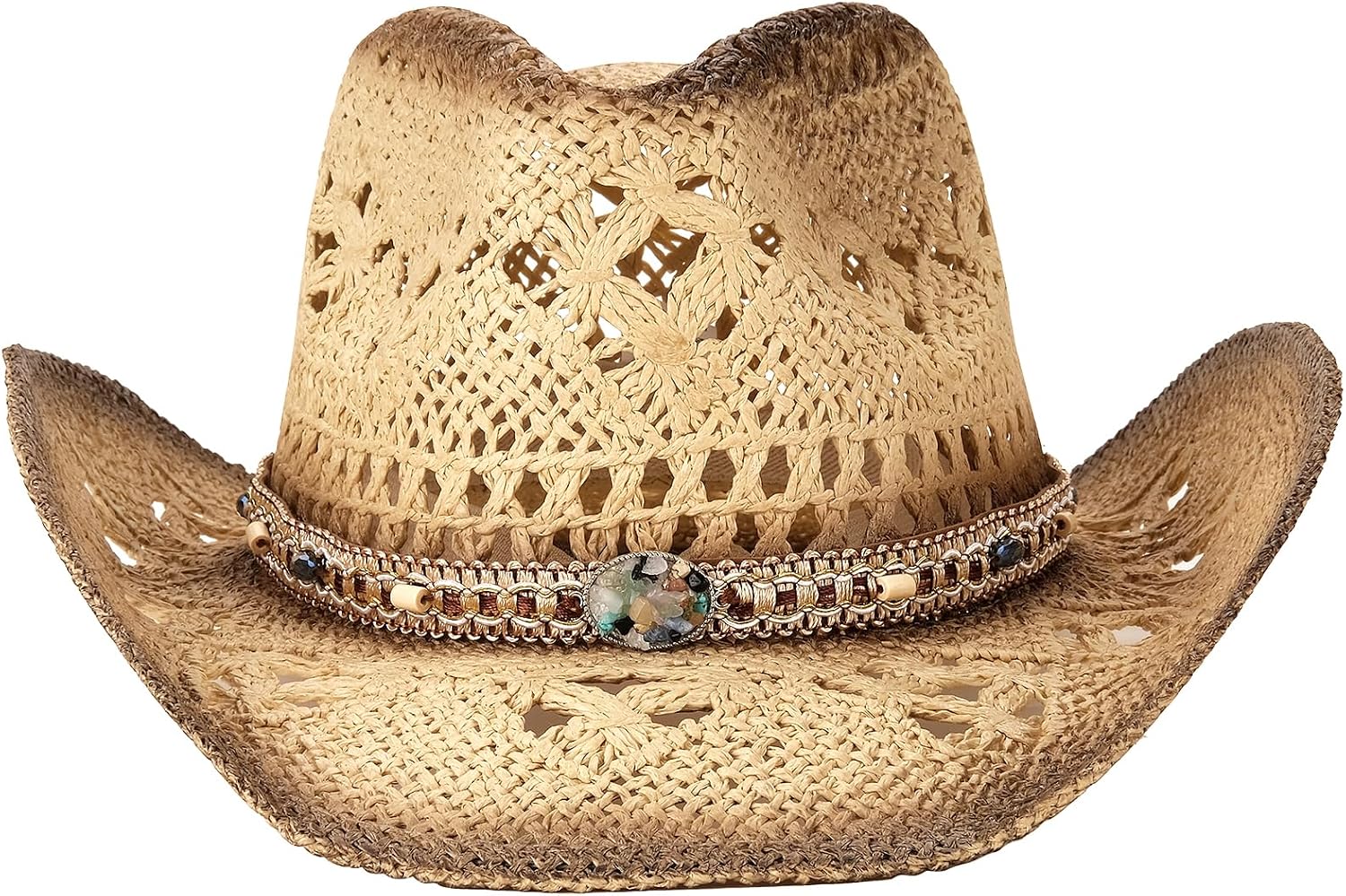
The Mid-Range Straw with Swappable Bands
Foeran
$35.88
In stock on Amazon
Check price on AmazonThe standout feature at this price band, documented in multiple buyer accounts, is the inclusion of two interchangeable hat band options in the box. That’s a meaningful value-add in a category where band customization usually requires a separate purchase. Reviewers cite this as one of the primary reasons they’d buy again — it allowed them to style the hat differently across multiple events without the DIY intervention that budget-tier buyers sometimes resort to.
One reviewer in this tier had waited since her teens for a straw cowboy hat and wore it to a rodeo in her late 40s — that’s a buyer who was not making an impulse decision. The emotional investment was real, and the hat delivered. For reunion buyers with similar stakes, the dual-band option matters: you may want one look for the daytime outdoor portion of an event and a slightly dressier look for an evening segment. Having two bands in the box removes that planning anxiety.
At this tier, construction is typically more consistent than budget straw, which means the brim stiffness debate is less pronounced — these hats are more likely to be described as “structured but workable” rather than splitting buyers into opposing camps.
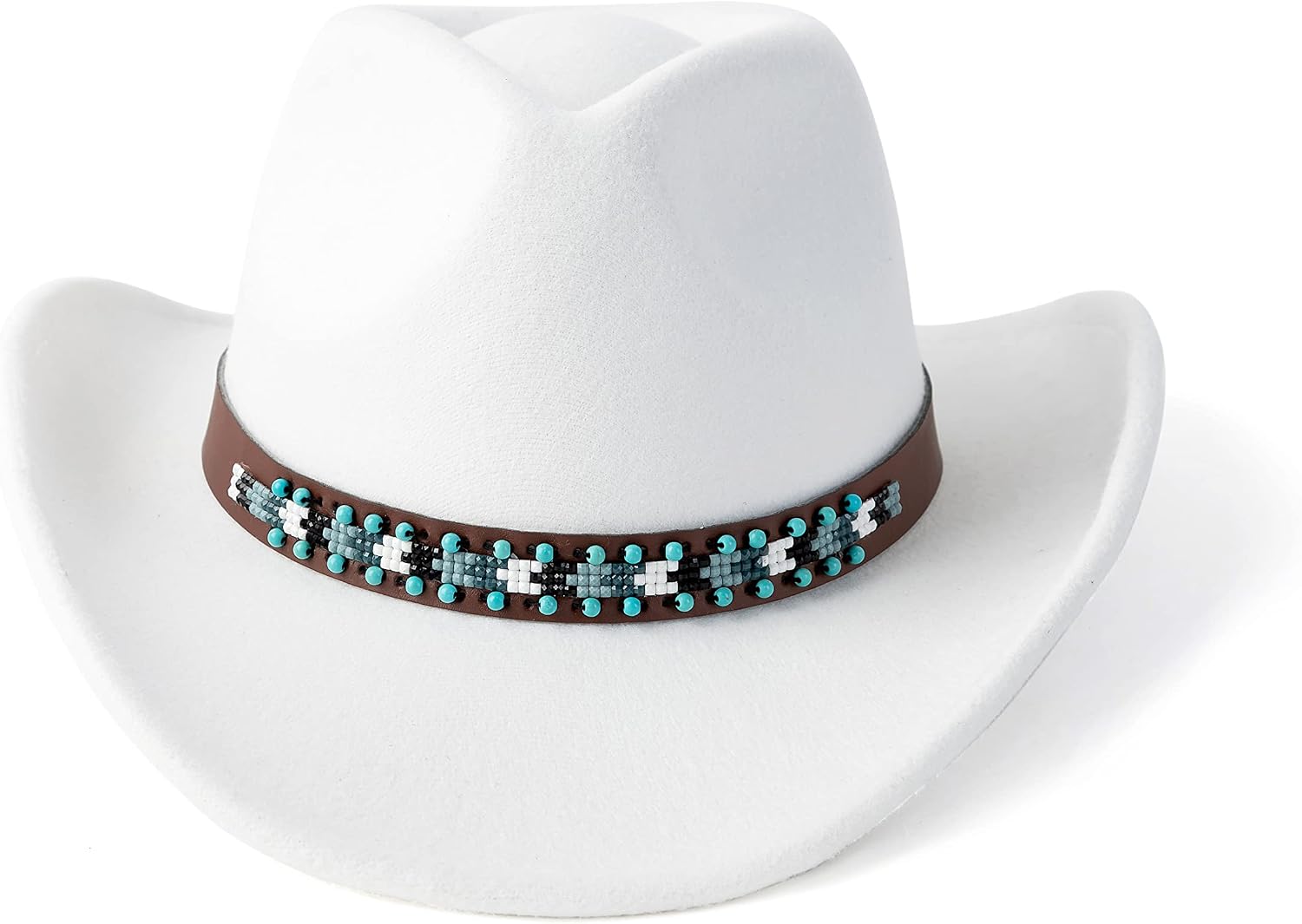
The Affordable Felt: Fall Rodeos and Cooler-Weather Events
Western
$14.51
In stock on Amazon
Check price on AmazonFelt western hats at the accessible price point earn consistent praise for reading “authentic” rather than novelty — a meaningful distinction in rodeo environments where the crowd knows the difference. Buyers describe affordable felt cowboy hats in this tier as photographing well and holding their shape reliably across a full event day.
What this tier is not: hand-blocked fur felt, which starts at multiples of this price point and is the construction standard for heirloom-quality western hats. At the accessible end, felt is compressed and shaped by machine. For a rodeo context where authenticity of silhouette matters more than construction provenance, it delivers. For a collector or serious western wear enthusiast, it’s a starting point, not a destination.
Smithsonian Magazine, in its feature “The Long History of the American Cowboy Hat,” documents how felt construction dominated western hat manufacturing through the nineteenth century before straw became standard summer workwear — which is why felt still carries an association with formality and tradition in western contexts. If your event is fall, winter, or a more formal western occasion, felt is the seasonally and aesthetically correct call.
Occasion Matching: Which Hat Earns Its Keep Where
Rodeo: Full-day sun exposure, dusty or grassy ground, and a crowd where western hats are genuinely the norm rather than a costume choice. Straw wins in summer heat. Felt is appropriate for fall and winter rodeos. Brim width of at least 3.5 inches provides meaningful shade across the face and neck — the functional origin of the style, as Smithsonian Magazine’s cowboy hat history coverage details.
Country Concert: The highest-volume use case in this category. Buyers want maximum visual impact, a hat that photographs well at close range, and enough durability to survive a crowd. Town & Country, in “How to Wear a Western Hat Without Looking Like a Costume,” notes that country concert environments reward hats with strong silhouette — which means visible brim width and a crown with defined structure. The stiffness that frustrates casual buyers is actually an asset here.
Reunion and Outdoor Party: This is where the dual-band mid-tier hat makes the strongest case for itself. You may want one look for the daytime outdoor segment and a slightly dressier presentation for an evening portion. Band swappability handles that without a second purchase.
Who What Wear, in “The Best Cowboy Hats to Shop Right Now,” has consistently noted that the difference between a hat looking “costume” and looking “considered” comes down to proportion matching — the hat’s brim width should be in rough conversation with the shoulder width of your outfit. A very wide brim on a narrow-shouldered silhouette reads as overwhelmed; a narrower western crown on a bold-shouldered jacket looks intentional.
The If/Then Decision Frame
If you’re buying for a summer outdoor rodeo or full-day country concert and you run a standard head size (57–59 cm), a budget or mid-range straw western hat delivers strong value — buy knowing you may want to steam and shape the brim before the event, not the morning of.
If you know your head runs small or large, skip one-size straw and either size up with hat tape or look for hats that ship in discrete sizes. The DIY band swap works but requires advance planning.
If the event is fall or cooler weather and you want a look that reads “intentional western,” an affordable felt cowboy hat is the honest recommendation — it photographs as a real rodeo hat and won’t read as summer-casual out of season.
If you are highly sensitive to stiffness and expect to shape your brim the day you receive it, read listings carefully for “shapeable” or “pinchable” language and plan to steam before wearing. If that step isn’t realistic for you, a structured brim is actually less frustrating to live with than a hat that resisted your shaping attempt.
Frequently Asked Questions
Can a straw cowboy hat get wet at a pool or beach without being ruined? Buyer accounts from summer-long use — including pool and water-park environments — suggest straw hats at this tier handle brief moisture without structural failure. Prolonged soaking combined with heat drying is the real risk. Let wet straw air dry in its shaped form rather than compressing or storing flat while damp.
How do I shape a shapeable brim before a big event? Use steam from a kettle or clothes steamer held a few inches from the brim for 20–30 seconds, then gently curl or tilt the brim to your desired shape and hold until cool. Repeat in sections. Allow the hat to dry fully before wearing — shaping a still-warm hat risks it returning to flat.
What should I do if my one-size western hat is too large? Hat sizing tape — thin foam strips sold at most craft stores — applied to the interior sweatband is the cleanest fix. The DIY exterior band swap documented in buyer reviews also works and has the side benefit of updating the hat’s visual. Both solutions are used by working milliners.
Is felt or straw better for a summer rodeo? Straw. It ventilates; felt traps heat. Save felt for fall rodeos, cooler evenings, or indoor events where you want a dressier western look. Vogue’s western wear coverage confirms that straw reads as seasonally correct in summer contexts and won’t feel overdressed at a working rodeo.
Do decorative bands on straw cowboy hats come off? It depends on construction. Mid-tier hats that ship with two swappable bands are explicitly designed for this — no cutting required. Budget-tier hats often have sewn-in bands; removal requires cutting stitches, which voids return options and requires care not to damage the brim. Check whether the band is stitched or slipped before assuming swappability.
How do straw cowboy hats hold up over a full day at a country concert? Across buyer accounts, straw cowboy hats in this tier handle full-day wear without meaningful structural changes. Sweat at the sweatband is normal; brim curl may relax slightly in high humidity. The bigger durability variable is crowd contact — hats get knocked in dense concert environments. A hat with a chin cord or strap reduces that risk significantly.